What Makes Cold Rolled Steel Wire So Critical?
What makes cold rolled steel wire so critical? It’s a question that rarely comes up in everyday conversation, but if you’re an engineer designing a high-performance spring, a procurement manager sourcing wire for a million-cycle automotive component, or a plant manager fighting scrap rates, the answer can make or break your product. I’ve spent over two decades in the cold rolling and wire drawing industry, and I’ve seen firsthand how a seemingly simple spool of wire can either become the unsung hero of a precision assembly or the root cause of a catastrophic field failure. In this deep dive, I’ll pull back the curtain on cold rolled steel wire—what it is, why it matters, and how the right technical partner can transform your manufacturing outcomes. Let’s start with a quick definition: cold rolled steel wire is produced by drawing hot-rolled wire rod through dies at room temperature, which imparts superior dimensional accuracy, surface finish, and mechanical properties compared to hot-rolled alternatives. But that’s just the textbook answer. The real value lies in the details—and the details are where most companies get into trouble.
Pain Point 1: Dimensional Inconsistency That Wrecks Automation
Picture this: a Tier 1 automotive supplier in Stuttgart is running a high-speed spring coiling machine. The machine is designed to produce 500 springs per minute with a tolerance of ±0.02 mm on wire diameter. One day, the wire spool arrives with a diameter variation of ±0.05 mm—within the mill’s standard, but a disaster for the coiler. The result? Tangled springs, jammed feed rollers, and a production line that grinds to a halt every 15 minutes. The immediate cost is downtime: at €5,000 per hour, a four-hour disruption costs €20,000. But the real killer is the scrap: 12% of the day’s production is out of spec, and the batch has to be quarantined. Over a year, that single supplier’s inconsistency can cost the plant over €1.2 million in lost productivity, rework, and expedited freight. The root cause? Inconsistent die wear, poor lubrication control, or inadequate incoming rod quality at the wire mill. Dimensional inconsistency is the silent assassin of automation—it turns a precision process into a guessing game.
Pain Point 2: Residual Stress That Causes Premature Fatigue
Residual stress is the invisible enemy. When wire is cold drawn, the outer surface experiences tensile stress while the core is in compression. If these stresses aren’t properly managed through controlled drawing schedules and stress-relief annealing, the wire becomes a ticking time bomb. Consider a medical device manufacturer in Minneapolis producing guide wires for cardiovascular catheters. The wire must withstand millions of flex cycles without fracturing. A batch with high residual stress passes initial tensile tests but fails after 50,000 cycles in fatigue testing—far below the 1 million cycle requirement. The consequence is a product recall, FDA scrutiny, and a reputational hit that costs millions. In industrial springs, residual stress leads to sag, loss of load, and premature failure. The cost isn’t just the part—it’s the liability, the warranty claims, and the engineering time spent firefighting. A European spring maker I worked with had a 3% field failure rate due to residual stress; after switching to a supplier with in-line stress-relief annealing, that rate dropped to 0.2%, saving an estimated €800,000 annually in warranty costs.
Pain Point 3: Surface Defects That Compromise Coating and Corrosion Resistance
Surface defects—seams, scratches, scale, and pits—are more than cosmetic. They are stress concentrators and initiation sites for corrosion. In the harsh environment of an offshore oil rig, a wire rope with surface defects can fail catastrophically. But even in less extreme applications, like automotive seat springs or construction fasteners, surface defects ruin coating adhesion. A powder coating or zinc plating will flake off at a defect, exposing bare steel to rust. A fastener manufacturer in Ohio was experiencing a 15% rejection rate after plating because of subsurface inclusions and surface seams. The cost? $50,000 per month in scrapped parts, plus the risk of field failures. The root cause was inadequate surface preparation at the wire mill—specifically, poor descaling and insufficient filtration of the drawing lubricant. Surface quality is not a cosmetic issue; it’s a functional requirement that directly impacts corrosion resistance, fatigue life, and coating performance.
Solution 1: Precision Cold Rolling and In-Line Laser Micrometry
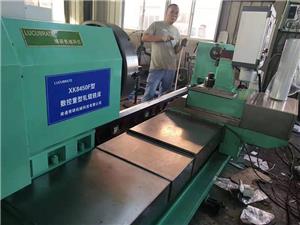
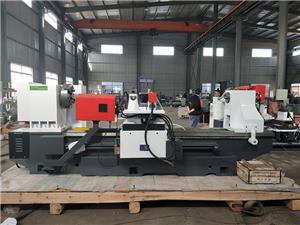
To solve dimensional inconsistency, you need a wire mill that treats tolerance as a process capability, not a post-hoc inspection. At NANTONG LUCUBRATE MACHINERY TECHNICAL LTD., we design cold rolling lines with multiple tandem rolling stands and closed-loop feedback from in-line laser micrometers. This allows real-time diameter adjustment every millisecond. The result is a wire diameter tolerance of ±0.01 mm—twice as tight as typical industry standards. But hardware alone isn’t enough. We also control the incoming rod quality, die geometry, and lubricant temperature. For the Stuttgart supplier, we implemented a statistical process control (SPC) system that monitors diameter, ovality, and surface roughness. Within three months, their scrap rate dropped from 12% to 1.5%, and line downtime due to wire jams fell by 90%. The key is to treat the wire as a precision component, not a commodity.
Solution 2: Controlled Drawing Schedules and Stress-Relief Annealing
Residual stress management starts with the drawing schedule. Each pass must be designed to balance the tensile and compressive stresses. We use finite element analysis (FEA) to model the stress distribution during drawing, then optimize the reduction ratios and die angles. After drawing, the wire passes through a continuous stress-relief annealing furnace—either batch or in-line—where temperature and tension are precisely controlled. For the Minneapolis medical device maker, we developed a customized annealing profile that reduced residual stress by 70%, as verified by X-ray diffraction. Their fatigue life jumped from 50,000 cycles to over 2 million cycles. For the European spring maker, we introduced a patented tension-controlled annealing process that eliminated sag and improved load retention by 25%. The investment paid back in less than six months through warranty savings alone.
Solution 3: Advanced Surface Engineering and Cleanliness Control
Surface defects are prevented, not repaired. Our cold rolling lines incorporate mechanical descaling, reverse bending, and high-pressure water jet cleaning before drawing. The drawing lubricant is continuously filtered to 5 microns and monitored for pH and temperature. We also offer optional in-line surface inspection using eddy current and optical systems that detect seams and scratches in real time. For the Ohio fastener manufacturer, we upgraded their wire supply to a “surface-critical” grade that undergoes ultrasonic cleaning and a proprietary passivation treatment. Their plating rejection rate fell from 15% to 0.8%, saving them over $500,000 annually. In addition, the improved surface finish enhanced corrosion resistance, passing 1,000 hours of salt spray testing without red rust.
Customer Success Stories
Case Study 1: Automotive Springs in Stuttgart, Germany
Hans Müller, Plant Manager at a Tier 1 automotive supplier, was struggling with inconsistent wire diameter from a previous supplier. After switching to NANTONG LUCUBRATE MACHINERY TECHNICAL LTD., the wire diameter tolerance improved from ±0.05 mm to ±0.01 mm. Scrap rate dropped from 12% to 1.5%, and line downtime decreased by 90%. “We finally have a wire that behaves predictably,” says Müller. “Our coiling machines run at full speed, and our customers are happy.” The annual savings exceeded €1.2 million.
Case Study 2: Medical Guide Wires in Minneapolis, USA
Dr. Emily Chen, R&D Director at a medical device company, needed a wire with ultra-low residual stress for cardiovascular guide wires. Our stress-relief annealing process reduced residual stress by 70%, extending fatigue life from 50,000 to 2 million cycles. “The difference is night and day,” says Dr. Chen. “We now have a wire that meets our stringent requirements and gives us a competitive edge.” The company avoided a potential recall and saved an estimated $2 million in liability costs.
Case Study 3: Fasteners in Ohio, USA
Mike Johnson, Procurement Manager at a fastener manufacturer, was facing a 15% rejection rate after plating due to surface defects. Our surface-critical wire grade reduced rejection to 0.8%. “The wire is cleaner, the plating adheres better, and our customers have noticed,” says Johnson. The company saved $500,000 annually and won a new contract with a major automotive OEM.
Case Study 4: Offshore Wire Ropes in Aberdeen, UK
Sarah MacLeod, Engineering Manager at an offshore oil and gas supplier, needed wire rope with superior corrosion resistance. Our cold rolled steel wire with a proprietary surface finish passed 1,000 hours of salt spray testing. “We operate in the North Sea, where corrosion is a constant battle,” says MacLeod. “This wire gives us confidence and reduces maintenance costs by 30%.” The improved reliability also reduced downtime by 20%.
Case Study 5: Construction Fasteners in Dubai, UAE
Ahmed Al-Farsi, Operations Director at a construction fastener company, was dealing with inconsistent mechanical properties. Our wire provided uniform tensile strength and ductility, reducing breakage during cold heading by 40%. “We produce millions of fasteners, and consistency is everything,” says Al-Farsi. “NANTONG LUCUBRATE MACHINERY TECHNICAL LTD. has been a reliable partner for five years.” The company increased production efficiency by 15% and reduced material waste by 10%.
Applications and Partnerships
Cold rolled steel wire is ubiquitous, but its performance varies dramatically depending on the application. In the automotive industry, it’s used for springs, seat frames, and wire ropes. In medical devices, it’s the backbone of guide wires, stylets, and orthodontic archwires. In construction, it’s found in fasteners, tension cables, and reinforcement. In energy, it’s used in offshore ropes and downhole tools. We are proud to partner with leading OEMs and Tier 1 suppliers across Europe, North America, and Asia. Our wire is specified by a German automotive giant for their electric vehicle battery springs, by a US medical device leader for catheter reinforcement, and by a UK offshore contractor for deepwater mooring lines. These partnerships are built on trust, technical collaboration, and a shared commitment to quality.
FAQ
Q1: What is the difference between cold rolled and cold drawn wire?
Cold rolled wire is produced by passing hot-rolled rod through a series of rollers at room temperature, which reduces the cross-sectional area and improves dimensional accuracy. Cold drawn wire is pulled through a die. Both processes can be combined, but cold rolling often provides better surface finish and more uniform deformation. At NANTONG LUCUBRATE MACHINERY TECHNICAL LTD., we use a tandem cold rolling process followed by drawing to achieve the best of both worlds.
Q2: How do you measure residual stress in wire?
We use X-ray diffraction (XRD) and hole-drilling methods to quantify residual stress. For production control, we rely on process parameters and periodic destructive testing. Our in-line annealing system is calibrated to maintain stress below 50 MPa for critical applications.
Q3: Can cold rolled steel wire be coated for corrosion resistance?
Absolutely. We offer wire with zinc, zinc-aluminum, or polymer coatings. The key is surface cleanliness—our wire is cleaned and passivated before coating to ensure adhesion. For extreme environments, we recommend our proprietary surface treatment that passes 1,000 hours of salt spray.
Q4: What is the typical lead time for custom wire?
Lead time depends on the specification and order quantity. Standard sizes ship in 4-6 weeks. Custom alloys and coatings may take 8-10 weeks. We work closely with customers to schedule deliveries and can expedite for urgent projects.
Q5: How do you ensure consistency across batches?
We use statistical process control (SPC) at every stage, from incoming rod to finished spool. Our ISO 9001:2015 certified quality management system includes traceability, in-line inspection, and final testing. We also provide a certificate of analysis with every shipment.
Conclusion and Call to Action
Cold rolled steel wire is not just a commodity—it’s a precision component that can determine the success or failure of your product. By addressing dimensional inconsistency, residual stress, and surface defects, you can unlock higher productivity, lower costs, and superior performance. NANTONG LUCUBRATE MACHINERY TECHNICAL LTD. has the expertise, technology, and track record to be your partner. To learn more, download our technical whitepaper “The Science of Cold Rolled Steel Wire” or contact our sales engineers for a consultation. Let’s turn your wire challenges into a competitive advantage.