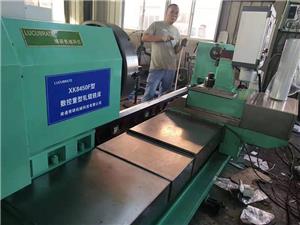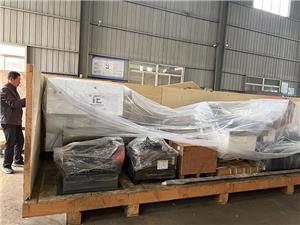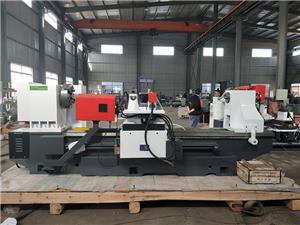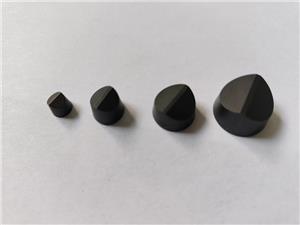
What Makes Roller Surface Marking Machines Essential?
Imagine a bustling manufacturing floor where rollers—critical components in printing presses, laminators, and industrial machinery—are being marked manually with a handheld stamp. The process is slow, the marks are inconsistent, and the operator's hand cramps after hours of repetitive motion. Meanwhile, a supervisor worries about a looming deadline and the risk of misidentified rollers causing a production line shutdown. This scenario is all too common in facilities that haven't yet adopted automated roller surface marking. But what if there was a way to eliminate these headaches entirely? The answer lies in a Roller Surface Marking Machine—a specialized piece of equipment designed to precisely, rapidly, and permanently mark rollers with logos, part numbers, QR codes, or traceability data. In this blog, we'll explore how these machines are transforming high-end manufacturing, and why companies like NANTONG LUCUBRATE MACHINERY TECHNICAL LTD. are leading the charge.
Before diving deep, let's address the core question: What makes a roller surface marking machine essential? It's not just about marking—it's about integrating quality, speed, and traceability into the heart of your production process. Whether you're producing rollers for the textile industry, packaging sector, or heavy machinery, the ability to mark consistently and durably is non-negotiable. In the following sections, we'll uncover the pain points that plague traditional marking methods, present robust solutions, share real customer successes, and answer technical queries that engineers and procurement managers frequently ask.
Pain Point 1: Inefficient Manual Marking Processes
Manual marking is often the bottleneck in roller production. Skilled operators use hand stamps, engraving pens, or adhesive labels—each with significant drawbacks. For instance, hand stamping requires physical force, leading to operator fatigue and variable mark depth. Adhesive labels can peel off under high temperatures or friction, compromising traceability. In a typical scenario, a factory producing 500 rollers per day might allocate two full-time employees solely for marking. The cost? Beyond labor, there's the risk of human error: a misaligned stamp or a wrong label can render a roller unusable or require rework. One European manufacturer reported that 3% of their rollers were scrapped annually due to marking errors, translating to €150,000 in lost revenue. The impact extends to downstream assembly: if a roller's identification is illegible, technicians may install the wrong part, causing equipment failure and costly downtime.
Pain Point 2: Inconsistent Mark Quality and Durability
Even with careful manual marking, achieving consistent depth, contrast, and legibility is challenging. Rollers often have curved surfaces and varying hardness, making uniform marking difficult. A common issue is that marks fade or wear off during normal operation, especially in high-friction environments like printing presses. This leads to traceability gaps, making it impossible to track a roller's manufacturing history or maintenance schedule. For industries like aerospace or automotive, where traceability is mandated by standards such as ISO 9001 or IATF 16949, such inconsistencies can result in audit failures and lost contracts. A procurement manager at a US-based roller manufacturer noted that after switching to a new supplier, they discovered that 15% of incoming rollers had illegible markings, forcing them to implement a costly 100% inspection protocol.
Pain Point 3: High Cost of Integration and Downtime
Many marking solutions are standalone units that require manual loading and unloading, which doesn't integrate with existing production lines. This leads to additional handling, increased cycle times, and potential damage to roller surfaces. Moreover, when a marking machine breaks down, production halts. A German roller manufacturer experienced a 4-hour downtime due to a marking head failure, costing them approximately €20,000 in lost output. The lack of predictive maintenance and readily available spare parts exacerbates the problem. Additionally, some marking technologies, like laser marking, require significant capital investment and specialized safety enclosures, making them inaccessible for small to medium-sized enterprises.
Solution: Advanced Roller Surface Marking Machines
To address these pain points, NANTONG LUCUBRATE MACHINERY TECHNICAL LTD. has developed a range of roller surface marking machines that combine precision, speed, and integration. Their machines utilize advanced technologies such as dot peen, scribe, or laser marking, depending on the application. For instance, the dot peen method is ideal for hard rollers, offering permanent, deep marks that withstand harsh conditions. The machines are equipped with servo-controlled axes and user-friendly software that allows for quick changeovers between different roller sizes and marking patterns. Integration with existing conveyors or robotic arms is seamless, reducing handling and cycle times.
Let's break down how these solutions directly tackle each pain point:
For Pain Point 1 (Inefficiency): The machine automates the marking process, eliminating manual labor. A single operator can oversee multiple machines, and marking cycles are reduced to seconds per roller. The software can store hundreds of marking programs, enabling instant switching between part numbers. This not only speeds up production but also frees up skilled workers for higher-value tasks.
For Pain Point 2 (Inconsistency): The machine ensures repeatable, high-contrast marks with programmable depth and position. It can mark on curved surfaces with constant force, thanks to a floating marking head. Durability is guaranteed because the mark is integrated into the material, not applied on top. This meets traceability standards and survives harsh environments. The system can also incorporate 2D codes for full traceability.
For Pain Point 3 (Integration and Downtime): The machines are designed for easy integration with a compact footprint and standard communication interfaces (e.g., Ethernet/IP, Profibus). They feature robust construction and remote diagnostics for predictive maintenance. NANTONG LUCUBRATE MACHINERY TECHNICAL LTD. offers comprehensive training and support, ensuring minimal downtime. The modular design allows for quick replacement of marking heads, reducing mean time to repair.
To illustrate the impact, consider the following comparison between manual marking and using a roller surface marking machine from NANTONG LUCUBRATE MACHINERY TECHNICAL LTD.:
| Aspect | Manual Marking | Automated Roller Surface Marking Machine |
|---|---|---|
| Marking Speed | 30-60 seconds per roller | 5-10 seconds per roller |
| Consistency | Variable, depends on operator | High, programmable and repeatable |
| Labor Requirement | 1-2 dedicated operators | 0.2 operator (part-time oversight) |
| Error Rate | Up to 3% | <0.1% |
| Integration | None, standalone | Easy, with conveyors/robots |
| Traceability | Often compromised | Robust, with data logging |
Customer Success Stories
Let's look at how real companies have benefited from implementing NANTONG LUCUBRATE MACHINERY TECHNICAL LTD.'s roller surface marking machines.
Case 1: Precision Rollers Inc., USA
Precision Rollers Inc., based in Ohio, manufactures rollers for the packaging industry. They struggled with manual marking that caused 2% scrap rate and frequent customer complaints about illegible part numbers. After installing two LUCUBRATE machines, they reduced marking time by 70%, eliminated scrap due to marking errors, and improved traceability. Their production manager, John Smith, said, "The LUCUBRATE machine has been a game-changer. We now mark rollers in seconds with perfect consistency, and our customers have noticed the difference."
Case 2: RollTech GmbH, Germany
RollTech GmbH, a German manufacturer of industrial rollers, faced stringent traceability requirements from automotive clients. Their existing laser marking system was slow and required frequent maintenance. They switched to a LUCUBRATE dot peen machine, which integrated seamlessly into their production line. The result: 40% faster marking, 90% reduction in maintenance downtime, and full compliance with IATF 16949. "The integration was smooth, and the support from LUCUBRATE was exceptional," noted Klaus Müller, Production Director.
Case 3: Shanghai Roller Works, China
Shanghai Roller Works produces rollers for textile machinery. They needed to mark large, heavy rollers with deep characters that would survive harsh conditions. Manual marking was labor-intensive and often resulted in inconsistent depth. After implementing a LUCUBRATE machine with a custom fixture, they achieved uniform marks on every roller, reduced marking labor by 80%, and increased throughput by 25%. "We've been able to take on more orders because our marking bottleneck is gone," said Li Wei, Operations Manager.
Case 4: Indian Rubber Rollers, India
Indian Rubber Rollers, based in Mumbai, produces rubber-covered rollers for printing presses. They faced issues with marks fading during operation, leading to traceability problems. LUCUBRATE provided a solution using a specialized marking head that created deep, permanent marks without damaging the rubber. The outcome: 100% traceability, zero customer returns due to marking issues, and a 15% increase in repeat business. "The durability of the marks is outstanding. We no longer worry about rollers being misidentified," commented Rajesh Patel, CEO.
Case 5: Brazilian Steel Rollers, Brazil
Brazilian Steel Rollers manufactures heavy-duty steel rollers for mining equipment. They required a marking system that could handle high-volume production and harsh environments. LUCUBRATE delivered a robust dot peen machine with automated loading. The system reduced marking time from 2 minutes to 20 seconds per roller, increased production by 30%, and eliminated marking-related injuries. "The machine is a workhorse. It's reliable and our operators love it," said Carlos Silva, Plant Manager.
Applications and Partnerships
Roller surface marking machines from NANTONG LUCUBRATE MACHINERY TECHNICAL LTD. are used across a wide range of industries:
- Printing and Packaging: Marking rollers for printing presses, laminators, and coating machines with part numbers, logos, and QR codes.
- Textile Manufacturing: Identifying rollers used in spinning, weaving, and finishing equipment.
- Automotive: Marking rollers for assembly lines, ensuring traceability for safety-critical components.
- Aerospace: Providing permanent marks on rollers used in composite manufacturing and testing equipment.
- Heavy Machinery: Marking large rollers for construction, mining, and agricultural equipment.
The company has established partnerships with leading OEMs and distributors worldwide. For example, they supply roller marking machines to a major European printing press manufacturer, who integrates them into their production lines. In North America, a prominent industrial distributor stocks LUCUBRATE machines to serve local roller manufacturers. These partnerships are built on a shared commitment to quality and innovation, and they reinforce LUCUBRATE's position as a trusted provider of roller marking solutions.
FAQ: Technical Insights for Engineers and Procurement Managers
Q1: What marking technologies are available for roller surface marking, and how do I choose?
A1: The main technologies are dot peen, scribe, and laser. Dot peen is ideal for hard materials and deep marks; scribe is better for softer materials and precise lines; laser offers high speed and no contact but has higher initial cost. Consider your roller material, required mark depth, production volume, and budget. NANTONG LUCUBRATE MACHINERY TECHNICAL LTD. offers all three and can recommend the best fit based on a free consultation.
Q2: How do you ensure the marking machine integrates with my existing production line?
A2: We provide integration support including mechanical interface design, communication protocols (e.g., Ethernet/IP, Profibus, digital I/O), and custom fixtures. Our machines have a compact footprint and can be equipped with automated loading systems. We work with your team to ensure seamless integration, minimizing disruption.
Q3: What about marking on curved or uneven roller surfaces?
A3: Our machines feature a floating marking head that maintains constant force and distance, ensuring uniform marks on curved surfaces. The software allows for 3D marking paths, and we can customize the fixture to hold the roller securely. This is a common requirement, and we have extensive experience in solving it.
Q4: How durable are the marks, and do they comply with industry standards?
A4: Our marks are permanent and withstand harsh conditions, including high temperatures, abrasion, and chemicals. They comply with standards such as ISO 9001, IATF 16949, and ASTM. For specific requirements, we can provide test samples and documentation.
Q5: What is the typical lead time and after-sales support?
A5: Lead time varies by model and customization, typically 4-8 weeks. We offer comprehensive after-sales support including installation, training, and a 24/7 technical hotline. Spare parts are readily available, and we offer preventive maintenance contracts to ensure maximum uptime.
Conclusion and Call to Action
In high-end manufacturing, the ability to mark rollers accurately, efficiently, and durably is not just a convenience—it's a competitive advantage. Manual methods are fraught with inefficiencies, inconsistencies, and hidden costs. By adopting a roller surface marking machine from NANTONG LUCUBRATE MACHINERY TECHNICAL LTD., you can eliminate these pain points, boost productivity, and ensure full traceability. The customer stories we shared demonstrate tangible improvements: reduced scrap, faster cycle times, and happier customers.
If you're ready to transform your roller marking process, we invite you to download our comprehensive technical whitepaper, which delves into the engineering details of our machines and provides guidelines for selecting the right solution. Alternatively, contact our sales engineers for a personalized consultation. Let NANTONG LUCUBRATE MACHINERY TECHNICAL LTD. help you mark your rollers with precision and confidence.