Why Alloy Rolls Define High-End Manufacturing?
In the heart of every high-end manufacturing plant, from the blazing furnaces of steel mills to the precision lines of aluminum foil producers, there is an unsung hero: the alloy roll. These massive, precisely engineered cylinders are the workhorses that shape, form, and finish metals with incredible accuracy. But why do some manufacturers swear by their alloy rolls while others struggle with frequent failures? The answer lies in the metallurgy, design, and manufacturing excellence behind them. At NANTONG LUCUBRATE MACHINERY TECHNICAL LTD., we've spent decades perfecting the art and science of alloy rolls, and we're here to share why they are the backbone of high-end manufacturing.
Imagine a steel rolling mill in Pittsburgh running at full capacity. Suddenly, a roll fails, and the entire line grinds to a halt. The cost? Not just the replacement roll, but thousands of dollars per hour in lost production, missed deadlines, and frustrated customers. This scenario is all too common when alloy rolls aren't engineered for the extreme conditions of modern manufacturing. But with the right alloy roll, you can turn this around. In this blog, we'll explore the pain points, solutions, and real-world success stories that demonstrate why alloy rolls are not just components—they are strategic assets.
Pain Points: When Alloy Rolls Fail, Production Lines Suffer
Alloy rolls operate under extreme conditions: high temperatures, heavy loads, abrasive materials, and rapid thermal cycling. When they fail, the consequences ripple through the entire production process. Let's examine three critical pain points that manufacturers face daily.
1. Premature Wear and Unplanned Downtime
In a hot rolling mill, rolls are subjected to temperatures exceeding 1000°C, combined with high pressure and abrasive scale. Standard rolls wear out quickly, leading to frequent replacements. Each replacement can take 4-8 hours, during which the entire line is down. For a typical steel mill producing 200 tons per hour, that's 800-1600 tons of lost production per downtime event. At a profit margin of $100 per ton, that's $80,000 to $160,000 lost per event. Over a year, with multiple failures, this can amount to millions in lost revenue.
Moreover, premature wear leads to inconsistent product quality. As the roll wears, the thickness and surface finish of the rolled metal vary, leading to rejections and rework. In the competitive automotive industry, where tolerances are measured in microns, such inconsistencies are unacceptable.
2. Inconsistent Quality and Material Waste
When alloy rolls are not properly designed, they can cause uneven cooling, leading to thermal gradients that affect the microstructure of the rolled metal. This results in variations in hardness, strength, and ductility, which can cause cracks or failures in downstream processes. For example, in aluminum foil rolling, a poorly performing roll can lead to pinholes and thickness variations, rendering the foil unusable for critical applications like lithium-ion battery current collectors.
Material waste is another major concern. If the roll produces out-of-spec product, the entire coil may need to be scrapped or downgraded. In the production of high-value alloys like titanium or nickel-based superalloys, the cost of raw material is astronomical. A single scrapped coil can cost tens of thousands of dollars, not to mention the energy and labor already invested.
3. Thermal Cracking and High Maintenance Costs
Thermal cracking is a common failure mode in alloy rolls, especially in hot rolling applications. It occurs when rapid heating and cooling cycles create stresses that exceed the material's fatigue limit. Cracks initiate on the roll surface and propagate, leading to spalling and eventual failure. Once cracks appear, the roll must be removed and either reconditioned or replaced. Reconditioning involves grinding away the cracked layer, which reduces the roll diameter and may affect its mechanical properties. Frequent reconditioning shortens the roll's life and increases maintenance costs.
In addition, thermal cracking can cause catastrophic failure if not detected in time. A sudden roll breakage can damage other equipment, injure operators, and cause extended downtime. The cost of such an event can run into hundreds of thousands of dollars, plus the intangible cost of safety incidents.
Solutions: Engineering Alloy Rolls for Extreme Conditions
At NANTONG LUCUBRATE MACHINERY TECHNICAL LTD., we address these pain points head-on with a comprehensive approach to alloy roll design and manufacturing. Our solutions are rooted in advanced metallurgy, precision engineering, and a deep understanding of our customers' processes.
1. Advanced Metallurgy and Heat Treatment
The foundation of a durable alloy roll is its material. We use a range of high-performance alloys, including high-chromium cast iron, high-speed steel, and forged alloy steels, each selected for specific applications. For hot rolling, our high-chromium alloys offer excellent wear resistance and thermal fatigue resistance. For cold rolling, we use forged steels with high hardness and toughness to withstand high contact stresses.
Our heat treatment processes are carefully controlled to achieve the optimal balance of hardness, toughness, and residual stress. We employ advanced techniques such as differential heat treatment, where the roll surface is hardened while the core remains tough, providing both wear resistance and resistance to breakage. We also use deep cryogenic treatment to further enhance dimensional stability and wear resistance.
2. Precision Machining and Quality Control
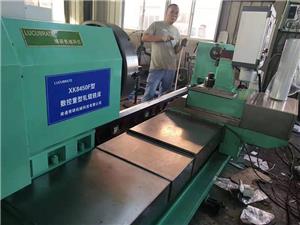
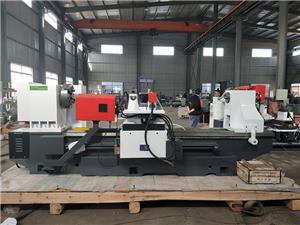
Even the best material can fail if not machined to exact specifications. Our rolls are machined on state-of-the-art CNC lathes and grinding machines, achieving tolerances within ±0.005 mm and surface finishes as low as Ra 0.1 μm. This precision ensures uniform contact and load distribution, minimizing stress concentrations that lead to cracking.
Quality control is integral to our process. We perform non-destructive testing (NDT) such as ultrasonic testing and magnetic particle inspection to detect internal defects. We also conduct hardness testing, dimensional inspection, and dynamic balancing. Each roll is accompanied by a comprehensive inspection report, ensuring full traceability.
3. Custom Alloy Formulations for Specific Applications
No two rolling mills are identical, and neither are our alloy rolls. We work closely with our customers to understand their specific challenges—whether it's rolling stainless steel, aluminum, copper, or specialty alloys. Based on this, we tailor the alloy composition, heat treatment, and roll profile to optimize performance.
For example, for a customer rolling high-silicon electrical steel, we developed a roll with a special carbide-enhanced surface that resists abrasion and maintains a consistent surface texture. For another customer producing ultra-thin foil, we designed a roll with a unique cooling channel arrangement to ensure uniform temperature distribution and prevent thermal crown.
Customer Success Stories: Real Results from Real Manufacturers
Our alloy rolls have transformed production lines around the world. Here are a few examples of how we've helped manufacturers overcome their challenges and achieve remarkable results.
1. Steel Giant in Pittsburgh, USA
A major steel producer in Pittsburgh was experiencing frequent roll failures in their hot strip mill. The rolls were lasting only 3 weeks, causing unplanned downtime and inconsistent strip quality. They turned to NANTONG LUCUBRATE MACHINERY TECHNICAL LTD. for a solution. We analyzed their operating conditions and recommended our high-chromium alloy roll with a specially designed cooling system. The result: roll life increased to 12 weeks, downtime reduced by 75%, and strip quality improved, leading to a 15% reduction in rejects. The plant manager commented, "These rolls have been a game-changer. We've not only saved on maintenance costs but also increased our production output significantly."
2. Aluminum Producer in Essen, Germany
An aluminum rolling mill in Essen was struggling with thermal cracking on their cold rolling rolls. The cracks were causing surface defects on the aluminum sheet, leading to customer complaints and returns. Our engineers developed a forged alloy steel roll with a proprietary heat treatment that increased thermal fatigue resistance. The new rolls lasted 2.5 times longer than the previous ones, and surface defects were virtually eliminated. The production manager said, "We've seen a 30% increase in roll life and a 20% reduction in energy consumption due to less frequent roll changes. The quality of our product has never been better."
3. Copper Recycler in Osaka, Japan
A copper recycling facility in Osaka was facing high wear rates on their rolling rolls due to abrasive copper scrap. The rolls needed reconditioning every 2 weeks, disrupting their continuous process. We supplied a roll made from a high-speed steel with a hardness of 65 HRC and a polished surface. The rolls now last 8 weeks between reconditioning, reducing downtime by 60% and increasing throughput by 25%. The plant supervisor remarked, "The durability of these rolls is outstanding. We can now plan our maintenance with confidence and keep our furnaces running at full capacity."
4. Specialty Alloy Maker in Sheffield, UK
A manufacturer of nickel-based superalloys in Sheffield required rolls that could withstand high temperatures and maintain precise dimensions. Our solution was a roll made from a custom alloy with high tungsten and cobalt content, designed for hot rolling at temperatures up to 1200°C. The rolls have exceeded expectations, with a life of 18 months compared to the previous 6 months. The technical director stated, "The precision and reliability of these rolls have allowed us to meet the stringent specifications of our aerospace customers. We couldn't be happier."
5. Automotive Supplier in Detroit, USA
A Detroit-based automotive supplier was producing advanced high-strength steel (AHSS) for vehicle bodies. Their existing rolls were wearing out rapidly due to the high hardness of AHSS. We developed a roll with a nanostructured carbide coating that provides exceptional wear resistance while maintaining a low friction coefficient. The rolls lasted 4 times longer than the previous ones, and the surface quality of the AHSS improved, reducing scrap by 18%. The procurement manager commented, "The cost savings from reduced roll changes and scrap have been substantial. NANTONG LUCUBRATE has become our go-to partner for critical rolls."
Applications and Partnerships: Where Alloy Rolls Make a Difference
Alloy rolls are essential in a wide range of metal forming processes. Our rolls are used in:
- Hot rolling mills for steel, aluminum, copper, and specialty alloys.
- Cold rolling mills for precision strip and foil.
- Pipe and tube mills for forming and sizing.
- Wire rod mills for high-speed rolling.
- Plate mills for heavy plate production.
We are proud to partner with leading equipment manufacturers and end-users globally. Our rolls are specified by OEMs such as Primetals Technologies, SMS group, and Danieli, and are used by major producers like ArcelorMittal, Nippon Steel, and Alcoa. These partnerships are built on our commitment to quality, innovation, and responsive customer service.
In addition, we collaborate with research institutions to stay at the forefront of alloy development. For instance, we are currently working with a European university on a project to develop rolls with self-lubricating properties for dry rolling applications, which could eliminate the need for lubricants and reduce environmental impact.
FAQ: What Engineers and Procurement Managers Ask
1. How do I choose the right alloy for my rolling mill?
Choosing the right alloy depends on several factors: the material being rolled, rolling temperature, speed, load, and desired surface finish. For hot rolling, high-chromium alloys are often preferred for their wear and thermal fatigue resistance. For cold rolling, forged steels with high hardness and toughness are suitable. Our engineers can help you select the optimal alloy based on your specific operating conditions. We also offer trial rolls to validate performance before full-scale adoption.
2. What is the typical lead time for custom alloy rolls?
Lead time varies depending on the complexity and size of the roll. For standard rolls, we can deliver in 6-8 weeks. For custom rolls with special alloys or coatings, lead time may be 10-14 weeks. We strive to meet our customers' timelines and can expedite orders in urgent cases. We also maintain a stock of semi-finished rolls for quick finishing.
3. Can alloy rolls be refurbished or reconditioned?
Yes, many alloy rolls can be reconditioned by grinding to remove surface cracks and restore dimensions. However, the number of times a roll can be reconditioned depends on its initial diameter and the depth of the hardened layer. We provide reconditioning services and can advise on whether a roll is suitable for reconditioning or should be replaced. Our reconditioned rolls are returned to like-new condition with full warranty.
4. How do you ensure dimensional accuracy and surface finish?
We use advanced CNC machining and grinding equipment to achieve precise dimensions and surface finishes. Our quality control includes in-process inspections and final verification using coordinate measuring machines (CMM) and surface profilometers. We can achieve tolerances within ±0.005 mm and surface roughness as low as Ra 0.1 μm. For critical applications, we can also provide rolls with mirror finishes.
5. What support do you offer for installation and troubleshooting?
We provide comprehensive support, including installation guidance, operation training, and troubleshooting. Our engineers are available for on-site assistance if needed. We also offer remote diagnostics and can analyze roll performance data to recommend improvements. Our goal is to ensure that our rolls perform optimally throughout their life cycle.
Conclusion: The Smart Choice for High-End Manufacturing
In the world of high-end manufacturing, alloy rolls are not just consumables—they are critical components that determine productivity, quality, and profitability. By choosing the right alloy rolls, you can minimize downtime, reduce waste, and achieve consistent, high-quality output. NANTONG LUCUBRATE MACHINERY TECHNICAL LTD. is dedicated to helping you achieve these goals with our advanced alloy rolls and engineering support.
Whether you are in steel, aluminum, copper, or specialty alloys, we have the expertise and experience to deliver rolls that exceed your expectations. Our customer success stories are a testament to our commitment to excellence. We invite you to join the ranks of satisfied manufacturers who have transformed their operations with our alloy rolls.
To learn more about how our alloy rolls can benefit your specific application, we encourage you to download our technical white paper, "Engineering Alloy Rolls for Extreme Conditions," which provides in-depth information on alloy selection, design, and maintenance. Alternatively, you can contact our sales engineers to discuss your requirements and request a quote. Let us help you take your manufacturing to the next level.