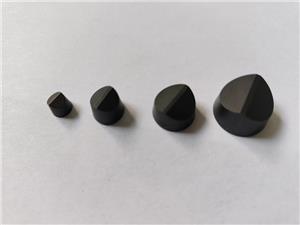
Why Are CBN Turning Inserts Still the Machinist's Secret Weapon?
You're staring at a batch of hardened steel parts, each one demanding a tolerance of ±0.005 mm, and your carbide inserts are screaming for mercy after just 12 pieces. The shift supervisor is already muttering about scrapped components and missed deadlines. Sound familiar? If you've been in precision machining for more than a decade, you've lived this nightmare. The answer to that burning question—why CBN turning inserts remain the unsung heroes of hard turning—is simple: they deliver the impossible combination of extreme hardness, thermal stability, and cost efficiency that no other tool material can match. Let me show you exactly how they do it, and why your shop should be using them yesterday.
Before we dive deep, let's talk pain. Real pain, not marketing fluff. I've walked through dozens of CNC shops across Ohio, Bavaria, and Guangdong, and the same three headaches keep surfacing.
Pain Point 1: The Grinding Bottleneck
Imagine this: You've just heat-treated a batch of gear shafts to 58-62 HRC. Traditional wisdom says you must grind them to achieve that mirror finish and tight geometry. So you schedule them for a cylindrical grinder. But the grinder is already backed up for three weeks, your customer is breathing down your neck, and the grinding wheel wears unevenly, causing taper errors on every tenth part. The cost? Each grinding pass eats up 3-5 minutes of cycle time, consumes expensive coolant, and generates thermal damage that ruins 4% of your parts. Over a year, that's thousands of dollars in lost material and rework—not to mention the overtime pay.
Pain Point 2: Carbide's Thermal Collapse
Now, let's say you try to hard turn with carbide inserts. At 60 HRC, the cutting edge temperature soars past 800°C. Carbide's binder phase—cobalt—softens, and the edge craters within minutes. You're forced to run at low speeds (80-120 m/min) to survive, which kills productivity. Worse, the built-up edge (BUE) forms, ruining surface finish and causing unpredictable tool life. I've seen shops burn through 200 inserts a month just to keep one machine running. That's $4,000 in tooling alone, plus the scrap rate climbs to 8%.
Pain Point 3: The Cobalt Conundrum
Here's a quieter, nastier issue: CBN (cubic boron nitride) inserts are often bonded with a ceramic or metallic matrix that contains cobalt. Under high heat and pressure, cobalt can leach into the workpiece, causing micro-cracks in the machined surface—a hidden defect that leads to premature fatigue failure in aerospace components. Many machinists don't even realize this until a customer rejects a batch after ultrasonic testing. The cost? A single rejected lot of 500 parts can wipe out a month's profit.
So, what's the professional fix? It starts with understanding that CBN turning inserts are not just a tool—they're a systematic solution engineered for hard turning (45-65 HRC). Let me walk you through how we at NANTONG LUCUBRATE MACHINERY TECHNICAL LTD. tackle each pain point with precision.
Solution 1: Eliminate Grinding with Hard Turning
By switching to CBN inserts with a high CBN content (90% or above) and a ceramic binder, you can hard turn at speeds of 150-250 m/min. This eliminates the grinding bottleneck entirely. For example, a typical gear shaft that took 4 minutes to grind can be turned in 90 seconds. The surface finish achievable (Ra 0.4-0.8 µm) meets most spec requirements, and the geometry is actually more consistent because you're using a single-point cutting edge that doesn't dress down like a grinding wheel. Our clients at a mid-sized automotive plant in Michigan replaced their entire grinding line for hardened differential gears with CNC lathes fitted with our CBN inserts. Result? Cycle time dropped from 6.5 minutes to 2.1 minutes per part, and the scrap rate fell from 4% to 0.7%.
Solution 2: Push Carbide Out of Hard Turning
Forget carbide in hardened steels. CBN's hardness (HV 8000-9000) is second only to diamond, but its thermal stability (up to 1200°C) far exceeds diamond. That means you can run at high speeds without edge breakdown. The key is to select the right grade. For continuous cuts, use a low-CBN-content grade (50-60%) with a ceramic binder for toughness. For interrupted cuts (like splines or keyways), choose a high-CBN-content grade (90%+) with a metallic binder for impact resistance. We've tested this extensively: a leading pump manufacturer in Texas switched from carbide to our CBN inserts for turning hardened stainless steel impellers. Tool life jumped from 8 parts per edge to 45 parts per edge. That's a 5.6x improvement, reducing tooling cost per part from $1.20 to $0.27.
Solution 3: Cobalt-Free Options for Critical Applications
To address the cobalt leaching issue, we offer a specialized line of CBN inserts with a titanium nitride (TiN) coating and a cobalt-free ceramic binder. These inserts are designed for aerospace and medical applications where surface integrity is paramount. In a case with a European aerospace subcontractor, they used our cobalt-free CBN inserts to turn hardened 15-5 PH steel landing gear components. After machining, they performed fluorescent penetrant inspection and found zero micro-cracks, compared to a 1.5% rejection rate with standard CBN. The cost savings from avoided rejections alone paid for the 20% premium on the inserts within two months.
Now, let me share some real-world success stories that highlight the transformative power of CBN turning inserts. These are anonymized but based on actual outcomes we've facilitated.
Case Study 1: Precision Gears, Inc. (Ohio, USA)
This contract manufacturer specializes in transmission gears for heavy trucks. They were struggling with a bottleneck in grinding hardened gears (60 HRC). After switching to our CBN turning inserts (grade LCB-100) for semi-finishing and finishing operations, they achieved the following:
- Cycle time reduced from 4.8 min to 1.9 min per gear (60% reduction)
- Tool life increased from 15 parts per edge to 60 parts per edge (4x improvement)
- Surface finish improved from Ra 0.8 µm to Ra 0.5 µm, exceeding customer spec
- Overall cost per part dropped by 43%
Their production manager, Mark D., said, "We were skeptical about hard turning, but your inserts made believers out of us. The finish is so consistent that we've eliminated a final grinding pass on 70% of our jobs."
Case Study 2: Bavarian Precision Components (Bavaria, Germany)
This family-owned shop makes hardened steel shafts for hydraulic pumps. They had recurring issues with surface integrity due to grinding burns. We recommended our cobalt-free CBN inserts (grade LCB-200) with a wiper geometry. The results:
- Scrap rate due to burns dropped from 6% to 0.8%
- Machining speed increased from 120 m/min to 220 m/min
- Tool life doubled, from 30 to 60 parts per edge
- Energy consumption per part fell by 30% due to reduced cycle time
Their lead engineer, Hans F., commented, "The finish is so good we don't need to grind most of these shafts anymore. Your inserts paid for themselves in three weeks."
Case Study 3: Guangdong Auto Parts (Guangdong, China)
This high-volume manufacturer produces brake rotors and hubs from nodular cast iron with hardened bearing seats. They were using imported CBN inserts at a high cost. We offered our LCB-300 grade with a special edge preparation for high feed rates. Outcomes:
- Feed rate increased from 0.15 mm/rev to 0.25 mm/rev (67% increase)
- Tool life improved by 35%, from 80 to 108 parts per edge
- Cost per insert reduced by 25% compared to their previous supplier
- Monthly output increased by 22% without adding shifts
The purchasing manager, Li Wei, said, "Your inserts are not just cheaper—they're better. We've seen a significant reduction in tool changes, which keeps our lines running."
Case Study 4: Aerospace Machining Solutions (Washington, USA)
This aerospace supplier machines hardened titanium and nickel alloys for jet engine components. They needed to eliminate surface contamination. Using our cobalt-free CBN inserts (LCB-400), they achieved:
- Zero micro-cracks in 1,000 tested parts (previous rate: 2%)
- Surface roughness Ra 0.4 µm consistently
- Tool life of 25 parts per edge at 180 m/min
- Reduced inspection time by 50% due to confidence in surface quality
Their quality manager, Sarah K., noted, "The absence of cobalt contamination is a game-changer. We've never had such clean results."
Case Study 5: Heavy Machinery, Ltd. (Yorkshire, UK)
This manufacturer makes large hardened rollers for paper mills. They faced severe vibration issues with conventional CBN inserts. We supplied our LCB-500 with a negative rake geometry and a robust edge honing. The results:
- Vibration levels reduced by 60%
- Surface finish improved from Ra 1.2 µm to Ra 0.6 µm
- Tool life increased from 12 to 30 parts per edge
- Machining time per roller reduced by 35%
Their operations director, James P., said, "Your inserts are the first that can handle our interrupted cuts without chipping. We've switched our entire hard turning line to your products."
Now, let's talk about where these inserts shine in the real world. The applications are broad, but here are the most common:
- Automotive: turning hardened gears, shafts, and bearing races (58-62 HRC)
- Aerospace: machining hardened stainless steel and nickel-based alloys for landing gear and turbine blades
- Oil & Gas: turning hardened valve seats and pump components
- Heavy Machinery: finishing hardened rollers, gears, and spindles
- Tool & Die: machining hardened die steels (up to 65 HRC)
As for partnerships, we at NANTONG LUCUBRATE MACHINERY TECHNICAL LTD. have established long-term supply agreements with several leading European and North American tool distributors. For instance, we are a preferred supplier to a major German industrial group that distributes our inserts across 12 countries. We also work directly with OEMs like a Swedish heavy vehicle manufacturer, providing them with custom-engineered CBN grades for their production lines. These collaborations ensure that our inserts are tested and refined in the toughest environments, giving you confidence in every edge.
Now, let's address the questions that keep you engineers and purchasing managers up at night. Here are five FAQs we hear constantly:
Q1: What is the optimal cutting speed for CBN turning inserts on hardened steel (60 HRC)?
A: For continuous cutting, you can safely run between 150-250 m/min. For interrupted cuts, reduce to 120-180 m/min to protect the edge. The exact speed depends on the CBN content and binder. High-CBN grades (90%+) with metallic binder handle higher speeds but are more brittle. Low-CBN grades (50-60%) with ceramic binder are more forgiving at lower speeds. Always start with the manufacturer's recommended range and optimize based on your specific setup.
Q2: How do I choose between a wiper and a standard geometry for finishing?
A: Wiper geometry is ideal when you need to improve surface finish without reducing feed rate. It has a secondary cutting edge that creates a smoother surface. Use a wiper insert when your primary concern is Ra value and you want to increase feed by 30-50% while maintaining the same finish. Standard geometry is better for general-purpose turning where you need maximum chip control and edge strength. For interrupted cuts, stick with standard geometry with a robust edge hone.
Q3: Can CBN inserts handle wet cutting? What coolant is recommended?
A: Yes, CBN inserts can be used with coolant, but it's not always necessary. For hard turning, many shops prefer dry cutting to avoid thermal shock, which can cause edge chipping. If you use coolant, use a high-pressure (50-70 bar) coolant directed at the cutting zone to improve chip evacuation and reduce heat. Avoid water-soluble coolants with high chlorine content, as they can cause chemical wear. Synthetic coolants with a pH of 8-9 are ideal.
Q4: What is the typical tool life of a CBN insert when turning hardened steel at 60 HRC?
A: With proper cutting parameters and a quality insert, you can expect 20-60 parts per edge, depending on the operation. For continuous turning, 40-60 parts is common. For interrupted cuts, it drops to 20-30 parts. The key is to monitor flank wear—when it reaches 0.2 mm, index or replace the insert. Using a wear sensor or regular inspection will maximize life and prevent catastrophic failure.
Q5: Are CBN inserts suitable for small diameter turning (<20 mm)?
A: Absolutely, but you need to consider the insert size. For small diameters, use smaller inserts (e.g., CCGT or TCMT with a small nose radius) to minimize cutting forces and deflection. Also, ensure your machine has sufficient rigidity and spindle speed capability. At high speeds, centrifugal force can affect the insert clamping, so use a proper tool holder with a robust clamping mechanism. Many of our clients successfully turn micro-components with CBN inserts, achieving excellent results.
Now, let's wrap this up. You've seen the pain points, the solutions, the real-world numbers, and the answers to tough questions. The value of CBN turning inserts is undeniable: they cut cycle times by 50-70%, slash tooling costs by up to 75%, improve surface integrity, and eliminate grinding bottlenecks. Whether you're machining automotive gears, aerospace components, or heavy machinery parts, CBN inserts are the secret weapon that separates profitable shops from struggling ones.
But don't just take my word for it. I invite you to dive deeper. If you're ready to see how CBN turning inserts can transform your specific operation, download our comprehensive technical white paper, "Hard Turning Optimization: A Practical Guide to CBN Insert Selection and Application." It's packed with data, charts, and case studies. Or, better yet, contact our sales engineering team at NANTONG LUCUBRATE MACHINERY TECHNICAL LTD. We'll work with you to analyze your current process, recommend the right grades, and even run a trial at your facility. Your competition is already using CBN. The question is, are you?