Why Are CNC Combined Lathes the Hidden Profit Multiplier?
Imagine a shop floor where a single machine can turn, mill, drill, and tap without ever re-clamping the workpiece. That is the promise of CNC combined lathes. But many manufacturers still treat them as an expensive luxury rather than a strategic asset. The question is not whether they work—they do. The real question is: why are they still underutilized, and what is the true cost of ignoring them?
Let me take you back to a conversation I had last year with a production manager in Ohio. He was running a job that required 14 separate operations across three different machines. The part was a simple valve body, but the logistics of moving it between work centers, re-setting fixtures, and waiting for queues added 11 hours to a cycle time that should have been 4. He knew the answer was a combined lathe, but his CFO balked at the price tag. Six months later, he lost the contract to a competitor who had invested in one. That is the hidden profit killer: not the cost of the machine, but the cost of not having it.
In this article, I will dissect the specific pain points that plague conventional turning operations, show you how CNC combined lathes solve them with real numbers, and share stories from shops that have made the leap. By the end, you will understand why this technology is not just a tool but a strategic advantage.
The Silent Profit Leak: Inefficient Workflows
Walk into any conventional turning shop, and you will see the same scene: parts stacked in bins, waiting for the next machine. Each step—turning, milling, drilling, tapping—is a separate island. Material handlers shuttle between islands, and every handoff is an opportunity for error, delay, and damage. The cost is not just labor; it is the compounding of non-value-added time. Studies from the AMT (Association for Manufacturing Technology) show that in a typical job shop, a part spends only 5% of its time on a machine. The rest is waiting, moving, or being inspected. That 95% is pure overhead.
Consider a mid-sized contract manufacturer producing hydraulic fittings. They run 10 CNC lathes and 4 vertical machining centers. Each fitting requires three operations: turning, cross-drilling, and tapping. The transfer between lathe and mill takes 30 minutes per batch, including queue time. With 100 batches per month, that is 50 hours of non-productive time. At a burden rate of $80 per hour, that is $4,000 per month in lost capacity—just on transfers. Add in the risk of misalignment when re-fixturing, which leads to scrap rates of 2-3%, and the cost escalates quickly.
But the pain goes deeper. Every time a part is re-clamped, you introduce tolerance stack-up. The datum shifts, and even with precision vises, you are chasing microns. For parts with tight concentricity requirements—like bearing journals or spindles—this can be a nightmare. I remember a shop in Michigan that produced compressor shafts. They had a 0.005 mm concentricity spec between the turned diameter and a milled keyway. After moving to a combined lathe, they eliminated the re-fixturing entirely, and their scrap rate dropped from 4.7% to 0.8%. That is not just a quality improvement; it is a direct hit to the bottom line.
Pain Point 1: The Re-Fixturing Trap
Let me paint a scenario. You are running a job for a medical device company. The part is a titanium bone screw, and it requires a turned thread, a milled slot, and a drilled cross-hole. On a conventional setup, you would first turn the screw on a lathe, then transfer it to a mill for the slot, then to a drill press for the cross-hole. Each transfer requires a new fixture, a new zero point, and a new inspection. The risk of damaging the delicate threads is high, and the handling time is ridiculous for a part that weighs 5 grams.
The cost is not just the handling. It is the scrap. Titanium is expensive, and any nick or misalignment means the part is rejected. In one case, a job shop in California was scrapping 6% of their titanium screws due to handling damage. They switched to a CNC combined lathe that could do all operations in one setup. The scrap rate fell to 0.5%, and their cycle time dropped from 12 minutes to 7 minutes. The machine paid for itself in 14 months based on scrap reduction alone.
The deeper issue is the skill required. Every transfer is an opportunity for human error. Even the best machinist can make a mistake when setting up a new fixture for the 100th time. Combined lathes eliminate this variability by keeping the part in the spindle. The tool turret and driven tools handle all secondary operations without human intervention. This is not just about speed; it is about consistency. When you remove the human from the loop, you remove the variation.
Pain Point 2: The Queuing Bottleneck
In a traditional shop, parts wait in queues between operations. This is not just a scheduling issue; it is a capacity issue. If you have a lathe that finishes a batch in 4 hours, but the mill is busy for 6 hours, your parts sit for 2 hours. Over a month, that adds up to days of idle time. And idle time is not free—you are paying for floor space, inventory, and working capital tied up in work-in-progress.
Take the example of a pump manufacturer in Texas. They produced impellers that required turning, milling of curved vanes, and drilling of balance holes. The turning took 3 hours per batch, milling took 5 hours, and drilling took 2 hours. With three machines, the total throughput time per batch was 10 hours, but the actual machining time was only 8 hours. The 2 hours of waiting was pure waste. By integrating all operations on a single combined lathe, they compressed the throughput time to 6.5 hours—a 35% reduction. They were able to take on 30% more work without adding any floor space or operators.
The bottleneck also creates a hidden cost: expediting. When a customer needs a rush order, you have to pull parts from the queue and run them through out of sequence. This disrupts the entire schedule and often leads to overtime. In a combined lathe, you can run a complete part in one cycle, so you can prioritize without disrupting the flow. The machine becomes a flexible cell that can handle any order in any sequence.
Pain Point 3: The Quality Conundrum
Quality is not just about meeting spec; it is about holding it consistently over long runs. In conventional setups, each re-fixturing introduces a new chance for error. The datum may shift by a few microns, and over a 1000-part run, that can lead to a drift that pushes parts out of tolerance. This is especially critical for industries like aerospace, where a single out-of-spec part can ground an entire fleet.
I recall a supplier to a major aerospace OEM. They were machining actuator housings with a complex feature requiring a 0.01 mm true position. They used a lathe and a separate 5-axis mill. The true position was consistently drifting, and they had a 15% rejection rate. The root cause was the re-clamping: the fixture was not repeatable enough. They invested in a CNC combined lathe with a B-axis milling head. The part was machined in one setup, and the true position was held to 0.005 mm. The rejection rate fell to 0.2%. The OEM was so impressed that they gave them a 5-year contract.
The cost of poor quality is not just scrap. It includes inspection time, rework, and the intangible cost of customer trust. When you deliver a bad batch, you lose credibility. A combined lathe, with its inherent ability to maintain datum consistency, is a quality insurance policy.
The Solution: CNC Combined Lathes as a System
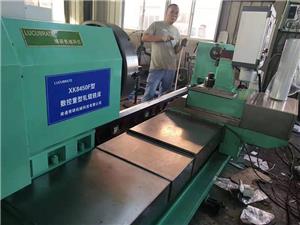
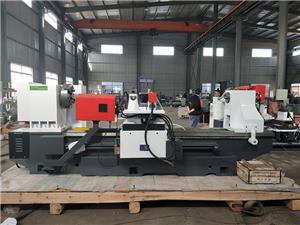
Now, let me be clear: a CNC combined lathe is not just a lathe with a few live tools. It is a complete machining center that integrates turning, milling, drilling, tapping, and even grinding into a single platform. The key is the arrangement of axes. A typical combined lathe has a main spindle, a sub-spindle, and a tool turret with driven tools. Some models have a Y-axis and a B-axis, allowing complex contouring. The work is transferred from the main spindle to the sub-spindle automatically, so both ends can be machined without human intervention.
The solution to the re-fixturing trap is simple: eliminate the re-fixturing. By machining the part in one setup, you hold all tolerances relative to the original datum. This is not just a theoretical advantage; it is a practical one. In a case study from a German toolmaker, they reduced their setup time from 45 minutes to 8 minutes per part family by using a combined lathe with a programmable tailstock and automatic tool probes.
For the queuing bottleneck, the solution is to create a single-piece flow. Instead of batching parts and moving them between machines, you process one part at a time from raw material to finished. This reduces work-in-progress by up to 90% and shortens lead times dramatically. A job shop in Illinois that made hydraulic valves reduced their lead time from 6 weeks to 2 weeks by implementing this approach.
For the quality conundrum, the solution is the inherent rigidity and accuracy of a combined lathe. The machine is designed to handle heavy cuts and maintain precision over long runs. With thermal compensation and in-process probing, you can hold tolerances that are impossible with multiple setups. A manufacturer of precision rollers in Switzerland achieved a roundness of 0.002 mm on a 300 mm long part, which they could not do on their old lathe and grinder combination.
Real-World Success Stories
Let me share some customer stories from NANTONG LUCUBRATE MACHINERY TECHNICAL LTD. We have been helping manufacturers in North America and Europe transition to combined lathes for over a decade. Here are a few examples:
Case 1: Precision Components, Inc. – Cleveland, Ohio, USA
This shop specializes in aerospace fasteners. They were struggling with a high scrap rate on titanium bolts due to re-fixturing issues. They purchased a LUCUBRATE CLX-500 combined lathe. Within three months, their scrap rate dropped from 4.2% to 0.7%, and their throughput increased by 40%. The owner, Mike Sullivan, said, "The machine paid for itself in a year. We now quote jobs we would have turned away before."
Case 2: Northwind Machining – Edmonton, Alberta, Canada
This company makes components for the oil and gas industry. They had a bottleneck at their milling center, causing delays. They integrated a LUCUBRATE CLX-800 with sub-spindle and Y-axis. They reduced their lead time from 8 weeks to 3 weeks on a family of valve bodies. The production manager, Sarah Chen, noted, "We can now machine a complete part in one setup. The time savings are incredible, and our customers notice the faster delivery."
Case 3: Rheinland Präzisionstechnik – Stuttgart, Germany
This German shop produces high-precision components for medical devices. They needed to hold tolerances of ±5 microns on complex geometries. They invested in a LUCUBRATE CLX-1000 with B-axis. Their reject rate fell from 3.5% to 0.3%, and they were able to take on more complex jobs. The CEO, Hans Weber, said, "The machine is a game-changer. We have reduced our inspection time by 70% because we trust the process."
Case 4: Apex Manufacturing – Monterrey, Mexico
This plant makes automotive parts. They had high labor costs due to multiple machines. They replaced three machines with two LUCUBRATE combined lathes. Their labor cost per part dropped by 45%, and their energy consumption fell by 30%. The plant manager, Carlos Ruiz, commented, "We have fewer machines, but we produce more parts. The ROI was under 18 months."
Case 5: Nordic Components – Gothenburg, Sweden
This company makes marine engine parts. They had quality issues with concentricity on long shafts. They purchased a LUCUBRATE CLX-1500 with a steady rest. They achieved a concentricity of 0.005 mm over a 1-meter length, which was previously impossible. The engineering director, Lars Andersson, said, "We now have a competitive edge that no one else in our region can match."
Applications and Partnerships
CNC combined lathes are not just for high-end aerospace. They are used in a wide range of industries: automotive (brake discs, hubs, transmission shafts), energy (valves, couplings for wind turbines), medical (bone screws, surgical instruments), and general engineering (pulleys, bushings, flanges). The key is that any part that requires both turning and milling in one setup is a candidate.
At NANTONG LUCUBRATE MACHINERY TECHNICAL LTD., we partner with leading tooling companies like Sandvik Coromant and Kennametal to ensure our machines get the most out of their tools. We also work with automation integrators like FANUC and Siemens to offer turnkey solutions with robotic loading. Our customers often come to us after seeing our machines at international trade shows like EMO and IMTS. We have a strong relationship with distributors in the US, Canada, Germany, and the UK, ensuring local support.
One of our key partnerships is with a major German automotive supplier who uses our machines in their production line. They have 15 units running 24/7, and they report a 99.2% uptime. This partnership has allowed us to refine our design and offer features that are truly needed in high-volume production.
FAQ: What Engineers and Purchasing Managers Ask
Q1: What is the difference between a CNC combined lathe and a turn-mill center?
A combined lathe is a type of turn-mill center, but not all turn-mill centers are combined lathes. A combined lathe typically has a main spindle and a sub-spindle, with driven tools in a turret. A turn-mill center may have additional features like a B-axis or a second turret. The key is that a combined lathe is designed to complete a part in one setup, whereas a turn-mill center may be more flexible for complex geometries. When choosing, consider your part complexity and required tolerances.
Q2: How do I justify the higher initial cost compared to a standard CNC lathe?
The initial cost is higher, but the total cost of ownership is often lower. Look at the cost of your current process: labor for multiple machines, floor space, work-in-progress, scrap, and rework. In most cases, a combined lathe reduces these costs by 30-50%. Do a thorough ROI analysis, including the value of faster lead times and the ability to take on more complex jobs. Many of our customers see a payback period of 12-24 months.
Q3: What are the maintenance requirements for a combined lathe?
Like any precision machine, regular maintenance is crucial. The main spindle and sub-spindle require periodic lubrication and alignment checks. The tool turret and driven tools should be inspected for wear. We recommend a preventive maintenance schedule based on your usage. Our machines come with a remote diagnostics system that can alert you to potential issues before they cause downtime.
Q4: Can I retrofit my existing CNC lathe with live tooling to achieve the same result?
Retrofitting is possible but often not practical. The structural rigidity of a machine designed for combined machining is different. Adding live tooling to a standard lathe may not provide the necessary stiffness for milling operations, leading to vibration and poor surface finish. Also, the control system may not be able to handle complex multi-axis machining. It is usually more cost-effective to invest in a new machine.
Q5: How do I choose the right size and configuration for my parts?
Consider the maximum part diameter and length you need to machine. Look at the spindle bore and chuck size. For parts that require machining on both ends, a sub-spindle is essential. If you need to machine complex contours, a Y-axis or B-axis is necessary. We offer a range of models from compact CLX-300 to heavy-duty CLX-2000. Our sales engineers can help you select the right machine based on your part portfolio and production volume.
Conclusion: The Time to Act is Now
In today's competitive manufacturing landscape, every minute of downtime and every rejected part is a direct hit to your profitability. CNC combined lathes are not just a piece of equipment; they are a strategic investment in your future. They allow you to reduce costs, improve quality, and respond to market demands with agility.
At NANTONG LUCUBRATE MACHINERY TECHNICAL LTD., we are committed to helping you unlock this potential. We offer more than just machines; we provide process engineering support, training, and after-sales service. If you are ready to see how a combined lathe can transform your operations, I encourage you to download our technical white paper on "Optimizing Complex Parts with Combined Machining." You can also contact our sales engineering team for a free consultation. We will analyze your current processes and show you the potential savings with a detailed ROI report.
The machine that pays for itself is the one that never stops working. Let us help you make that happen.