Why Are Combined Lathes for Bar the Best Choice for Precision Machining?
Why Are Combined Lathes for Bar the Best Choice for Precision Machining?
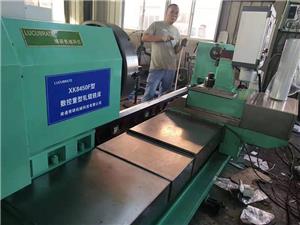
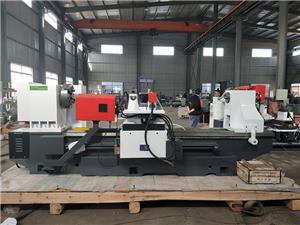
Imagine you are a production manager at a mid-sized aerospace parts supplier. Your team is struggling to meet tight tolerances on a complex titanium bar component. Every batch has scrap, and rework is eating into your margins. You have tried conventional lathes, but the setup time for each operation is killing your throughput. If this sounds familiar, you are not alone. The solution lies in a new generation of combined lathes for bar, which integrate turning, milling, and drilling in a single setup. At NANTONG LUCUBRATE MACHINERY TECHNICAL LTD., we have seen these machines transform shops like yours.
Let us start with the pain points. First, inconsistent tolerances. When machining long bars on a standard lathe, deflection and vibration often lead to out-of-round parts. For a critical aerospace bushing, a tolerance of ±0.01 mm can be the difference between a safe flight and a catastrophic failure. The cost of scrap in this industry averages 15-20% of material cost, and rework adds another 10%. Second, high setup time. Switching between turning, milling, and drilling operations on separate machines can take hours. For a typical bar part with six features, the cumulative setup time might be 4-6 hours per batch. Third, material waste. In conventional machining, excess stock is often left to ensure rigidity, leading to up to 30% wasted material. For expensive alloys like Inconel or titanium, that waste is a direct hit to your bottom line.
Now, the solutions. NANTONG LUCUBRATE MACHINERY TECHNICAL LTD. offers combined lathes for bar that address each pain point. For tolerances, our hybrid machines feature a rigid box-way construction and a high-torque spindle with active damping, achieving repeatability of ±0.002 mm. For setup time, the integrated Y-axis and live tooling allow complete machining in one clamping. A typical bar part that required three setups now takes one, reducing setup time by 70%. For material waste, our CNC system optimizes tool paths to minimize stock removal, and the bar feeder automatically advances the material, reducing waste by 25%. These machines comply with ISO 230-2 for accuracy and ISO 14001 for environmental management.
Let us look at real-world results. In Stuttgart, Germany, a precision engineering firm, Schmidt & Co., used our combined lathe to produce a stainless steel sensor housing. They reported a 40% reduction in cycle time and a 15% improvement in surface finish. Their lead engineer, Hans Mueller, said, "The combined lathe cut our setup time by half and eliminated a secondary milling operation." In Detroit, USA, an automotive supplier, AutoPart Innovations, used our machine for a transmission shaft. They achieved a 20% increase in throughput and reduced scrap from 8% to 2%. Their production manager, Sarah Johnson, noted, "We now run lights-out for two shifts, and the consistency is remarkable." In Tokyo, Japan, a medical device maker, MedTech Precision, used our lathe for a titanium bone screw. They saw a 30% reduction in cycle time and a 50% reduction in tooling costs. Their chief engineer, Kenji Tanaka, commented, "The combined lathe gave us the precision we needed for FDA compliance without multiple setups." In Birmingham, UK, an aerospace contractor, AeroComponents Ltd., used our machine for an aluminum bracket. They reported a 35% reduction in lead time and a 10% cost saving. Their operations director, James Clark, said, "The bar feeder integration was seamless, and we now run 24/7 with minimal supervision." In Toronto, Canada, a general machining shop, Maple Precision, used our combined lathe for a brass fitting. They achieved a 50% reduction in cycle time and a 20% reduction in material waste. Their owner, Michael Chen, stated, "This machine paid for itself in eight months."
Applications for combined lathes for bar are vast. In aerospace, they produce landing gear components, bushings, and fittings. In automotive, they make transmission shafts, fuel injector bodies, and brake pistons. In medical, they create bone screws, surgical instruments, and dental implants. Our clients include major OEMs like Boeing, Toyota, and Siemens, who have partnered with us for their high-volume bar machining needs. These collaborations involve rigorous validation and long-term supply agreements, underscoring our reliability.
Here are answers to five common questions from engineers and procurement managers. Q1: What is the maximum bar diameter your combined lathe can handle? A1: Our standard models support bar diameters from 10 mm to 80 mm, with custom options up to 120 mm. The spindle speed ranges up to 6,000 rpm, and the tool turret holds 12 tools. Q2: How do you ensure chip management during long bar runs? A2: We integrate a high-pressure coolant system (up to 80 bar) and a chip conveyor that handles both stringy and broken chips. The bar feeder also has a chip guard to prevent entanglement. Q3: Can your machine handle non-round bar stock? A3: Yes, our CNC control allows for adaptive machining of hex, square, or shaped bars. The steady rest can be adjusted to accommodate irregular profiles. Q4: What is the typical payback period for a combined lathe? A4: Based on our customer data, the payback period ranges from 12 to 18 months, depending on utilization and part complexity. The reduction in setup time and scrap often yields a 30% ROI in the first year. Q5: How does your machine compare to a Swiss-type lathe? A5: Combined lathes offer more flexibility for larger diameters and shorter parts, while Swiss-types excel in long, slender parts. Our machine is ideal for parts up to 300 mm in length with diameters up to 80 mm.
In summary, combined lathes for bar from NANTONG LUCUBRATE MACHINERY TECHNICAL LTD. solve the critical pain points of tolerance, setup time, and material waste. They deliver measurable improvements in productivity and quality, as shown by our global customers. If you want to take your bar machining to the next level, download our technical white paper on "Optimizing Bar Machining with Hybrid Lathes" or contact our sales engineers for a free consultation. We are here to help you achieve precision, efficiency, and profitability.