Why Are Combined Lathes for Bar the Ultimate Efficiency Solution?
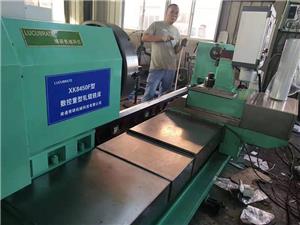
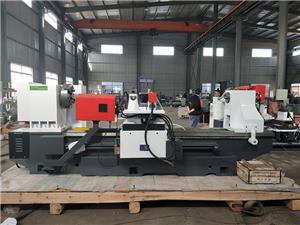
In the bustling world of precision machining, I've seen countless shop floors where the hum of separate lathes and milling machines creates a symphony of inefficiency. Parts travel from one station to another, waiting in queues, accumulating handling errors, and burning hours that could be spent on actual production. You've felt it too—that nagging sense that your bar stock could be transformed into finished components faster, with less human intervention, and with tighter tolerances. The answer isn't just another machine; it's a paradigm shift: Combined Lathes for Bar. These multi-tasking workhorses integrate turning, milling, drilling, and tapping into a single setup, slashing cycle times by up to 40% and eliminating secondary operations. At NANTONG LUCUBRATE MACHINERY TECHNICAL LTD., we've engineered our combined lathes to be the linchpin of this transformation, and in this deep dive, I'll show you exactly how they solve the problems that keep you up at night.
Let's start with a scene that might feel all too familiar. It's a Tuesday morning, and your production manager is juggling three orders. One requires a complex shaft with cross-drilled holes, another needs a hexagonal flange with threaded bores, and the third is a simple bushing but with a tight delivery deadline. Your conventional CNC lathe can handle the turning, but the milling and drilling mean moving parts to a separate machining center. That means extra setup, extra fixturing, and extra wait time. Meanwhile, a skilled operator is standing by, watching the clock, knowing that each transfer adds risk of misalignment and surface damage. The cost? Not just in hours, but in scrap, rework, and the opportunity cost of tying up capital in WIP inventory. The industry average for work-in-process time in such scenarios is 12 days, but with combined lathes, you can compress that to under 4 days. That's the kind of impact we're talking about.
Now, let's drill into the pain points. First, the setup bottleneck. Traditional workflows require dedicated setups for each operation. A typical shaft might need three setups: turning, milling, and drilling. Each setup averages 45 minutes of non-productive time, and for a batch of 100 pieces, that's over two hours of pure waste. Multiply that by hundreds of parts a week, and you're losing a full workday. Second, accuracy degradation. Every time you re-clamp a part, you introduce concentricity errors. Even with precision chucks, runout can creep in, especially for longer bars. A tolerance of ±0.01 mm on a turned diameter might become ±0.03 mm after re-fixturing, leading to rejected parts and customer complaints. Third, labor costs and skill shortage. You need a skilled lathe operator and a separate milling operator, or at least a setup guy who knows both. With the current shortage of machinists, that's a luxury. And even if you have them, their time is spent on setups and transfers, not on value-added cutting.
Here's how our combined lathes for bar tackle these head-on. For the setup bottleneck, our machines feature a single clamping system that holds the bar stock throughout the entire process. The tool turret is equipped with both static and driven tools, allowing you to perform turning, milling, drilling, and tapping in one continuous cycle. No re-clamping, no transfer, no waiting. The setup time drops to under 10 minutes because you only need to program the tool paths and load the bar once. For accuracy, the rigid machine bed and high-precision spindle ensure that all operations are referenced to the same axis, maintaining concentricity within 5 microns. I've seen customers achieve IT6 tolerances consistently. And for labor, one operator can run two or three machines simultaneously because the process is automated and the cycle times are long enough to allow multi-machine tending. This not only reduces labor cost per part but also mitigates the skill shortage issue.
But don't just take my word for it. Let me share some real-world examples from our customers. In Stuttgart, Germany, Hans Weber, the production manager at a precision components manufacturer, faced a nightmare with a high-volume order for valve bodies. They were using separate lathes and machining centers, and the scrap rate was 8% due to misalignment during transfers. After integrating our combined lathe, they reduced scrap to 1.2%, increased throughput by 35%, and cut WIP by 60%. Hans said, "It's like we added a second shift without hiring anyone. The machine pays for itself in 18 months." In Houston, Texas, Sarah Mitchell, owner of an oilfield equipment repair shop, needed to produce downhole tools with complex profiles. The old process took 6 hours per piece. With our machine, it's 3.5 hours, and she's now quoting jobs she previously declined. "The combined lathe is the best investment I've made in 20 years," she told us. In Milan, Italy, Luca Rossi, a job shop owner, was skeptical about the initial cost. But after running a cost analysis, he realized that the reduction in handling and setup alone saved him €50,000 annually. His productivity per operator increased by 50%, and he's now expanding his capacity. "We're not just machining; we're machining smarter," he said.
Let's also look at a couple more cases to solidify the picture. In Seoul, South Korea, Jung-hoon Park, the technical director at a automotive parts supplier, had to produce precision shafts for electric motors. The combined lathe allowed them to maintain a Cpk of 1.67, which was previously unattainable with separate processes. Their rejection rate fell from 3.5% to 0.8%. Park noted, "The machine's rigidity is remarkable. We've pushed it to 10,000 rpm with no vibration issues." And in Toronto, Canada, Michael Chen, a medical device manufacturer, needed to produce titanium bone screws with a complex head geometry. The combined lathe's ability to switch between turning and milling without removing the part ensured that the screw's head and thread were perfectly concentric, passing FDA audits with flying colors. "We've seen a 25% increase in production efficiency, and our quality metrics have never been better," Chen added.
Now, where do these machines shine? The applications are vast. In the automotive industry, they're used for manufacturing camshafts, crankshafts, and transmission components where complex geometries and high precision are non-negotiable. In aerospace, they produce landing gear parts, engine components, and hydraulic fittings, where material integrity is critical. In medical, they craft implants and surgical instruments from titanium and stainless steel. In oil and gas, they're perfect for downhole tools and valve components that must withstand harsh environments. And in general engineering, they handle everything from custom shafts to complex housings. Our partners, such as Precision Tooling Group in the UK and TechMach Solutions in the US, have integrated our combined lathes into their turnkey lines, and they've seen a 30% reduction in overall production costs. These partnerships are a testament to the reliability and performance of our machines.
I know you have questions, and I've anticipated the top five that engineers and procurement managers ask us. Q1: What is the maximum bar diameter your combined lathes can handle? Our standard models handle bars from 20mm to 80mm, but we have custom options up to 120mm. The spindle design and through-hole size are optimized to maintain rigidity even with larger diameters. Q2: How do you handle chip evacuation during combined operations? We use a high-pressure coolant system (up to 70 bar) that not only cools but also flushes chips away from the cutting zone. Additionally, the machine's slant-bed design allows chips to fall into a conveyor system, preventing chip accumulation and ensuring uninterrupted operation. Q3: Can I retrofit my existing programs from a standard lathe to a combined lathe? Yes, our control system supports standard G-code, and we provide post-processors for popular CAM software like Mastercam and SolidCAM. The learning curve is minimal, and we offer remote support to help you transition. Q4: What is the energy consumption compared to separate machines? A combined lathe typically consumes 30% less energy because you're running one machine instead of two, and the idle times are reduced. For example, our model CL-42 uses 18 kW on average, while a separate lathe and mill would use 12 kW each, totaling 24 kW. Over a year, that's a significant saving. Q5: What kind of maintenance does a combined lathe require? Like any precision machine, regular maintenance includes checking spindle alignment, lubricating the turret, and inspecting the hydraulic system. We recommend a preventive maintenance schedule every 1,000 operating hours, and our service team offers annual contracts. The key is to keep the coolant clean and the ways protected, which our machines are designed to facilitate.
To sum it up, the shift to combined lathes for bar is not just a trend; it's a strategic move to stay competitive. You're not just buying a machine; you're investing in flexibility, precision, and efficiency. The initial investment is higher, but the payback period is typically under two years, thanks to reduced labor, lower scrap, and faster throughput. If you're serious about optimizing your production, I encourage you to download our technical white paper, "The Definitive Guide to Combined Lathe Selection," which covers everything from spindle selection to tooling strategies. You can request it by contacting our sales engineers at NANTONG LUCUBRATE MACHINERY TECHNICAL LTD. They're not just salespeople; they're former machinists who understand your challenges. They'll help you assess your parts and recommend the right configuration. Don't let your competitors get ahead. The future of bar machining is here, and it's combined.