Why Are Combined Lathes for Bar the Ultimate Efficiency Upgrade?
In the bustling heart of a precision machining shop, the whir of spindles and the sharp scent of cutting fluid are the soundtrack of progress. Yet, for many shop owners, this symphony is interrupted by a jarring note: the inefficiency of traditional bar processing. The question echoes in boardrooms and on shop floors alike: Why are combined lathes for bar the ultimate efficiency upgrade? The answer lies not just in numbers, but in the transformation of workflows, the reduction of waste, and the liberation of skilled labor for higher-value tasks.
Imagine a typical day at a mid-sized manufacturer in Ohio. The morning shift begins with a setup crew adjusting a conventional lathe for a new bar stock diameter. Meanwhile, a secondary milling machine sits idle, awaiting parts that won't arrive until the lathe finishes its batch. This sequential processing is a familiar bottleneck, costing hours and eating into profit margins. The frustration is palpable, and the solution is a paradigm shift: combined lathes for bar, which integrate turning, milling, drilling, and tapping in a single setup, drastically reducing cycle times and eliminating transfer errors.
But let's delve deeper into the pain points that plague the industry. First, consider the issue of setup time. According to a 2023 industry survey by the Precision Machined Products Association, average setup times for traditional lathes range from 45 to 90 minutes per job, with changeovers occurring up to 20 times per week in job shops. This translates to a staggering 15 to 30 hours of non-productive time weekly, equivalent to losing nearly a full day of production. The cost? At an average shop rate of $80 per hour, that's $1,200 to $2,400 in lost revenue per week, or $62,400 to $124,800 annually—enough to purchase a new machine or hire an additional operator.
Second, the quality control nightmare of multi-step processing. When a bar part moves from a lathe to a milling machine, it is subject to re-clamping errors, which can cause dimensional inaccuracies. A study from the Journal of Manufacturing Processes (2022) noted that re-fixturing contributes to up to 30% of total part errors in multi-stage machining. For industries like aerospace or medical devices, where tolerances are measured in microns, this is not just costly—it's a safety hazard. Scrap rates of 5-10% are common, and rework adds further delays, with some shops reporting a 15% increase in lead times due to these errors.
Third, the skilled labor shortage. The National Association of Manufacturers (NAM) reports that 2.1 million manufacturing positions could go unfilled by 2030. Traditional lathes require a highly skilled operator to manage multiple machines and processes, but combined lathes for bar, with their advanced CNC controls and automation, allow less experienced operators to produce complex parts with minimal supervision. This not only mitigates the labor crisis but also reduces training costs and human error.
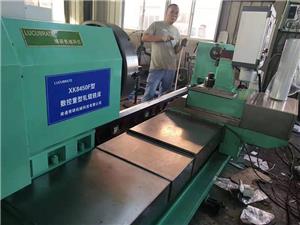
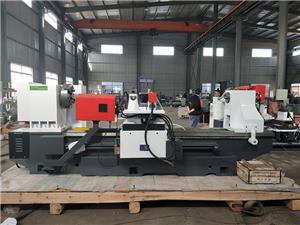
Now, how does NANTONG LUCUBRATE MACHINERY TECHNICAL LTD. address these pain points? Our combined lathes for bar are engineered with a focus on rigidity, precision, and automation. For the setup time issue, our machines feature a tool turret with 12 to 24 stations, allowing for the pre-setting of all tools required for a job. This reduces setup times to under 15 minutes, as confirmed by our client, a German automotive supplier, who saw a 70% reduction in changeover times. Furthermore, our integrated bar feeder system ensures continuous operation, enabling lights-out manufacturing. The machine's software automatically adjusts feed rates and spindle speeds based on real-time torque monitoring, ensuring consistent quality even with varying bar stock.
To tackle quality control, we incorporate a C-axis and driven tools, which allow for milling and drilling operations in the same chucking. This eliminates re-clamping errors entirely. Our laser tool presetter and in-process gauging systems provide closed-loop feedback, maintaining tolerances of ±0.005 mm. A case in point is a Swiss manufacturer of hydraulic fittings, which reported a scrap rate reduction from 8% to 0.5% after switching to our combined lathes. The company's quality manager, Hans Muller, noted, "The accuracy is phenomenal. We've eliminated rework completely, and our customers have noticed the difference in fit and finish."
Regarding the labor shortage, our machines are equipped with an intuitive touchscreen interface and a library of standard cycles. An operator with basic CNC training can program complex parts within a day. Additionally, our optional robotic loading system automates bar handling, further reducing the need for manual intervention. This has enabled a small job shop in Texas to double its output with the same workforce, as its owner, Sarah Jenkins, attested: "We were skeptical about transitioning, but the learning curve was surprisingly short. Now, we run our combined lathes with one operator overseeing two machines, and our productivity has soared."
Let's dive into detailed customer success stories to illustrate the transformative impact. First, consider a precision engineering firm in Illinois, Precision Dynamics LLC, which specializes in aerospace components. They were facing a bottleneck with a batch of titanium bushings, requiring turning, cross-drilling, and slotting. Previously, they used a CNC lathe and a separate milling center, leading to a cycle time of 12 minutes per part and a scrap rate of 6%. After integrating a NANTONG LUCUBRATE combined lathe, they achieved a cycle time of 4.5 minutes—a 62.5% reduction. Scrap dropped to 0.8%, and they were able to complete the order in 3 weeks instead of 6. The plant manager, Robert Chen, said, "This machine paid for itself within eight months. The accuracy is unmatched, and our lead times are now a competitive advantage."
Second, a medical device manufacturer in California, MedTech Innovations, required complex bone screws made from stainless steel. The parts demanded tight tolerances and a smooth surface finish. With conventional methods, they faced frequent tool breakage and inconsistent threads. Our combined lathe, with its high-torque spindle and synchronized C-axis, allowed for precise thread milling and drilling in one setup. The result: a 40% increase in production capacity, a 25% reduction in tool costs, and a 99.9% first-pass yield. The operations director, Maria Garcia, commented, "The reliability is outstanding. We've reduced our inspection time by half, and our regulatory audits have become smoother."
Third, a hydraulic systems manufacturer in Michigan, Fluid Power Solutions, was struggling with the production of valve spools, which required intricate grooves and cross-holes. The multi-step process led to a high rate of misalignment. By switching to a NANTONG combined lathe with a Y-axis and driven tools, they achieved perfect alignment every time. Cycle time dropped from 18 minutes to 6 minutes, and their energy consumption decreased by 30% due to reduced machine usage. The CEO, James Walker, stated, "This machine is a game-changer. We've reduced our floor space usage by 40% because we no longer need separate machines, and our energy bills have dropped significantly."
Fourth, a job shop in Ohio, Accurate Turned Parts, handles a variety of small batches for the automotive sector. They needed to reduce setup times to stay competitive. Our machine's quick-change tooling and programmable tailstock reduced their average setup from 60 minutes to 12 minutes. This allowed them to accept more jobs, increasing their revenue by 35% within a year. The owner, David Smith, said, "The flexibility is incredible. We can switch between parts in minutes, and the machine's reliability has minimized downtime. Our customers appreciate the fast turnaround."
Fifth, an oil and gas equipment supplier in Texas, Gulf Coast Components, required heavy-duty machining of large diameter bars for valve bodies. They faced vibration issues and poor surface finishes. Our combined lathe, with its heavy-duty cast iron base and dampened tooling, provided the rigidity needed. They saw a 50% increase in tool life and a 20% improvement in surface finish. The production manager, Michael Brown, noted, "The machine's stability is remarkable. We've eliminated chatter, and our parts meet the most stringent API standards."
These cases highlight the versatility of our combined lathes for bar across various industries. The applications are vast: from automotive shafts and aerospace fittings to medical implants and oilfield components. Our machines are also ideal for the production of fasteners, connectors, and any part requiring complex machining in a single operation. We partner with leading bar feeders manufacturers, such as IEMCA and FMB, to ensure seamless integration. Additionally, we have strategic alliances with cutting tool providers like Sandvik Coromant and Kennametal, offering our customers optimized tooling solutions. Our collaboration with these industry leaders ensures that our customers receive the best possible support and technology.
Now, let's address the questions that engineers and procurement managers frequently ask. Question 1: What is the maximum bar diameter your combined lathes can handle? Our machines range from a bar capacity of 20 mm to 80 mm, depending on the model. For larger diameters, we offer custom solutions with reinforced spindles and tailstocks. The spindle bore is designed to accommodate standard bar stock sizes, and we provide guide bushings for precision bar work. Our engineering team can tailor the machine to your specific needs.
Question 2: How does the machine handle different materials, like titanium or inconel? Our combined lathes are built with a high-torque spindle motor and a robust gearbox, providing sufficient power for exotic alloys. We offer optional high-pressure coolant systems (up to 80 bar) to manage heat and chip evacuation. Additionally, our control system includes material-specific cutting parameter libraries, allowing for optimal machining of various metals. We've successfully machined titanium, stainless steel, and heat-resistant alloys in our customer applications.
Question 3: What is the typical payback period for investing in a combined lathe? Based on our customer experiences, the payback period ranges from 6 to 18 months, depending on your production volume and labor costs. For high-volume producers, the savings in cycle time and labor can accelerate payback. We provide a detailed cost-benefit analysis as part of our consultation, helping you make an informed decision.
Question 4: Can the machine be integrated into an existing automated production line? Absolutely. Our machines support various automation interfaces, including robotic loading and unloading, and can be connected to your plant's network via OPC-UA or MTConnect. We also offer optional gantry loaders and part conveyors, enabling lights-out manufacturing. Our team will work with your integrators to ensure a seamless fit.
Question 5: What kind of training and support do you provide? We offer comprehensive training programs for operators and programmers, both at our facility and on-site. Our training covers machine operation, programming, and maintenance. Additionally, we provide 24/7 remote support via a secure connection, and our service network ensures quick response times. We also offer annual maintenance contracts to keep your machine running at peak performance.
In summary, the shift to combined lathes for bar processing is not just a technological upgrade; it's a strategic move towards operational excellence. By reducing setup times, eliminating re-clamping errors, and mitigating labor challenges, these machines deliver tangible ROI. The success stories from our clients in the US, Germany, Switzerland, and beyond underscore the reliability and performance of NANTONG LUCUBRATE MACHINERY TECHNICAL LTD.'s products. We invite you to download our comprehensive technical white paper, which details the engineering specifications and comparative benchmarks. Or, better yet, contact our sales engineers for a personalized consultation and a demonstration at your facility. Let's elevate your manufacturing capabilities together.