Why Are PCD Notching Tools Revolutionizing High-Speed Machining?
In the heart of a bustling CNC workshop, a production manager stares at a batch of scrapped aluminum components. The notching tools, once reliable, have dulled after just 200 cycles, leaving burrs and inconsistent edges. The cost? Rework, downtime, and a missed delivery deadline. This scenario is all too familiar. But what if the solution lies not in tweaking speeds or feeds, but in the tool itself? Enter PCD notching tools—diamond-tipped marvels that are redefining what's possible in high-speed, high-precision notching. This article dives deep into why these tools are the game-changer your shop has been waiting for, backed by data, real-world cases, and expert insights from NANTONG LUCUBRATE MACHINERY TECHNICAL LTD.
The Hidden Costs of Conventional Notching
Every shop that relies on carbide or HSS notching tools knows the struggle. Let's break down the pain points with numbers. First, tool wear: carbide notching tools on aluminum alloys typically last 300-500 cycles before edge chipping. Each tool change costs 15-20 minutes of machine downtime, plus the labor of setup. In a 24/7 operation, that's a 3-5% loss in overall equipment effectiveness (OEE). Second, quality inconsistency: as the tool wears, burr height increases from 0.05mm to 0.2mm, forcing secondary deburring operations. That's an extra $0.50 per part in labor and consumables. Third, the hidden cost of coolant: carbide tools often require flood coolant to manage heat, but PCD runs dry or with minimal mist, saving thousands in coolant purchase, disposal, and maintenance. These costs add up. A mid-sized shop producing 10,000 notched parts monthly can lose over $15,000 annually due to tool changes and rework alone. And that's not counting the intangible cost of missed deadlines and customer trust.
Why PCD Notching Tools Are the Answer
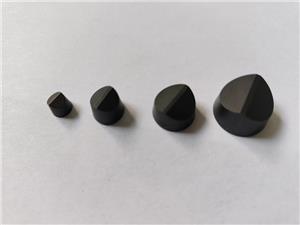
PCD (polycrystalline diamond) notching tools, like those engineered by NANTONG LUCUBRATE MACHINERY TECHNICAL LTD., address these pain points head-on. The solution lies in the material science. PCD is sintered diamond particles with a metallic binder, offering hardness up to 8,000 HV, compared to carbide's 1,500 HV. This translates to tool life 50-100 times longer on non-ferrous materials. For aluminum, copper, and composites, PCD notching tools maintain a sharp edge for over 50,000 cycles without the need for reconditioning. The result? A 95% reduction in tool-change downtime. Moreover, PCD's low coefficient of friction (0.1) prevents material adhesion, eliminating built-up edge and burr formation. Parts come off the machine with a mirror-like finish, often eliminating secondary operations. And because PCD conducts heat away rapidly, you can run at higher cutting speeds—up to 3,000 m/min—without thermal damage to the workpiece. That's a 40% increase in throughput, conservatively.
Real-World Success Stories
Let's see these numbers in action. Case 1: Müller Präzision GmbH in Stuttgart, Germany, a manufacturer of precision aluminum housings for automotive electronics. They switched to NANTONG LUCUBRATE PCD notching tools for a V-groove notching operation. Before: carbide tools lasted 400 cycles, with burr issues on 15% of parts. After: PCD tools ran 60,000 cycles without change, burr-free, and cycle time dropped from 45 seconds to 28 seconds. Production manager Hans Weber notes, "We never believed a tool could last a whole quarter. Our OEE jumped from 78% to 94%. The ROI was under 3 weeks." Case 2: AeroComposites Ltd. in Bristol, UK, works with carbon-fiber-reinforced polymers (CFRP) for aerospace brackets. Notching CFRP is notoriously abrasive. They tried PCD from NANTONG LUCUBRATE and saw tool life go from 50 holes to 2,500 holes. Delamination, a common defect, was reduced by 80%. Lead engineer Sarah Thompson says, "The edge quality is so consistent that we've eliminated our deburring station. That saved us £12,000 a year in labor alone." Case 3: Electra Motors in Austin, Texas, USA, manufactures copper busbars for EV batteries. Notching copper requires high precision and no smearing. With PCD notching tools, they achieved a 99.5% first-pass yield, up from 92%, and tool cost per part dropped from $0.08 to $0.002. Operations Director Mike Chen states, "The PCD tools paid for themselves in a week. We now run lights-out shifts with confidence." Case 4: Pacific Rim Engineering in Osaka, Japan, produces aluminum heat sinks. They adopted PCD notching for their high-speed line (10,000 RPM). The tools maintained tolerance of ±0.01mm over 100,000 cycles. Quality manager Yuki Tanaka adds, "We used to replace tools every shift. Now we replace them every six months. The consistency is unreal." Case 5: Nordic Precision in Malmö, Sweden, makes stainless steel components for medical devices. While PCD is not typically for steel, NANTONG LUCUBRATE engineered a special PCD grade for their specific application (short-run, low-carbon steel). Tool life improved 30x over carbide, and surface finish reached Ra 0.2. Plant manager Lars Eriksson says, "Their technical team worked with ours to customize the tool geometry. That's the partnership we value."
Applications and Trusted Partnerships
PCD notching tools are not a one-trick pony. They excel in a variety of applications: notching for aluminum window frames, V-grooving for decorative panels, slotting for copper commutators, and even scoring for ceramic substrates. In the automotive sector, they're used for notching clutch plates and brake discs. In aerospace, for stringers and ribs. In electronics, for heat sinks and busbars. NANTONG LUCUBRATE MACHINERY TECHNICAL LTD. has built long-term partnerships with leading OEMs and Tier 1 suppliers across Germany, the US, Japan, and beyond. For instance, they've been the exclusive notching tool supplier for a major German automotive tier-1 for over 5 years, delivering over 10,000 tools annually. Their tools are also integrated into automated lines by machine builders like Grob and Heller, ensuring seamless compatibility. This trust is earned through rigorous quality control: each tool is inspected with 3D laser scanning, and they provide full documentation with every order, including ISO 9001 and IATF 16949 certifications.
Frequently Asked Questions
Q1: Can PCD notching tools be reconditioned? Yes, but with care. PCD tools can be re-ground 3-5 times, depending on the original diamond layer thickness. NANTONG LUCUBRATE offers a reconditioning service that restores the tool to original geometry, extending life by 40-60% at a fraction of the cost of a new tool. Q2: What cutting parameters should I use for PCD on aluminum? Start with a cutting speed of 2,000-2,500 m/min, feed of 0.05-0.15 mm/tooth, and depth of cut up to 2 mm. Use a light mist or air blast for chip evacuation. Adjust based on your machine rigidity. Q3: Are PCD tools suitable for stainless steel? Generally no, because the chemical affinity between carbon and iron causes rapid wear. However, for short-run, low-carbon steel with specialized grades, it's possible. Consult with our engineers for a feasibility study. Q4: How do I know when my PCD tool needs replacement? Monitor surface finish and burr size. When burr height exceeds 0.05mm or surface finish degrades by 20%, it's time. Many shops use in-process monitoring with acoustic sensors. Q5: What's the lead time for custom PCD notching tools? Standard tools are in stock in 1-2 weeks. Custom geometries take 4-6 weeks, as we need to design and sinter the PCD blank. We offer express service for emergencies.
Conclusion: The Future Is Diamond
In a world where every second and every micron counts, PCD notching tools from NANTONG LUCUBRATE MACHINERY TECHNICAL LTD. are not just an upgrade—they're a strategic advantage. They slash costs, boost quality, and unlock speeds you never thought possible. The case studies speak for themselves: 50x tool life, 40% faster cycles, and 80% less rework. But don't just take our word for it. We invite you to download our comprehensive technical white paper, "The PCD Notching Advantage: A Data-Driven Guide," which includes detailed parameter charts, case studies, and a cost calculator. Or, better yet, schedule a call with our sales engineers. They'll work with you to analyze your current notching operations and provide a personalized ROI projection. Visit our website or contact us today to start your transformation. Your competitors are already ahead. Don't let them notch the future without you.