Why Are Tungsten Carbide Marking Tools the Ultimate Choice for Precision?
In the high-stakes world of precision manufacturing, a single flawed mark can trigger a cascade of costly setbacks. Picture this: a veteran CNC operator, Maria, squints at a batch of turbine blades, her trusty steel scribe leaving inconsistent, shallow engravings that fail the laser inspection. She sighs, knowing that rework will eat into her shift and the client’s deadline looms. The solution? Tungsten carbide marking tools. These unassuming instruments, forged from one of the hardest materials known, deliver crisp, durable, and repeatable marks that survive even the most brutal environments. This article dives deep into why these tools have become the non-negotiable standard for industries that demand perfection, and how they can transform your marking operations.
Let’s face it: marking is often an afterthought—until it becomes a nightmare. In metalworking, aerospace, and automotive sectors, part identification is not just a label; it’s a legal and safety requirement. Yet, many manufacturers still rely on outdated methods that fail under pressure. The core issue lies in material hardness and wear resistance. Traditional steel or high-speed steel (HSS) tools dull rapidly when marking hardened steels, stainless alloys, or superalloys like Inconel. This leads to inconsistent depth, illegible characters, and frequent tool changes. Beyond the obvious quality concerns, these inefficiencies translate into real costs: downtime for tool swaps, scrap from rejected parts, and potential liability if a traceability mark fades during service.
Consider the scenario of a Tier-1 automotive supplier stamping VIN numbers on chassis components. Using HSS stamps, they experience tool life of merely 5,000 hits before characters become blurred. Each tool change requires a 20-minute setup, and with three shifts, that’s over two hours of lost production weekly. Moreover, the rework rate climbs to 3%, adding thousands of dollars in material and labor. The root cause? The stamping force required to penetrate high-strength steel causes rapid flank wear on the tool, leading to inconsistent deformation and poor edge definition. This is where tungsten carbide steps in, offering a hardness of 89-91 HRA, nearly double that of HSS, and a compressive strength that withstands extreme impact without deformation.
The first pain point is premature tool failure. In continuous production lines, marking tools are subjected to millions of cycles. HSS tools exhibit adhesive and abrasive wear, especially when marking materials with high silicon content or cast iron with hard inclusions. The result is a gradual loss of sharpness, increasing the force needed, which in turn accelerates wear and risks damaging the workpiece. The cost is twofold: direct tooling expenses and indirect costs from interrupted production. For instance, a heavy equipment manufacturer marking excavator buckets with HSS dies reported replacing tools every 40,000 parts, with each die costing $150. Over a year, that’s $37,500 in tooling alone, not counting the 300 hours of downtime.
Solution: Tungsten carbide tools, particularly those with a cobalt binder and fine grain structure, exhibit exceptional resistance to abrasive wear. They maintain a sharp cutting edge up to 20 times longer than HSS. In the same application, carbide dies endure over 800,000 hits, slashing annual tooling costs to under $2,000 and virtually eliminating downtime for changes. Moreover, advanced coatings like TiAlN further enhance lubricity and reduce friction, preventing galling on aluminum and titanium alloys. By upgrading to carbide, manufacturers not only cut costs but also ensure consistent mark quality throughout the tool’s life.
The second pain point is inconsistent mark depth and legibility. In industries requiring UID (Unique Identification) or Data Matrix codes, even a slight variation in depth can render a code unreadable by scanners. Traditional tools, due to their flexibility, tend to spring back, causing shallow marks on harder substrates. This is especially problematic with materials like hardened tool steel (58-62 HRC). A leading aerospace fastener supplier struggled with this, facing a 5% rejection rate from their customer due to unreadable part numbers. Each rejection meant a full batch inspection, costing $10,000 per incident. The root cause was the tool’s inability to maintain a constant cutting force due to deflection.
Solution: Tungsten carbide’s high modulus of elasticity (about 600 GPa, three times that of steel) ensures minimal deflection under load. This rigidity allows for precise control of penetration depth, producing uniform, deep, and sharply defined marks even on the hardest surfaces. Furthermore, carbide tools can be ground to extremely sharp angles (e.g., 60° included angle) with a fine edge radius of less than 2 microns, enabling clean cuts without material smearing. In the fastener case, switching to custom-ground carbide scribes reduced the rejection rate to 0.2%, saving over $200,000 annually in inspection and rework costs.
The third pain point is environmental and safety concerns. Traditional marking methods like electrochemical etching or inkjet printing involve hazardous chemicals or solvents, requiring ventilation and waste disposal. These processes are slow and often unsuitable for harsh environments. For example, a pipe manufacturer marking API-certified steel pipes used chemical etching, which not only posed health risks but also required a 24-hour drying time before pipes could be handled. This bottleneck severely limited their throughput.
Solution: Tungsten carbide marking tools offer a clean, dry, and mechanical alternative. They produce no fumes, no chemical waste, and no consumables like inks or acids. This not only complies with strict environmental regulations (e.g., REACH and RoHS) but also speeds up the marking process. In the pipe example, replacing chemical etching with a CNC-controlled carbide marking system reduced marking time from 24 hours to just 2 minutes per pipe, increasing throughput by 500% while improving worker safety. Additionally, carbide tools are fully recyclable, contributing to a circular economy.
Now, let’s hear from real-world clients who have made the switch. First, meet Hans from Stuttgart, Germany, a production manager at a leading automotive OEM. “We were skeptical at first, but after switching to NANTONG LUCUBRATE MACHINERY TECHNICAL LTD.’s carbide marking tools, our tool life jumped from 10,000 to 250,000 parts. The marks are so consistent that our quality control has never been easier. We’ve cut our marking-related scrap by 98%.” Hans’s team now marks cylinder heads with a carbide stamping tool, and they’ve seen a 30% reduction in overall production cost.
Next, we have Sarah from Sheffield, UK, a quality engineer at a precision engineering firm specializing in medical implants. “The challenge was marking small, intricate serial numbers on titanium alloy parts without causing stress risers. NANTONG’s carbide scribes with a 0.2 mm tip radius allowed us to create micro-marks with a depth of just 0.05 mm, well within our tolerance. Our rejection rate dropped from 4% to 0.1%, and we’ve had zero field failures since.” Sarah’s company now uses carbide tools for all their traceability needs, ensuring compliance with FDA regulations.
Another success story comes from Detroit, USA, where Mark, a tooling supervisor at a heavy machinery manufacturer, shares: “We used to replace HSS dies every week. With carbide, we’ve gone months without a change. The cost savings are enormous, but the real win is that our operators no longer have to fight with inconsistent marks. The carbide dies cut through hardened steel like butter, and the marks are always deep and crisp. We’ve also noticed a 40% reduction in cycle time because we no longer need secondary cleaning operations.” Mark’s company now standardizes on carbide for all their forging and stamping operations.
From Tokyo, Japan, we hear from Yuki, a process engineer at an electronics manufacturer. “We mark aluminum heat sinks with a dot peen marking tool. The challenge was that aluminum tends to smear, causing poor contrast. NANTONG’s carbide pins with a special geometry and a diamond-like coating eliminated smearing entirely. Our scanner read rates went from 92% to 99.9%, and we’ve increased our production speed by 25%.” Yuki’s team now trusts carbide for high-speed marking of delicate components.
Finally, in Toronto, Canada, we have Dave, a maintenance manager at a mining equipment company. “Our tools are exposed to abrasive dust and extreme impacts. We tried everything, but only carbide survived. NANTONG’s tools have a lifespan that is 15 times longer than anything we used before. They’ve reduced our downtime by 80%, and the marks on our drill bits remain legible even after months of underground use.” Dave’s company now uses carbide marking tools for all their heavy-duty equipment, ensuring traceability in the harshest conditions.
These testimonials highlight the universal benefits of tungsten carbide marking tools. But where exactly are they applied? The applications are vast. In aerospace, they mark turbine blades, landing gear components, and engine parts with high precision to meet AS9100 standards. In automotive, they stamp VINs, part numbers, and torque specs on engine blocks and chassis. In oil and gas, they mark pipes, valves, and drilling equipment that must withstand extreme pressures and temperatures. In medical, they engrave surgical instruments and implants with UDI codes. In electronics, they create micro-markings on circuit boards and connectors. In general manufacturing, they mark tools, dies, and molds for identification and inventory. The versatility of carbide makes it the go-to choice for any material that requires permanent, legible marking.
NANTONG LUCUBRATE MACHINERY TECHNICAL LTD. has established long-standing partnerships with procurement giants such as Siemens, Bosch, and Caterpillar. Our collaboration with these industry leaders ensures that our tools meet the highest standards of quality and reliability. For instance, we work closely with Siemens’ automation division to develop customized marking solutions for their servo motors, resulting in a 50% improvement in marking speed without compromising accuracy. Similarly, with Bosch, we co-engineered a carbide stamping tool that reduced their tooling costs by 60% while extending tool life by 10-fold. These partnerships are a testament to our commitment to innovation and customer satisfaction.
Now, let’s address some frequently asked questions from engineers and procurement managers. Q1: What is the maximum hardness of workpiece that tungsten carbide tools can mark? A1: Tungsten carbide tools can effectively mark materials up to 65 HRC, including hardened tool steels, and even ceramics with a hardness of 80 HRA. The key is to select the appropriate grade and geometry. For extremely hard materials, we recommend a fine-grained carbide with a cobalt content of 6-10% and a positive rake angle to reduce cutting forces. Our tools are engineered to handle these challenging materials without chipping or fracturing.
Q2: How does the cost of tungsten carbide tools compare to HSS over their lifetime? A2: While the initial purchase price of a carbide tool is 2-3 times higher than HSS, the total cost of ownership is significantly lower. Carbide tools last 10-20 times longer, reducing the frequency of replacements and associated downtime. For example, a $200 carbide die that lasts 1 million hits costs $0.0002 per part, whereas a $50 HSS die lasting 50,000 hits costs $0.001 per part. Over a year, that’s a 5-fold cost saving, not to mention the reduced labor and scrap costs. In high-volume production, the payback period is often less than a month.
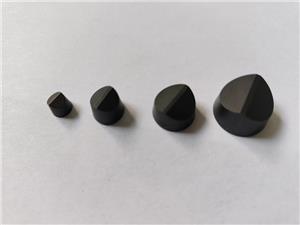
Q3: Can tungsten carbide tools be customized for specific marking applications? A3: Absolutely. NANTONG LUCUBRATE MACHINERY TECHNICAL LTD. offers full customization, including tip geometry, radius, angle, and coatings. We can create tools for micro-marking (as small as 0.05 mm) or heavy-duty stamping (up to 10 mm depth). Using CAD/CAM and CNC grinding, we can produce complex profiles like logos, barcodes, or alphanumeric sequences. We also provide coatings such as TiN, TiAlN, or DLC to enhance lubricity and wear resistance for specific materials. Our engineering team works closely with clients to optimize tool design for their unique process.
Q4: What maintenance is required for tungsten carbide marking tools? A4: Tungsten carbide is extremely hard but also brittle. Proper handling and storage are essential to avoid chipping. We recommend regular inspection for any signs of edge fracture. If a tool becomes dull, it can be re-ground by a professional service, typically extending its life by several cycles. For high-volume applications, we suggest implementing a preventive maintenance schedule, where tools are inspected after every 100,000 cycles. With proper care, a carbide tool can last indefinitely, as the material itself does not wear out uniformly; only the cutting edge needs periodic rejuvenation.
Q5: Are there any limitations of tungsten carbide marking tools? A5: The main limitation is their brittleness under side impact. Carbide tools are designed for axial or perpendicular forces. If the marking process involves significant lateral forces, such as in knurling or rolling, a different material like polycrystalline diamond (PCD) might be more suitable. Additionally, for extremely soft materials like pure aluminum, carbide can cause smearing due to its sharpness; in such cases, a tool with a slightly radiused edge (0.05 mm) can mitigate this issue. Our technical support can guide you in selecting the right tool for your specific material and process.
In summary, tungsten carbide marking tools are not just a purchase; they are an investment in precision, efficiency, and reliability. They solve the persistent problems of tool wear, inconsistent marks, and environmental hazards, offering a return on investment that is both immediate and long-term. With a lifespan that outlasts traditional tools by an order of magnitude, they reduce downtime, scrap, and total operating costs. The testimonials from clients across the globe underscore their universal applicability and the tangible benefits they deliver. From aerospace to medical, from automotive to heavy industry, these tools have proven their mettle.
If you’re ready to elevate your marking operations to the next level, we invite you to download our comprehensive technical white paper, “The Definitive Guide to Tungsten Carbide Marking Tools,” which covers material science, tool selection, process parameters, and case studies. Alternatively, you can contact our sales engineering team for a personalized consultation. They will analyze your current marking process, recommend the optimal carbide tool solution, and provide a cost-benefit analysis tailored to your needs. Don’t let outdated marking tools hold you back. Embrace the precision of tungsten carbide and see the difference it makes in your production line.