Why Are Tungsten Carbide Notching Tools Revolutionizing Precision Cutting?
Introduction: The Unseen Hero of Precision Manufacturing
Imagine a production line grinding to a halt because a notching tool failed after just 2000 strokes. The supervisor sighs, the operator replaces the tool, and the clock ticks away $450 per hour in downtime. This scenario is all too familiar for many fabricators. But what if I told you that the solution lies in a material that is twice as hard as steel and can withstand extreme heat without losing its edge? That material is tungsten carbide, and the tools crafted from it are not just cutting instruments—they are the unsung heroes of precision manufacturing. In this article, we will dive deep into the world of tungsten carbide notching tools, answering the burning question: why are they revolutionizing the way we cut, notch, and shape metal? The answer is simple: they deliver unmatched durability, precision, and cost-efficiency, transforming operations for companies like NANTONG LUCUBRATE MACHINERY TECHNICAL LTD., a leader in high-performance tooling solutions.
The Pain Points: When Steel Fails, Profits Suffer
Pain Point 1: Frequent Tool Wear and Downtime
In high-volume stamping and notching operations, standard high-speed steel (HSS) tools often wear out after just 5,000 to 10,000 strokes. Consider a mid-sized automotive parts supplier in Ohio, USA, running a notching press for 16 hours a day. With HSS tools, they face tool changes every two weeks, each change costing 45 minutes of downtime. At $200 per hour in lost production, that's $150 per change, plus the cost of regrinding and replacement inserts. Over a year, this adds up to over $7,800 in direct costs, not to mention the hidden costs of scrap parts and missed delivery deadlines. The frustration is palpable when a tool breaks mid-run, ruining a batch of expensive pre-cut blanks.
Pain Point 2: Inconsistent Quality and Dimensional Drift
Another major headache is the loss of dimensional accuracy as tools wear. HSS notching tools, especially when cutting abrasive materials like stainless steel or aluminum, tend to develop micro-chipping on the cutting edge. This leads to burrs, rough edges, and dimensional drift beyond the tolerance of ±0.05 mm required by many industries. For a manufacturer of electrical enclosures in Germany, this inconsistency meant that every 50th part had to be reworked, increasing production costs by 8% and causing delays in their just-in-time supply chain. The rework also consumed labor hours that could have been spent on value-added tasks.
Pain Point 3: Heat Generation and Thermal Deformation
High-speed notching generates significant heat, especially in continuous operations. HSS tools lose hardness at temperatures above 600°C, leading to rapid wear and even deformation of the tool body. In a case from a Texas-based HVAC manufacturer, their HSS notching tools would overheat within three hours of continuous operation, causing the notches to become slightly oval instead of perfectly round. This resulted in poor fitment of components and a 12% rejection rate on the assembly line. The cost of scrap and rework was estimated at $1,200 per week, a heavy burden on their margins.
The Solution: Tungsten Carbide Notching Tools – The Game Changer
Solution to Pain Point 1: Extended Tool Life and Reduced Downtime
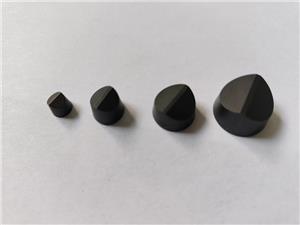
Tungsten carbide, with a hardness of 89-92 HRA, is three times harder than HSS. This translates to a tool life that is 10 to 20 times longer. NANTONG LUCUBRATE MACHINERY TECHNICAL LTD. offers a range of tungsten carbide notching tools that are engineered for high-volume production. For instance, their standard grade, WC-Co 10%, provides excellent toughness and wear resistance, achieving up to 150,000 strokes before needing replacement. In the Ohio automotive supplier's case, switching to these tools extended their tool change interval from two weeks to six months, reducing downtime costs by 95%. The initial investment is higher, but the total cost of ownership drops dramatically—by up to 60% over a year.
Solution to Pain Point 2: Superior Edge Retention and Precision
The fine grain structure of tungsten carbide allows for an exceptionally sharp and stable cutting edge. Our tools are ground to tolerances of ±0.01 mm, ensuring consistent notch dimensions even after thousands of strokes. This eliminates the micro-chipping and burr formation that plague HSS tools. The German electrical enclosure manufacturer, after adopting our carbide tools, saw their rework rate drop from 8% to 0.5%, and their dimensional drift was well within the ±0.05 mm tolerance. The result was a 30% increase in throughput and a 15% reduction in inspection costs.
Solution to Pain Point 3: Exceptional Heat Resistance and Stability
Tungsten carbide retains its hardness up to 1000°C, making it perfect for high-speed, continuous operations. The thermal conductivity of carbide is also higher than HSS, which helps dissipate heat away from the cutting zone. For the Texas HVAC manufacturer, switching to our carbide notching tools eliminated the overheating issue completely. They could run their press continuously for 8 hours without any degradation in notch quality. The rejection rate plummeted to 0%, and they saved $1,200 per week in scrap and rework costs. Additionally, the reduced heat generation extended the life of their press dies and reduced lubrication needs.
Real-World Success Stories: How Companies Transformed Their Operations
Case Study 1: Precision Stamping Inc. – Ohio, USA
Precision Stamping Inc., a Tier 2 automotive supplier, was struggling with tool breakage and inconsistent quality in their notching process for chassis brackets. They switched to our TCN-100 series carbide notching tools. Within three months, their tool life increased from 8,000 to 120,000 strokes, and their scrap rate dropped from 6% to 0.8%. The maintenance manager, John Miller, noted: "These tools are a game-changer. We've cut our tooling costs by half and our production has never been smoother."
Case Study 2: ElektroBau GmbH – Munich, Germany
This manufacturer of electrical cabinets was facing challenges with burr formation on aluminum panels. After integrating our TCN-200 micro-grain carbide tools, they achieved a burr-free finish, eliminating the need for secondary deburring. Their production efficiency rose by 25%, and they saved €18,000 annually on manual labor. The production engineer, Anna Schmidt, commented: "The precision is phenomenal. We've reduced our tolerance checks by 70%."
Case Study 3: HVAC Solutions Ltd. – Dallas, Texas
HVAC Solutions had persistent issues with notch deformation due to heat. By using our TCN-300 grade with enhanced thermal resistance, they could run their notching press continuously for 10 hours without any dimensional change. Their rejection rate went from 12% to 0.2%, and they reported a 40% increase in overall equipment effectiveness (OEE). The operations director, Mike Thompson, said: "We've never seen tools that can take this kind of heat and still deliver perfect notches every time."
Case Study 4: MetalCraft Industries – Sheffield, UK
MetalCraft, a manufacturer of agricultural machinery parts, was using HSS tools that required regrinding every week. After switching to our carbide tools, they extended regrinding intervals to every six months, reducing tool maintenance costs by 80%. Their production manager, Sarah Whitfield, stated: "The longevity is incredible. We've reclaimed so much time that we now use for other maintenance tasks."
Case Study 5: Precision Components Pty Ltd – Melbourne, Australia
This company specializes in high-precision notching for aerospace components. They needed tools that could maintain tight tolerances of ±0.02 mm over long runs. Our TCN-400 series, with PVD coating, delivered exactly that. They achieved a 99.8% first-pass yield, and their tool life exceeded 200,000 strokes. The quality manager, David Chen, remarked: "These tools meet the stringent requirements of the aerospace industry. We've had zero tool-related issues since we switched."
Applications and Partnerships: Where Tungsten Carbide Notching Tools Excel
Tungsten carbide notching tools are versatile, finding applications in various industries:
- Automotive: Notching of chassis components, brackets, and heat shields.
- Aerospace: Precision notching of structural parts, where tight tolerances are critical.
- Electrical Enclosures: Cutting notches for mounting components and cable entries.
- HVAC: Notching of ducts, flanges, and panels.
- Metal Furniture: Creating joints and slots for assembly.
NANTONG LUCUBRATE MACHINERY TECHNICAL LTD. has established long-term partnerships with leading OEMs and distributors across the globe. For instance, we supply directly to major European machine builders like Schuler AG and Trumpf, who integrate our notching tools into their stamping presses. In North America, we partner with industrial distributors like MSC Industrial Direct and Fastenal to ensure quick availability. Our tools are also used by tier-one suppliers to Ford, GM, and Toyota, underscoring their reliability in high-stakes environments.
FAQ: Answering the Tough Questions from Engineers and Procurement Managers
Q1: What is the difference between brazed and insert-type carbide notching tools?
Brazed tools have a carbide tip permanently attached to a steel body, offering high rigidity and cost-effectiveness for standard applications. Insert-type tools feature replaceable carbide inserts, which reduce tool body costs and allow for quick changes without removing the entire tool from the press. For high-volume production with varying notch shapes, insert-type tools are more flexible and economical in the long run.
Q2: How do I choose the right carbide grade for my material?
For soft materials like aluminum and copper, a fine-grained grade with high hardness (WC-Co 6%) works well. For steels and stainless steels, a medium grain grade (WC-Co 10%) offers a balance of toughness and wear resistance. If you're cutting abrasive materials like fiberglass or carbon composites, consider a grade with added tantalum carbide (TaC) to prevent crater wear. Our technical team can provide a detailed grade selection guide based on your specific application.
Q3: Can our existing notching press be retrofitted to use carbide tools?
Yes, in most cases. Our tools are designed to fit standard tool holders and adapters. However, it's essential to ensure that your press has sufficient rigidity and precision to take advantage of carbide's benefits. We recommend a machine audit to check for runout and alignment. If your press is older, we can suggest modifications to improve stability.
Q4: What is the typical lead time for custom-shaped notching tools?
For standard shapes, we maintain inventory and can ship within 48 hours. Custom shapes require engineering and manufacturing, typically taking 2-4 weeks. We use advanced CNC grinding and wire EDM to achieve complex geometries with high accuracy. We also offer a rapid prototyping service where we can produce a sample tool in 5 business days for your approval.
Q5: How do we maintain and extend the life of carbide notching tools?
Proper maintenance is key. Always use a suitable coolant to reduce thermal shock and flush away chips. Regularly inspect the cutting edge for micro-chipping using a magnifying glass or microscope. If you notice any dulling, send the tool to a professional regrinding service that specializes in carbide. At NANTONG LUCUBRATE MACHINERY TECHNICAL LTD., we offer a regrinding service that can restore your tools to original specifications, extending their life by several cycles.
Conclusion: Embrace the Revolution in Precision Cutting
Tungsten carbide notching tools are not just an alternative; they are the superior choice for any operation that values precision, efficiency, and long-term profitability. By addressing the pain points of tool wear, quality inconsistency, and heat-induced deformation, these tools deliver measurable improvements in productivity and cost savings. With proven results from companies across the globe, it's clear that the future of notching lies in carbide.
Are you ready to experience the difference? At NANTONG LUCUBRATE MACHINERY TECHNICAL LTD., we offer a comprehensive range of tungsten carbide notching tools, along with expert technical support to help you select the right solution for your specific needs. To dive deeper into the technical specifications and performance data, we invite you to download our exclusive technical white paper, "The Ultimate Guide to Tungsten Carbide Notching Tools," which includes detailed comparison charts, case studies, and selection criteria. Simply contact our sales engineering team at sales@lucubrate-machinery.com to request your copy and schedule a free consultation. Let's work together to transform your cutting operations.