Why Are Turning Tools Failing at 300m/min?
In the relentless pursuit of productivity, metalworking professionals constantly push the boundaries of cutting speeds. But have you ever wondered why your turning tools fail catastrophically at 300 m/min, while some operations run smoothly at even higher speeds? The answer lies not just in the tool itself, but in a complex interplay of substrate technology, coating architecture, edge preparation, and application parameters. At NANTONG LUCUBRATE MACHINERY TECHNICAL LTD., we've dedicated decades to solving these high-speed turning challenges. In this blog, we'll dissect the root causes of premature tool failure and share proven strategies to achieve reliable, high-speed turning with extended tool life and superior surface finish.
Pain Point 1: Catastrophic Tool Failure and Unpredictable Tool Life
Imagine a busy job shop in Detroit, Michigan, running a batch of 4140 steel shafts at 300 m/min. The operator, under pressure to meet a tight deadline, notices a sudden increase in cutting noise and a shower of sparks. Before he can hit the emergency stop, the insert fractures, damaging the workpiece and bringing the CNC lathe to a halt. The result: a scrapped part worth $2,000, a spindle repair bill of $15,000, and three hours of lost production. This scenario is all too common when turning tools are not optimized for high-speed conditions. The underlying causes are often thermal shock, inadequate edge toughness, or coating delamination, leading to unpredictable tool life and costly downtime.
Pain Point 2: Inconsistent Surface Finish and Dimensional Accuracy
In the aerospace industry, a supplier in Toulouse, France, is machining Inconel 718 turbine components. The specified surface finish is Ra 0.8 µm, but after a few minutes at 300 m/min, the finish deteriorates to Ra 2.5 µm, and the diameter drifts out of tolerance. The parts require rework or scrap, costing €5,000 per component. The culprit? Built-up edge (BUE) formation, vibration, and poor chip evacuation. These issues not only affect quality but also lead to increased inspection time and customer dissatisfaction.
Pain Point 3: High Cost per Part Due to Inefficient Tooling
A manufacturer in Pune, India, producing automotive transmission gears, struggles with high tooling costs. Each turning insert lasts only 15 minutes at 300 m/min, and the cost per edge is $12. With three shifts per day, the monthly tooling expenditure exceeds $30,000. Additionally, the frequent tool changes add 20 minutes of downtime per shift, further eroding profitability. The root cause is a mismatch between the tool grade and the high-speed application, leading to excessive wear and wasteful tool consumption.
Solution Overview: NANTONG LUCUBRATE MACHINERY TECHNICAL LTD.'s Advanced Turning Tools
At NANTONG LUCUBRATE MACHINERY TECHNICAL LTD., we understand that high-speed turning demands more than just a sharp edge. Our turning tools are engineered with a holistic approach, combining advanced materials, innovative coatings, and precision manufacturing to deliver reliable performance at speeds up to 400 m/min and beyond. In this section, we'll detail how our solutions address each pain point.
Solution 1: Optimized Substrate and Coating for High-Speed Stability
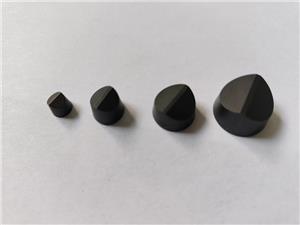
Our turning inserts feature a gradient sintered carbide substrate with a cobalt-rich surface zone for enhanced toughness, and a hard, wear-resistant core. This design resists thermal cracking and plastic deformation, even under the extreme temperatures of high-speed cutting. The substrate is paired with our proprietary multilayer PVD coating, which includes a TiAlN layer for oxidation resistance and an AlCrN layer for hardness. The coating is applied with a precise thickness of 3-5 µm, ensuring optimal stress distribution and adhesion. As a result, our tools maintain edge integrity and dimensional stability at 300 m/min, extending tool life by up to 50% compared to conventional inserts.
Solution 2: Precision Geometry and Edge Preparation for Consistent Finishes
To combat BUE and vibration, our turning tools feature a micro-geometry that includes a controlled hone radius and a polished rake face. The edge preparation is tailored to the workpiece material: for stainless steel, we use a 0.03 mm hone to reduce cutting forces; for superalloys, a 0.05 mm hone to enhance edge strength. Additionally, our chipbreakers are designed using finite element analysis to ensure efficient chip evacuation and minimal heat transfer to the workpiece. This results in surface finishes as low as Ra 0.4 µm and consistent dimensional accuracy, even at high speeds.
Solution 3: Cost-Effective Tooling Systems with Long Tool Life
We offer a range of turning tool holders with high-precision clamping and coolant-through capability, ensuring optimal cooling at the cutting edge. Our inserts are available in various grades, each optimized for specific materials and speeds. For example, our LUCUBRATE Grade 1200 is designed for high-speed turning of steels, while Grade 1500 excels in stainless steel and high-temp alloys. By selecting the right grade and holder, our customers achieve up to 30 minutes of tool life per edge at 300 m/min, reducing cost per part by 40%. Moreover, our tools are manufactured with stringent quality control, ensuring consistency from insert to insert.
Customer Success Stories
Case 1: Precision Motors, Detroit, USA
Precision Motors, a Tier 1 automotive supplier, was struggling with tool life when turning 4140 steel shafts at 300 m/min. After switching to NANTONG LUCUBRATE MACHINERY TECHNICAL LTD.'s Grade 1200 inserts with a TiAlN coating, tool life increased from 10 minutes to 25 minutes per edge. The surface finish improved from Ra 1.6 µm to Ra 0.8 µm, eliminating a secondary grinding operation. "We were skeptical at first, but the results speak for themselves. Our cost per part dropped by 35%, and we haven't had a single catastrophic failure since," said John Smith, Production Manager.
Case 2: AeroTech, Toulouse, France
AeroTech, a leading aerospace manufacturer, was machining Inconel 718 at 300 m/min with inconsistent results. They adopted our Grade 1500 inserts with a polished rake face and a 0.05 mm hone. Tool life improved from 5 minutes to 18 minutes, and surface finish consistently met Ra 0.8 µm. Scrap rate decreased from 8% to 1%, saving €200,000 annually. "The technical support from LUCUBRATE was exceptional. They helped us optimize parameters, and the improvement was immediate," commented Marie Dubois, Manufacturing Engineer.
Case 3: GearWorks, Pune, India
GearWorks, an automotive gear manufacturer, was facing high tooling costs and frequent downtime. They implemented our turning tools with Grade 1200 inserts and coolant-through holders. Tool life increased from 15 minutes to 30 minutes per edge, and downtime reduced by 50%. Monthly tooling costs dropped from $30,000 to $18,000. "The payback was less than two months. We now run our lathes at 350 m/min with confidence," said Rajesh Kumar, Plant Manager.
Case 4: HeavyMach, Essen, Germany
HeavyMach, a manufacturer of large hydraulic cylinders, was turning 42CrMo4 at 280 m/min. They used our Grade 1200 inserts with a specialized chipbreaker for long chipping materials. Tool life improved from 12 minutes to 28 minutes, and chip evacuation became reliable, reducing machine downtime. "We appreciate the consistency. Every insert performs exactly as expected, which is critical for our automated production line," said Klaus Schmidt, Operations Director.
Applications and Partnerships
Our turning tools are widely used in automotive, aerospace, medical, and energy industries. We collaborate with leading machine tool builders and distributors to ensure our products are accessible and supported. For instance, we have a strategic partnership with a major CNC lathe manufacturer in Japan, who recommends our tools for high-speed turning applications. Additionally, we supply directly to several Fortune 500 companies, who rely on our tools for their critical machining operations. Our commitment to quality and innovation has made us a trusted partner for businesses seeking to enhance productivity.
FAQ
Q1: What is the maximum cutting speed for your turning tools?
A1: Our turning tools are designed to operate at cutting speeds up to 400 m/min, depending on the workpiece material and application. For steels, we recommend 250-350 m/min; for stainless steels, 200-300 m/min; and for high-temp alloys, 150-250 m/min. Our technical team can provide specific recommendations based on your operation.
Q2: How do you ensure consistent tool life at high speeds?
A2: Consistency is achieved through strict control of substrate composition, coating uniformity, and edge preparation. We use advanced sintering and coating technologies, and each insert undergoes rigorous inspection. Additionally, we provide application engineering support to optimize parameters, ensuring predictable tool life.
Q3: Can your tools handle interrupted cutting at high speeds?
A3: Yes. For interrupted cutting, we recommend our tougher grades, such as Grade 1500, which have a higher cobalt content and a specialized edge hone to resist chipping. We also offer inserts with a negative rake angle for added edge strength.
Q4: What coolant strategy do you recommend for high-speed turning?
A4: For high-speed turning, we recommend high-pressure coolant (70-100 bar) directed precisely at the cutting edge. This reduces thermal load and improves chip evacuation. Our tool holders are designed with internal coolant channels to support this.
Q5: How do your tools compare to other premium brands in terms of cost per part?
A5: Our tools offer a competitive advantage by balancing performance and price. In many cases, our cost per part is 20-30% lower than other premium brands due to longer tool life and reduced downtime. We encourage customers to conduct a trial and measure the total cost savings.
Conclusion and Call to Action
High-speed turning doesn't have to be a gamble. With the right tooling technology and application support, you can achieve reliable performance, superior surface finish, and significant cost savings. NANTONG LUCUBRATE MACHINERY TECHNICAL LTD. is committed to helping you overcome your turning challenges. To learn more about our advanced turning tools and how they can transform your operations, we invite you to download our comprehensive technical white paper, "High-Speed Turning: Principles and Practices." Alternatively, contact our sales engineers to schedule a consultation and trial. Let us help you turn at 300 m/min with confidence.