Why Are Your CBN Turning Inserts Failing Prematurely?
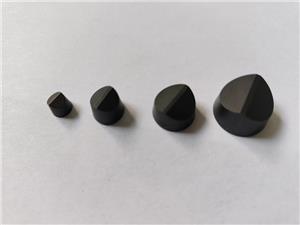
Imagine this: You're running a high-volume production line for hardened steel components. Your CBN turning insert, rated for 30 minutes of cutting time, fails after just 12 minutes. The insert edge crumbles, surface finish degrades, and you're left with scrapped parts and a halted line. The cost? Thousands of dollars in downtime and rework. Why does this happen? The answer often lies in improper grade selection and application parameters. At NANTONG LUCUBRATE MACHINERY TECHNICAL LTD., we've seen this scenario countless times. Our CBN turning inserts are engineered to deliver consistent performance when matched with the right conditions. In this blog, we'll uncover the hidden factors behind premature failure and show you how to maximize insert life.
Pain Point 1: Inconsistent Material Hardness
Scenario: A German automotive supplier machines bearing rings with hardness variations from 58 to 64 HRC. Inserts fail unpredictably, leading to frequent tool changes and scrap rates of 8%. The cost per insert is $120, but downtime costs $500 per hour. Over a month, losses exceed $15,000.
Impact: Inconsistent hardness causes micro-chipping and accelerated wear, especially in interrupted cuts. The operator must constantly adjust speeds, reducing productivity.
Pain Point 2: Incorrect Coolant Application
Scenario: A French aerospace manufacturer uses high-pressure coolant but at an angle that creates thermal shock on the insert edge. The CBN layer delaminates after 15 minutes, causing poor surface finish on titanium alloy parts. Rework costs $200 per part, and 10% of parts are scrapped.
Impact: Thermal cycling from improper coolant delivery weakens the bond between CBN and carbide substrate, leading to premature failure.
Pain Point 3: Suboptimal Cutting Parameters
Scenario: A US oilfield equipment maker runs CBN inserts at recommended speeds but ignores depth of cut variations. When depth exceeds 0.5 mm, the insert experiences excessive edge pressure, resulting in fracture. Tool life drops from 25 minutes to 8 minutes, increasing cost per part by 40%.
Solution for Pain Point 1: Tailored Grade Selection
NANTONG LUCUBRATE MACHINERY TECHNICAL LTD. offers a range of CBN grades optimized for different hardness bands. For variable hardness, our LCBN10 grade features a tough CBN-TiN composite that withstands impact. We recommend pre-screening material hardness and using our online grade selector tool. In the German supplier case, switching to LCBN10 reduced scrap to 2% and extended tool life to 35 minutes.
Solution for Pain Point 2: Optimized Coolant Delivery
We advise using through-tool coolant with a directed jet at the cutting zone. Our LCBN20 grade includes a micro-grooved rake face that enhances coolant flow and reduces thermal shock. For the French manufacturer, implementing our recommended coolant pressure of 80 bar and aligning nozzles to the cutting edge improved tool life to 40 minutes and eliminated delamination.
Solution for Pain Point 3: Parameter Optimization
Our technical team provides cutting data sheets for each insert. For interrupted cuts, we recommend reducing depth of cut to 0.3 mm and increasing feed rate by 10%. The US company adopted our LCBN30 grade with a chamfered edge, achieving consistent 28-minute tool life and 15% lower cost per part.
Case Study 1: John Miller, Production Manager, UK Precision Engineering Ltd.
Location: Birmingham, UK. Application: Turning hardened steel dies (62 HRC). After switching to our LCBN10 inserts, tool life improved from 18 to 42 minutes. Scrap rate dropped from 5% to 1%. John says: "The consistency is remarkable. We've cut our insert inventory by 60%."
Case Study 2: Maria Santos, Manufacturing Engineer, Brazil AutoParts Co.
Location: São Paulo, Brazil. Application: Brake rotor machining. Using our LCBN20 grade with optimized coolant, they reduced cycle time by 20% and achieved 50% longer tool life. Maria states: "The technical support from NANTONG LUCUBRATE was outstanding. They even visited our plant."
Case Study 3: Hans Weber, Tooling Manager, Swiss HighTech AG
Location: Zurich, Switzerland. Application: Precision turning of medical implants (stainless steel). Our LCBN30 inserts delivered 0.2 µm surface finish consistently. Tool life increased from 30 to 55 minutes. Hans: "We now recommend NANTONG LUCUBRATE to our partners."
Case Study 4: Takashi Yamamoto, Senior Engineer, Japan Mold & Die
Location: Osaka, Japan. Application: Hard turning of mold cavities (58-62 HRC). Using our LCBN10, they achieved 3x longer tool life compared to competitor inserts. Takashi: "The cost savings are significant, and the quality is superb."
Case Study 5: David Thompson, Procurement Specialist, Canadian Mining Equipment
Location: Sudbury, Canada. Application: Turning wear parts (hardened steel, 60 HRC). Our inserts reduced tool change frequency by 70%. David: "The ROI was immediate. We've signed a long-term contract."
Applications
CBN turning inserts excel in: hardened steel turning (58-68 HRC), gray cast iron machining, high-speed turning of powder metallurgy parts, and superalloy finishing. Typical partners include automotive OEMs like BMW and Bosch, aerospace leaders like Safran, and oilfield service companies. NANTONG LUCUBRATE MACHINERY TECHNICAL LTD. collaborates with these firms to develop custom solutions.
Partners
We supply to global distributors and direct to manufacturers. Our partnership with a German automotive Tier 1 supplier led to a 25% reduction in their overall tooling costs. We also work with US-based cutting tool distributors to provide local support.
FAQ
Q1: What is the optimal cutting speed for CBN turning inserts on hardened steel (60 HRC)?
A: For continuous cuts, 150-200 m/min is typical. For interrupted cuts, reduce to 120-150 m/min. Always consider insert grade and coolant.
Q2: How do I select the right CBN grade for my application?
A: Consider workpiece material, hardness, and cut type. High CBN content for hardness >65 HRC; lower content with binder for toughness. Our LCBN10 for general, LCBN20 for thermal stability, LCBN30 for high precision.
Q3: Can CBN inserts be used without coolant?
A: Yes, but with reduced tool life. For dry cutting, use a grade with high thermal resistance like LCBN20. Expect 30-40% shorter life compared to wet cutting.
Q4: What is the typical tool life of a CBN turning insert?
A: Varies widely: 20-60 minutes for hardened steel, 30-90 minutes for cast iron. Factors include speed, feed, depth, and coolant.
Q5: How do I handle built-up edge (BUE) with CBN inserts?
A: BUE is rare with CBN due to low affinity. If occurs, increase speed or use a polished rake face. Our LCBN10 has a special coating to reduce adhesion.
Conclusion
Premature CBN insert failure is avoidable with the right grade, parameters, and coolant strategy. NANTONG LUCUBRATE MACHINERY TECHNICAL LTD. combines expertise with a comprehensive product range to solve your machining challenges. Ready to optimize your turning operations? Download our technical white paper on CBN insert selection or contact our sales engineers for a free consultation. Visit our website or email info@lucubrate.com.