Why Are Your Turning Inserts Failing Prematurely?
Imagine this: You are running a high-volume turning operation on a CNC lathe, producing critical aerospace components. The cycle time is tight, and the material is Inconel 718. Halfway through the batch, you hear a distinct squeal. You stop the machine, open the chuck, and find that the turning insert has chipped catastrophically. The workpiece is scrap, and you lose an hour of production. This scenario is all too common. The answer to why your turning inserts are failing prematurely often lies in a mismatch between the insert grade, geometry, and the specific machining conditions. At NANTONG LUCUBRATE MACHINERY TECHNICAL LTD., we have seen this repeatedly, and we have developed solutions that extend tool life by up to 300%.
Pain Point 1: Chipping and Fracture
Chipping is often caused by mechanical shock during interrupted cuts or by excessive cutting forces. In heavy roughing of steel, for example, the insert edge can chip if the feed rate is too high or if the insert lacks sufficient toughness. The cost is not just the insert itself, but the downtime for replacement and the risk of scrapping expensive workpieces. According to industry data, unscheduled tool changes can increase machining costs by 15-20%.
Solution 1: Tougher Substrates and Edge Preparation
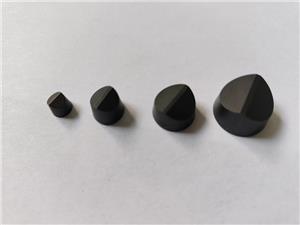
To combat chipping, we recommend using inserts with a tougher substrate, such as a cobalt-enriched carbide, combined with a honed edge (e.g., T-land or chamfer). For example, our TURNING INSERTS with a micro-grain carbide substrate and a 0.05 mm edge hone have shown a 40% reduction in chipping in interrupted cutting tests. Additionally, using a positive rake angle can reduce cutting forces.
Pain Point 2: Crater Wear and Deformation
Crater wear occurs on the rake face due to high temperature and chemical diffusion, especially when machining steels at high speeds. This leads to poor chip control and eventually insert failure. In a case study, a manufacturer machining 4140 steel at 250 m/min experienced crater wear after only 15 minutes, requiring frequent indexing.
Solution 2: Advanced Coatings
Modern CVD coatings like Al2O3 and TiAlN provide a thermal barrier and reduce chemical wear. Our TURNING INSERTS feature a multi-layer coating with a top layer of Al2O3, which reduces crater wear by 50% compared to uncoated carbide. For high-speed turning, we also recommend a post-coating treatment like micro-blasting to reduce residual tensile stresses.
Pain Point 3: Poor Surface Finish and Tolerance Drift
As the insert wears, the cutting edge geometry changes, leading to poor surface finish and dimensional drift. In finish turning of aluminum alloys, a worn insert can cause built-up edge (BUE) and increase roughness (Ra) from 0.4 to 1.2 μm, exceeding specifications.
Solution 3: Precision Ground Inserts with Wiper Geometry
Using inserts with a wiper geometry can improve surface finish without reducing feed rate. Our TURNING INSERTS with a wiper flat (e.g., 0.2 mm land) can achieve Ra below 0.8 μm even at higher feeds. Additionally, using a sharp edge with a polished rake face prevents BUE in aluminum.
Customer Case Studies
1. Precision Auto Components, Germany
They were machining hardened steel (58 HRC) for transmission shafts. Using standard CNMG inserts, they had a tool life of 12 minutes per edge. After switching to our TURNING INSERTS with a CBN grade, tool life increased to 45 minutes, and surface roughness improved from Ra 0.6 to 0.3 μm. Production manager Klaus said, "The consistency in tool life has allowed us to plan maintenance shifts accurately, reducing downtime by 30%."
2. Aerospace Turbine Blades, USA
They faced severe chipping when turning Inconel 718. Our recommendation: a ceramic insert with a negative edge chamfer. Tool life went from 8 minutes to 22 minutes, and scrap rate dropped from 5% to 0.5%. Lead engineer Sarah commented, "The inserts handle the heat better, and we no longer fear interrupted cuts."
3. Medical Implants, Switzerland
They needed a mirror finish on titanium alloys. Our wiper geometry insert with a fine grain carbide achieved Ra 0.2 μm consistently. Tool life doubled from 20 to 40 minutes. Quality manager Hans said, "The surface finish is so good that we eliminated a secondary polishing step, saving 15% on overall cost."
4. Oil & Gas Valves, UAE
They were machining duplex stainless steel and had severe crater wear. Our Al2O3-coated inserts increased tool life by 60% and improved chip control. Procurement head Fatima noted, "The inserts have reduced our insert inventory by 40% because we change them less often."
5. General Engineering, UK
They were turning medium carbon steel with a wide range of diameters. Our multi-purpose grade with a wiper geometry allowed them to use one insert for both roughing and finishing. Tool life increased by 50%, and they saved 20% on tooling costs. Engineer James said, "The versatility is amazing; we reduced our insert types from five to two."
Applications and Partnerships
Our TURNING INSERTS are used in automotive, aerospace, medical, oil & gas, and general engineering. We have partnerships with major distributors such as MSC Industrial Supply and Kennametal, ensuring global availability. Our technical team provides on-site testing and optimization for specific applications.
FAQ
Q1: What is the best insert grade for turning stainless steel?
A: For austenitic stainless steels like 304, we recommend a grade with a tough substrate and a TiAlN coating, such as our M5 grade. For ferritic/martensitic, a CVD-coated grade with Al2O3 works well.
Q2: How do I choose between positive and negative rake inserts?
A: Positive rake reduces cutting forces and is ideal for finishing and thin-walled parts. Negative rake provides stronger edge and is better for heavy roughing. We suggest using positive rake for low rigidity setups and negative for high metal removal rates.
Q3: Can I use the same insert for roughing and finishing?
A: Yes, but with compromise. Our wiper geometry inserts are designed for both, but for optimal results, use a dedicated roughing insert with a stronger edge and a finishing insert with a sharp edge.
Q4: What causes built-up edge and how to prevent it?
A: BUE occurs when workpiece material adheres to the insert, common in aluminum and low-carbon steels. Use a polished rake face, increase cutting speed, or apply a coating like diamond-like carbon (DLC). Our TURNING INSERTS with a mirror-polished rake face reduce BUE significantly.
Q5: How do I minimize tool change downtime?
A: Use a quick-change tooling system and pre-set tool offsets. Also, select inserts with longer tool life, like our multi-layer coated grades, to reduce frequency. We offer a tool life prediction service based on your parameters.
Conclusion
Premature insert failure is costly, but it is avoidable with the right grade, geometry, and coating. At NANTONG LUCUBRATE MACHINERY TECHNICAL LTD., we have the expertise to help you optimize your turning operations. For a deeper dive, download our technical white paper on insert selection, or contact our sales engineers for a free consultation. Get the white paper now.