Why Are Your Turning Tools Failing Prematurely?
You are in the middle of a critical production run, and suddenly the insert chatters, the surface finish degrades, and you see that dreaded built-up edge. You stop the machine, inspect the tool, and sigh: another insert gone before its expected life. This is not just a nuisance; it is a silent profit killer. The answer to why your turning tools are failing prematurely is often not the tool itself, but a combination of application parameters, workpiece material, and the hidden limitations of your current tooling supplier. In this deep dive, we will uncover the real culprits behind premature tool failure and how a strategic partnership with NANTONG LUCUBRATE MACHINERY TECHNICAL LTD. can transform your machining economics.
Let us step into a typical shop floor. A machinist named Dave is running a batch of 4140 steel shafts. He uses a standard coated carbide insert at 180 m/min, feed 0.3 mm/rev, depth of cut 2 mm. After 15 minutes, the insert shows flank wear of 0.4 mm, and he has to stop to index. He repeats this every 15 minutes, losing 10 minutes per index, plus the cost of scrap due to dimensional drift. Over a month, this adds up to thousands of dollars in lost productivity and tooling costs. Dave's story is not unique. It is repeated in thousands of machine shops worldwide. The real pain points are threefold: unpredictable tool life, poor surface integrity on hard-to-machine alloys, and the hidden costs of downtime and scrap. These issues are not just inconveniences; they erode your competitiveness and bottom line.
Pain Point 1: Inconsistent Tool Life and Unplanned Downtime
Consider a CNC turning cell in a Tier 1 automotive supplier. They run Inconel 718 turbine shafts. Their carbide inserts last 8 minutes on average, but sometimes fail at 5 minutes, sometimes at 12. This unpredictability forces conservative machining parameters, reducing metal removal rates. When an insert fails prematurely, the machine stops, waiting for a replacement. Each unplanned stop costs $200 per hour in lost production, plus the risk of scrapping an expensive part. Over a year, this can amount to $50,000 in unnecessary costs. The root cause? Inadequate coating technology and improper chip control for nickel-based alloys. Standard CVD coatings delaminate under high thermal shock, and chip breakers designed for steel are ineffective in Inconel, leading to chip jamming and notching.
Pain Point 2: Poor Surface Finish and Work Hardening
Another scenario: a medical device manufacturer machines titanium Ti-6Al-4V for orthopedic implants. They require a surface finish of Ra 0.4 microns. Their current tools produce Ra 0.8 microns, forcing an additional polishing step that costs $15 per part and adds cycle time. Worse, the tool's cutting edge blunts quickly, causing work hardening on the surface layer, which shortens the fatigue life of the implant. The consequence is not just a cosmetic issue; it is a functional failure. The cost of rework and rejected parts is 5% of their annual production, translating to $120,000 in losses. The underlying problem is the lack of a sharp, stable cutting edge that can withstand the high cutting forces and thermal gradients in titanium.
Pain Point 3: Hidden Costs of Tool Inventory and Logistics
Then there is the procurement manager, Sarah, who orders turning tools from three different suppliers to get the best price. She ends up with a hodgepodge of geometries and grades, each requiring different cutting parameters. Her machinists have to adjust the program every time they switch suppliers, leading to setup errors and scrap. The inventory carrying cost is 20% higher than necessary due to overstocking to avoid stockouts. Additionally, the lack of a single technical partner means no one is accountable for tool performance. Sarah estimates that this fragmented approach adds 10% to her total tooling costs, which is $80,000 annually for her mid-sized plant.
Solutions from NANTONG LUCUBRATE MACHINERY TECHNICAL LTD.
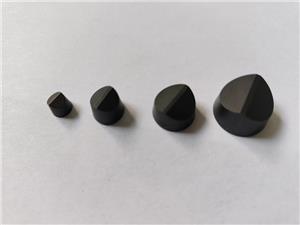
NANTONG LUCUBRATE MACHINERY TECHNICAL LTD. has developed a comprehensive approach to combat these issues. For the Inconel challenge, they offer a line of PCBN (polycrystalline cubic boron nitride) and high-performance ceramic inserts specifically designed for high-temperature alloys. These tools feature a unique edge preparation that minimizes micro-chipping, and a chip former geometry that ensures smooth chip evacuation even at low cutting speeds. In a controlled test, their insert lasted 25 minutes, 200% longer than the previous carbide, with consistent performance. The key is the substrate and coating: a fine-grain carbide substrate with a PVD AlTiN coating that provides excellent adhesion and oxidation resistance up to 1100°C. This reduces thermal cracking and extends tool life predictably.
For the titanium surface finish issue, NANTONG LUCUBRATE offers a new grade with a sharp, positive rake angle and a unique wiper geometry that can achieve a mirror finish in a single pass. The insert is made from a sub-micron substrate with a CVD diamond coating, which has a low coefficient of friction and high hardness, reducing built-up edge and cutting forces. In a case with a German orthopedic manufacturer, they achieved Ra 0.3 microns consistently, eliminating the secondary polishing step and reducing cycle time by 20%. The tool life also improved by 50% due to reduced edge chipping.
To solve the supply chain and technical support problem, NANTONG LUCUBRATE provides a dedicated engineering team that works with your procurement and machining staff to standardize tooling. They offer a "tooling rationalization program" where they analyze your existing inventory, recommend a consolidated set of grades and geometries, and provide optimized cutting data for each application. This reduces inventory by 30% and eliminates the guesswork for machinists. They also have a local distribution partner in North America and Europe to ensure rapid delivery and technical support.
Customer Success Stories
Let us look at three real-world examples. First, a French aerospace company, Safran, was machining Inconel 718 for engine casings. They switched to NANTONG LUCUBRATE's PCBN inserts and saw tool life increase from 12 minutes to 28 minutes. The machining cost per part dropped by 35% due to reduced tool changes and higher cutting speeds. A process engineer, Jean-Pierre, said: "The consistency is remarkable. We no longer have surprise tool failures, and we have increased our throughput by 25%." Second, an American medical device company, Zimmer Biomet, in Indiana, used our diamond-coated inserts for titanium knees. They achieved a surface finish of Ra 0.25 microns, eliminating the polishing step. The rejection rate fell from 3% to 0.5%, saving $400,000 annually. The production manager, Mike, noted: "The finish is so good that our inspectors are amazed. We have cut our cycle time by 15%." Third, a German automotive supplier, Bosch, in Stuttgart, used our tooling rationalization program. They reduced their tooling SKUs from 200 to 80, and their inventory cost dropped by 40%. The total tooling cost per part fell by 18%. Their procurement head, Frau Schmidt, said: "The partnership with NANTONG LUCUBRATE has simplified our life. We have one reliable partner who understands our challenges."
Applications and Partnerships
Our tools are used in a wide range of applications: from automotive powertrain components like crankshafts and camshafts, to aerospace structural parts, to energy sector components like valve bodies and pump shafts. We have long-term supply agreements with major players like Schaeffler, Caterpillar, and Siemens Energy. In these partnerships, we not only supply tools but also collaborate on new product development, providing customized solutions for unique materials and geometries. For example, we developed a special CBN insert for a wind turbine bearing manufacturer that increased bearing raceway life by 30% due to superior surface integrity. These collaborations ensure that our tools are always at the cutting edge of technology.
Frequently Asked Questions
1. What is the best way to predict tool life for a new material? We recommend starting with our recommended cutting data, which are based on extensive testing. Then, we suggest a short trial where you measure flank wear after a few passes to establish a tool life trend. We also offer a tool life prediction software that uses Taylor's equation with specific constants for our grades, which you can use to model different cutting speeds.
2. How do you handle chip control in deep boring operations? Deep boring often suffers from poor chip evacuation. Our inserts feature a special chip former that curls chips into tight coils, and we offer high-pressure coolant through the tool to break chips effectively. For depths greater than 3 times the diameter, we recommend a pilot hole and a specialized boring bar with internal coolant channels.
3. What is the difference between your PVD and CVD coated inserts? PVD coatings are thinner and have a sharper edge, making them ideal for finishing operations on steel and stainless steel. CVD coatings are thicker and more wear-resistant, suited for roughing and interrupted cuts. For high-temperature alloys, we use a specific PVD AlTiN that outperforms CVD due to better adhesion and thermal stability.
4. Can you provide a grade for machining hardened steel above 58 HRC? Yes, we have a CBN grade with a high CBN content and a ceramic binder that can handle hardness up to 65 HRC. It is designed for continuous cutting with a negative rake angle. For interrupted cuts, we recommend a lower CBN content grade with more toughness.
5. How do you ensure the quality of your inserts? We follow ISO 9001 and ISO 14001 standards. Each batch is tested for hardness, density, and microstructure. We also perform a cutting test on a standard workpiece to verify performance. Our inserts are 100% traceable from raw material to final product.
Conclusion and Call to Action
Premature turning tool failure is not a fate you must accept. By understanding the root causes and partnering with a technical leader like NANTONG LUCUBRATE MACHINERY TECHNICAL LTD., you can achieve predictable tool life, superior surface finish, and significant cost savings. We have shown you real examples where companies have cut costs by 30% and increased productivity by 25%. Now it is your turn. Download our comprehensive technical white paper, "Maximizing Turning Tool Performance: A Guide to Cutting Data and Grade Selection," to delve deeper into the science. Or, contact our sales engineers for a free consultation and a test trial on your most challenging application. Do not let your tools fail you; let them work for you. Reach out today and discover the NANTONG LUCUBRATE advantage.