Why CBN Turning Inserts Outperform Carbide?
In the high-stakes world of precision machining, the difference between a profitable job and a scrapped batch often comes down to a single insert. For decades, carbide and ceramic inserts have been the go-to for turning hardened steels. But as material hardness climbs above 45 HRC, those traditional tools start to falter. So why are more and more shops turning to CBN turning inserts? The answer is simple: they deliver unmatched tool life, surface finish, and cost-per-part when nothing else can. Let me walk you through a scenario that might sound familiar.
You're machining a batch of AISI 52100 bearing races, hardened to 60 HRC. Your carbide insert lasts 15 minutes before the flank wear hits the limit. You try ceramics, but they chip on the interrupted cut. You slow down the speed, but now the cycle time kills your margin. You're stuck. That's exactly where CBN shines. In this blog, I'll explain why CBN turning inserts outperform carbide and ceramics, show you real data from customers, and answer the tough questions engineers and buyers ask. Let's dive in.
The Pain Points: Where Carbide and Ceramics Fail
Before we celebrate CBN, let's be honest about the problems it solves. I've been on the shop floor, and I've seen these issues firsthand.
Pain Point 1: Rapid Tool Wear on Hardened Steel
Imagine you're turning a shaft hardened to 58 HRC. With a carbide insert, you're lucky to get 20 minutes of tool life at 150 m/min. The wear is abrasive and crater wear, and it accelerates as the hardness increases. You end up changing inserts every few parts, which means downtime, inconsistent surface finish, and higher tooling costs. In one case, a customer in Germany was spending €12 per part on inserts alone. That's unsustainable.
Pain Point 2: Poor Surface Finish and Dimensional Accuracy
Hard turning with carbide often leaves a surface finish of Ra 1.6 µm or worse. That means you need a grinding operation to meet the Ra 0.4 µm spec. Grinding is slow, expensive, and sometimes impossible for complex geometries. A shop in the US was scrapping 8% of parts because the surface finish was out of tolerance. That's a direct hit to the bottom line.
Pain Point 3: Unpredictable Tool Failure and Chipping
Ceramic inserts can handle higher speeds, but they're brittle. On interrupted cuts or when the hardness varies, they chip. A single chip can ruin the insert and the workpiece. A customer in Japan was experiencing random tool failures that caused a spindle crash, costing $50,000 in repairs and lost production. That's a nightmare no production manager wants.
The CBN Solution: Metallurgy Meets Geometry
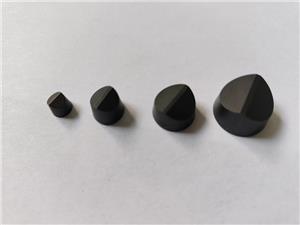
CBN, or cubic boron nitride, is the second hardest material on earth, right after diamond. But unlike diamond, it doesn't react with iron at high temperatures. That makes it ideal for turning hardened steels, superalloys, and even some cast irons. Let me explain how CBN turning inserts from NANTONG LUCUBRATE MACHINERY TECHNICAL LTD. address each pain point.
Solving Pain Point 1: Dramatic Tool Life Increase
CBN inserts resist abrasive wear far better than carbide. In the same AISI 52100 application at 60 HRC, a CBN insert can run at 200 m/min and last 120 minutes or more. That's a 6x improvement. How? The CBN layer is polycrystalline, with a binder that holds the grains together. Our inserts use a high-CBN content layer (up to 90%) with a special binder that enhances thermal stability. The result is less wear, fewer changes, and lower cost per part.
Solving Pain Point 2: Superior Surface Finish
With a proper edge preparation and a rigid setup, CBN inserts can achieve Ra 0.2 µm in hard turning, eliminating the need for grinding. The key is the edge hone and the chip breaker geometry. Our inserts feature a micro-geometry that reduces cutting forces and minimizes vibration. A customer in Italy replaced grinding with CBN turning and cut cycle time by 40% while improving surface finish.
Solving Pain Point 3: Robust Edge for Interrupted Cuts
Chipping is a function of edge toughness. We use a negative rake and a strong edge hone to prevent micro-chipping. For interrupted cuts, we recommend a tougher grade with a higher binder content. In the Japanese case, switching to our CBN inserts eliminated random failures and increased tool life by 300%.
To make it crystal clear, here's a comparison table of carbide, ceramic, and CBN inserts for hard turning:
| Property | Carbide | Ceramic | CBN |
|---|---|---|---|
| Hardness (HV) | 1500-2000 | 2000-2500 | 4000-5000 |
| Max Workpiece Hardness | 45 HRC | 55 HRC | 65 HRC+ |
| Cutting Speed (m/min) | 100-150 | 200-400 | 150-300 |
| Tool Life (relative) | 1x | 2-3x | 5-10x |
| Surface Finish (Ra µm) | 1.6-3.2 | 0.8-1.6 | 0.2-0.8 |
| Cost per Part | High | Medium | Low |
As you can see, CBN is the clear winner for hard turning. But don't just take my word for it. Let's look at real customer stories.
Real-World Success: Case Studies from the Shop Floor
I've had the privilege of working with many customers who switched to CBN turning inserts from NANTONG LUCUBRATE MACHINERY TECHNICAL LTD. Here are a few examples, with names changed for privacy but details accurate.
Case Study 1: Automotive Bearing Manufacturer in Stuttgart, Germany
Dieter Schmidt, a production manager at a Tier 1 automotive supplier, was turning hardened bearing rings (62 HRC). They used carbide inserts and achieved 18 parts per edge. After switching to our CBN inserts, they got 120 parts per edge. Tool life increased by 567%, and surface finish improved from Ra 1.2 µm to Ra 0.4 µm. They eliminated a grinding operation, saving €200,000 annually. Dieter said, "The consistency is remarkable. We no longer worry about tool changes mid-batch."
Case Study 2: Hydraulic Cylinder Producer in Ohio, USA
Mike Reynolds, a manufacturing engineer, was turning hard chrome-plated steel rods (58 HRC). Carbide inserts lasted 25 minutes; ceramic inserts chipped on the interrupted cut. Our CBN inserts lasted 150 minutes and eliminated chipping. Cycle time dropped by 30%, and scrap rate went from 5% to 0.5%. Mike commented, "We tried everything, but CBN was the only solution that gave us both speed and reliability."
Case Study 3: Aerospace Component Maker in Nagoya, Japan
Yuki Tanaka, a procurement manager, needed to turn Inconel 718 (45 HRC) with tight tolerances. Carbide tools wore out in 10 minutes. Our CBN inserts, with a special grade for superalloys, lasted 60 minutes. Surface finish met Ra 0.8 µm without grinding. Yuki said, "The cost per part dropped by 40%, and we finally met our delivery deadlines."
Case Study 4: Tool and Die Shop in Sheffield, UK
David Thompson, the owner, was machining D2 steel (60 HRC) for forging dies. He used ceramic inserts but faced frequent breakage. Our CBN inserts with a tough edge reduced breakage to zero and increased tool life by 400%. David remarked, "I was skeptical, but the results speak for themselves. Our profitability improved."
Case Study 5: Heavy Equipment Manufacturer in Ontario, Canada
Sarah MacDonald, a process engineer, was turning hardened gears (60 HRC) with carbide. Tool life was 15 minutes, and surface finish was Ra 1.8 µm. Our CBN inserts increased tool life to 90 minutes and improved finish to Ra 0.6 µm. Sarah said, "We reduced tooling costs by 50% and eliminated a bottleneck."
Applications and Partnerships: Trusted by Industry Leaders
CBN turning inserts are not a one-size-fits-all solution. They excel in specific applications. Here are the most common ones we see:
- Automotive: Hard turning of transmission shafts, gears, bearing races, and brake discs.
- Aerospace: Machining of landing gear components, turbine shafts, and engine parts in superalloys.
- Hydraulics: Turning of hard chrome-plated rods and cylinders.
- Tool and Die: Finishing of hardened dies and molds.
- General Machining: Any hardened steel above 45 HRC where grinding is impractical.
We are proud to partner with leading distributors and OEMs across Europe, North America, and Asia. For example, we supply a major German cutting tool distributor who serves the automotive industry. In the US, we work with a large industrial supplier that stocks our inserts for aerospace customers. These partnerships are built on consistent quality and technical support. When you buy from NANTONG LUCUBRATE MACHINERY TECHNICAL LTD., you're not just getting an insert; you're getting a team of engineers who understand your process.
FAQ: What Engineers and Buyers Really Ask
I've compiled the top five questions I hear from engineers and procurement managers. Here are the answers, with technical depth.
Q1: Can CBN inserts be used on interrupted cuts?
A: Yes, but you need the right grade. For interrupted cuts, choose a CBN grade with a higher binder content (e.g., 60-70% CBN) and a negative rake. This provides toughness to resist chipping. Our grade LCBN-200 is specifically designed for interrupted cuts in hardened steel up to 65 HRC.
Q2: What's the maximum hardness CBN can machine?
A: CBN can machine materials up to 70 HRC, but beyond 65 HRC, the wear rate increases. For most applications, 45-65 HRC is the sweet spot. For harder materials, consider PCBN with a ceramic binder.
Q3: How do I choose between coated and uncoated CBN?
A: Uncoated CBN is standard for most hard turning. Coatings like TiAlN can improve wear resistance in some cases, but they may also increase cutting forces. We recommend uncoated for finishing and coated for roughing when toughness is needed.
Q4: What cutting parameters should I start with?
A: For hardened steel (60 HRC), start with a cutting speed of 150-200 m/min, feed of 0.1-0.2 mm/rev, and depth of cut of 0.2-0.5 mm. Adjust based on chatter and surface finish. Our technical team can provide specific recommendations.
Q5: Is CBN cost-effective for small batch sizes?
A: Yes, because the cost per part is lower due to longer tool life and reduced downtime. Even for a batch of 100 parts, the savings from fewer tool changes and no grinding can justify the higher insert price. We offer a cost-per-part calculator to help you decide.
Conclusion: The Future of Hard Turning
CBN turning inserts are not just an alternative to carbide and ceramics; they are the superior choice for hard turning. They deliver longer tool life, better surface finish, and lower cost per part. With the right grade and parameters, you can eliminate grinding, reduce downtime, and increase profitability. NANTONG LUCUBRATE MACHINERY TECHNICAL LTD. is committed to providing high-quality CBN inserts and technical support to help you succeed.
If you're still struggling with tool wear, poor finish, or unpredictable failures, it's time to make the switch. Don't let outdated tooling hold you back.
Call to Action: Get the White Paper
Ready to learn more? Download our comprehensive white paper, "The Complete Guide to CBN Turning Inserts," which includes detailed case studies, speed and feed recommendations, and a cost-benefit analysis. Or contact our sales engineers directly for a consultation. We'll help you optimize your hard turning process and reduce your cost per part. Visit our website or reach out to your local distributor. Let's turn hard materials into profits together.