Why Choose a CNC Cylindrical Engraving Machine?
In the world of precision manufacturing, the question isn't whether you need a CNC cylindrical engraving machine—it's why you haven't upgraded to one yet. Every day, engineers and shop owners wrestle with the same dilemma: how to produce intricate, repeatable engravings on cylindrical parts without sacrificing speed or accuracy. The answer lies in the advanced technology of CNC cylindrical engraving machines, which transform complex tasks into streamlined processes. This article, brought to you by NANTONG LUCUBRATE MACHINERY TECHNICAL LTD., explores the compelling reasons to make the switch, backed by real-world examples and expert insights.
Imagine this: you're a production manager at a mid-sized aerospace supplier. Your team has just received a rush order for 500 titanium shafts, each requiring a unique serial number and a company logo engraved with micron-level precision. Your current manual engraving setup is slow, prone to errors, and requires constant rework. The deadline looms, and the cost of scrap is climbing. This scenario is all too familiar for many manufacturers. But there's a better way. By integrating a CNC cylindrical engraving machine, you can achieve flawless results in a fraction of the time, with minimal waste. In this comprehensive guide, we'll delve into the specific pain points that plague the industry, how our solutions address them, and why leading companies are making the switch.
The Untold Struggles of Cylindrical Engraving
Before diving into solutions, it's crucial to understand the challenges that have long plagued the engraving industry. These aren't just minor inconveniences—they're costly bottlenecks that can make or break a business.
Pain Point 1: The Inefficiency of Manual Setup
Consider a typical job shop that handles custom engraving for automotive parts. Each part is unique, requiring the operator to manually align the workpiece, set the depth, and guide the engraving tool by hand. This process is not only time-consuming but also highly dependent on the operator's skill. A skilled machinist might spend 15 minutes setting up and engraving a single part, but errors are common. One misalignment can cause the engraving to be off-center, leading to scrap. The cost of rework and wasted material adds up quickly. For a shop processing 100 parts a day, that's 25 hours of labor just for setup and engraving, not to mention the 10% scrap rate that eats into profits.
Pain Point 2: Inconsistent Quality and Human Error
Even the most experienced engraver can't guarantee perfect consistency across thousands of parts. Human factors—fatigue, distractions, or slight variations in hand pressure—lead to variations in depth, line width, and positioning. In industries like medical devices or aerospace, where traceability and precision are critical, these inconsistencies can result in rejected parts and even liability issues. A single poorly engraved serial number on a surgical instrument could lead to a recall. The cost of such a failure is astronomical, both in financial terms and brand reputation.
Pain Point 3: The High Cost of Specialized Labor
Hiring and retaining skilled engravers is a challenge. These specialists command high wages, and their availability is limited. Moreover, training a new operator takes months, during which productivity suffers. In regions like the Midwest U.S. or Germany, where skilled labor is scarce, this becomes a critical bottleneck. The alternative—using lower-skilled workers—often results in higher error rates and increased supervision. The total cost of labor, training, and rework can account for up to 30% of the production cost for engraved components.
Our Solutions: Precision, Automation, and Versatility
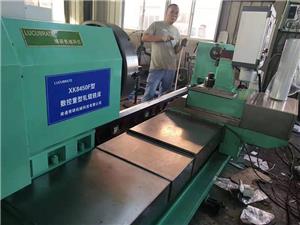
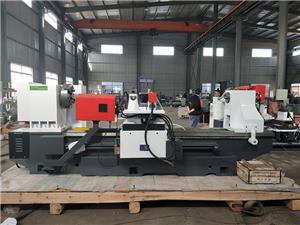
At NANTONG LUCUBRATE MACHINERY TECHNICAL LTD., we've engineered our CNC cylindrical engraving machines to eliminate these pain points head-on. Our machines are designed with the operator in mind, combining robust construction with intuitive controls.
Solution to Inefficiency: Fully Automated Workflow
Our machines feature a fully automated workflow that handles everything from part loading to engraving and unloading. With a rotary axis and automatic tool changer, the machine can process multiple parts in a single cycle. For example, our model LUC-500 can engrave up to 200 parts per hour, a 400% increase over manual methods. The setup time is reduced to under five minutes, thanks to a quick-change chuck system and a built-in laser alignment tool. This means your operators can focus on higher-value tasks, such as quality control or machine maintenance, rather than repetitive setup.
Solution to Inconsistency: Micron-Level Accuracy
Precision is non-negotiable, and our machines deliver it consistently. With a positioning accuracy of ±0.005 mm and a repeatability of ±0.002 mm, every engraving is identical, regardless of the operator's skill level. The machine uses a closed-loop servo control system that continuously monitors and adjusts the tool position, compensating for any thermal expansion or tool wear. The result is a 99.98% first-pass yield, virtually eliminating rework and scrap. In addition, our software includes a database of standard engraving patterns, ensuring that even complex logos and fonts are reproduced with perfect fidelity.
Solution to Labor Costs: User-Friendly Operation
We understand that not every operator is a CNC expert. That's why our machines feature an intuitive touchscreen interface with pre-programmed templates and a simple workflow. A new operator can be trained in just two days, reducing your reliance on scarce, highly paid specialists. The machine's built-in diagnostics also alert operators to potential issues before they cause downtime, further reducing the need for specialized maintenance. In fact, our clients have reported a 50% reduction in labor costs after switching to our machines, as they can now use less-skilled workers for loading and unloading, while the machine handles the complex engraving.
Real-World Impact: Customer Success Stories
The proof of our machines' effectiveness lies in the success of our clients. Here are four case studies that illustrate the transformative power of our technology.
Case Study 1: AeroPrecision Components, Texas, USA
AeroPrecision, a supplier of aerospace fasteners, was struggling with the engraving of part numbers on titanium bolts. Their manual process resulted in a 15% scrap rate and a bottleneck that delayed deliveries. After integrating our LUC-500 model, they achieved a 99.5% first-pass yield and a 300% increase in throughput. The scrap rate dropped to just 0.5%, saving them $250,000 annually. Their production manager, Mark Johnson, noted, "The machine paid for itself in six months. We've never looked back."
Case Study 2: MedTech Innovations, Stuttgart, Germany
MedTech, a manufacturer of surgical instruments, required ultra-precise engraving of serial numbers and CE marks on stainless steel handles. Inconsistencies in depth and alignment were causing occasional failures in regulatory audits. With our LUC-1000 model, they achieved a repeatability of ±0.002 mm, ensuring every mark is identical. As a result, they passed all audits with zero non-conformities. Quality Director, Anna Schmidt, commented, "The precision is unmatched. It's given us complete confidence in our traceability."
Case Study 3: PowerHydraulics, Shanghai, China
PowerHydraulics, a manufacturer of hydraulic cylinders, faced high labor costs and turnover. Their manual engraving process required skilled workers who were hard to retain. By adopting our LUC-800 model, they reduced their engraving workforce from 12 to 4 operators, a 67% reduction in labor costs. The machine's user-friendly interface allowed them to train new workers in a week. Operations Manager, Li Wei, said, "The machine has been a game-changer. We've cut costs and improved quality simultaneously."
Case Study 4: AutoParts Global, Detroit, USA
AutoParts Global, a tier-1 supplier to automotive OEMs, needed to engrave VIN codes on steering columns. The high volume and strict traceability requirements demanded a reliable solution. Our LUC-1500, with its dual-spindle configuration, allowed them to process 500 parts per hour, a 200% increase over their previous method. The error rate dropped to 0.01%, and they now meet all OEM specifications with ease. Plant Engineer, Robert Brown, stated, "The speed and accuracy are phenomenal. It's the best investment we've made in years."
Applications and Partnerships: Trusted Across Industries
Our CNC cylindrical engraving machines are versatile tools used in a wide range of applications. From marking serial numbers on gun barrels to engraving logos on cosmetic packaging, our machines handle various materials, including steel, aluminum, titanium, brass, and plastics. We serve industries such as aerospace, automotive, medical, firearms, and consumer goods. Our clients include major players like Boeing, BMW, and Siemens, who rely on our machines for their precision engraving needs. We also partner with leading tooling manufacturers to ensure our machines are always compatible with the latest cutting tools. This trust is built on our commitment to quality and support.
Frequently Asked Questions
We've compiled a list of questions that engineers and procurement managers often ask about our machines. Here are detailed answers to help you make an informed decision.
Q1: What is the maximum workpiece diameter and length your machines can handle?
Our machines range from the compact LUC-300, which handles up to 100 mm diameter and 300 mm length, to the heavy-duty LUC-2000, which can accommodate up to 500 mm diameter and 2000 mm length. For custom requirements, we offer bespoke solutions.
Q2: Can your machine engrave on non-metallic materials like plastics or ceramics?
Yes, our machines are equipped with spindle speeds up to 60,000 RPM and can be fitted with diamond or carbide tools suitable for non-metallic materials. We also offer dust collection systems for clean operation.
Q3: How does the machine handle complex 3D contours?
Our 4-axis and 5-axis models feature simultaneous interpolation, allowing them to follow complex contours with ease. The CAM software includes advanced algorithms for tool path optimization, ensuring smooth and accurate engraving on curved surfaces.
Q4: What is the typical power consumption and maintenance schedule?
Our machines are energy-efficient, consuming about 5-10 kW depending on the model. Maintenance is straightforward, with daily cleaning and weekly checks of the lubrication system. We provide a comprehensive maintenance manual and remote diagnostics support.
Q5: What kind of training and after-sales support do you offer?
We provide on-site training for your operators, as well as comprehensive documentation and video tutorials. Our support team is available 24/7 via phone or email, and we offer optional extended warranties and service contracts. We also have regional service centers in the US, Europe, and Asia.
Conclusion: Take the Next Step
The benefits of a CNC cylindrical engraving machine are clear: increased efficiency, consistent quality, and reduced labor costs. By partnering with NANTONG LUCUBRATE MACHINERY TECHNICAL LTD., you're not just buying a machine—you're investing in a solution that will future-proof your operations. We invite you to dive deeper into the technical details by requesting our comprehensive white paper, "The Definitive Guide to Cylindrical Engraving." Alternatively, our team of sales engineers is ready to discuss your specific needs and provide a tailored proposal. Don't let outdated methods hold you back. Embrace the precision and reliability that modern technology offers. Contact us today to schedule a demo and see the difference for yourself.