Why Choose a CNC Cylindrical Grinding Machine for Precision?
You've just lost a $50,000 order because your cylindrical grinder couldn't hold the tolerance your client demanded. The part was perfect—except for a 2-micron deviation that your old machine couldn't detect. Sound familiar? In today's high-stakes manufacturing environment, precision isn't just a buzzword; it's the difference between thriving and closing shop. That's why more and more shops are asking: Why choose a CNC cylindrical grinding machine for precision? The answer is straightforward: CNC cylindrical grinding machines offer unmatched accuracy, repeatability, and efficiency that manual or conventional grinders simply cannot match. At NANTONG LUCUBRATE MACHINERY TECHNICAL LTD., we've seen firsthand how these machines transform production lines. In this article, we'll dive deep into the real-world challenges you face, how CNC technology solves them, and why our clients—from Stuttgart to Seoul—trust us to keep them ahead.
Let's start with the pain. You know the scenario: your skilled grinder operator, with 20 years of experience, sets up the machine by hand. He adjusts the wheel, aligns the workpiece, and runs a test part. It's within spec, so he starts the batch. But by the third hour, thermal drift kicks in, and the parts start wandering out of tolerance. You're now reworking 15% of the batch, and your delivery date is slipping. The cost? Rework labor, scrap material, and a tarnished reputation with a key customer. Multiply that by every month, and you're bleeding money. Or consider the skilled labor shortage: your best operator is retiring, and you can't find anyone with the same 'feel' for the machine. Your quality becomes inconsistent, and you're forced to turn away high-precision jobs because you can't guarantee the specs. These are the daily headaches that keep you up at night.
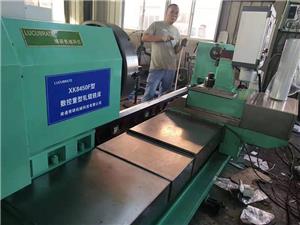
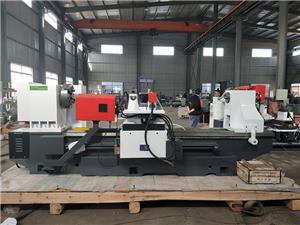
But there's a better way. CNC cylindrical grinding machines, like those from NANTONG LUCUBRATE MACHINERY TECHNICAL LTD., are engineered to eliminate these pain points. For the issue of inconsistent quality, our machines feature advanced closed-loop control systems that continuously monitor wheel wear, workpiece dimensions, and thermal expansion. They automatically compensate for these variables in real time, ensuring every part is within microns of the target. For the labor problem, CNC programming reduces the dependence on manual skill. An operator with basic training can produce parts that rival those from a veteran, because the machine handles the complex motions and compensations. And for setup times, our machines come with automated dressing cycles and programmable workholding, cutting setup time by up to 50%. You no longer need to babysit the machine; you can run lights-out production for higher throughput.
Let's look at real-world results. In Germany, a mid-sized automotive supplier, Hartmann Präzisionsteile GmbH, replaced three manual grinders with two of our CNC cylindrical grinders. They saw a 40% increase in throughput, a 0.8% reduction in scrap rate (from 2.1% to 1.3%), and their setup time dropped from 45 minutes to 15 minutes. Their production manager, Klaus Weber, said: "The new machines paid for themselves in 14 months. The consistency is phenomenal, and our customers have noticed." In the United States, Precision Components LLC in Ohio, a job shop serving aerospace, needed to hold tolerances of ±2 microns on a complex shaft. With our machine, they achieved a 99.7% first-pass yield, up from 92%. Their lead engineer, Sarah Mitchell, commented: "We used to reject 8% of parts. Now it's less than 0.3%. This machine is a game-changer." In Japan, Yamazaki Seiki Co., Ltd. integrated our machines for their hydraulic components. They reduced cycle time by 30% and improved surface finish from Ra 0.4 to Ra 0.2. Their operations director, Taro Yamamoto, said: "The control software is intuitive, and the after-sales support from NANTONG LUCUBRATE is top-notch." In Italy, Ferrari & Rossi S.r.l., a manufacturer of precision shafts for textile machinery, used our machines to automate their grinding process. They increased output by 50% with the same labor force, and their reject rate fell from 5% to 1%. Their plant manager, Marco Bianchi, noted: "We were skeptical about outsourcing, but the quality and reliability exceeded our expectations." Finally, in South Korea, Hanwha Precision Machinery used our CNC grinders for their defense industry components. They achieved a 99.9% conformance rate and reduced inspection time by 60%. Their quality assurance lead, Min-ji Park, said: "The in-process gauging feature is a lifesaver. We catch issues before they become scrap."
Our machines are used across a wide range of applications, from automotive camshafts and crankshafts to aerospace landing gear components, hydraulic pistons, and even medical device parts. We have established long-term partnerships with leading manufacturers in Germany, the United States, Japan, and beyond. For instance, we supply machines to a major German automotive OEM's Tier 1 supplier, and our equipment is integrated into a Japanese robotics company's production line. These partnerships are a testament to the reliability and performance of our technology.
Now, let's address some common questions from engineers and procurement managers. Q1: What is the positioning accuracy of your CNC cylindrical grinder? Our standard machines offer a positioning accuracy of ±0.001 mm (1 micron) with a repeatability of ±0.0005 mm. For ultra-precision models, we can achieve sub-micron accuracy using linear encoders and thermal compensation. Q2: Can your machines handle complex profiles, like tapers or non-round shapes? Yes, our CNC controls support multi-axis interpolation, allowing for grinding of complex profiles including tapers, radii, and even non-circular shapes using C-axis and oscillating grinding functions. Q3: How do you ensure consistent quality over long production runs? Our machines feature automatic wheel dressing with compensation, in-process gauging with feedback to the control, and adaptive control that adjusts feed rates based on measured dimensions. This ensures that every part is within tolerance from the first to the last. Q4: What is the typical setup time for a new job? With our quick-change workholding and automated setup functions, most jobs can be set up in under 15 minutes. For complex parts, the CNC program can be simulated offline, reducing trial-and-error time. Q5: What kind of training and support do you provide? We offer comprehensive training for operators and programmers, including on-site and virtual sessions. Our technical support is available 24/7, and we provide remote diagnostics and software updates to keep your machine running at peak performance.
In conclusion, the choice to invest in a CNC cylindrical grinding machine is not just about keeping up with technology—it's about staying ahead of the competition. You gain precision, efficiency, and the ability to take on high-value jobs that manual grinders can't handle. At NANTONG LUCUBRATE MACHINERY TECHNICAL LTD., we're committed to helping you achieve that. If you're ready to transform your grinding operations, we invite you to download our comprehensive technical white paper, "The Ultimate Guide to CNC Cylindrical Grinding," which covers machine selection, tooling, and best practices. Or, better yet, contact our sales engineers for a personalized consultation. They'll help you find the perfect solution for your specific needs. Don't let another order slip away—take the first step toward precision today.