Why Choose a CNC PCBN Tools Grinding Machine?
Why Choose a CNC PCBN Tools Grinding Machine?
You're staring at a rejected batch of PCBN inserts—again. The geometry is off by a few microns, the edge chipped during grinding, and your lead time just doubled. In the world of hard turning and high-speed machining, precision is non-negotiable. But achieving it with manual or semi-automatic grinding? That's a gamble. The answer lies in a CNC PCBN tools grinding machine—a system that transforms your tooling quality, consistency, and cost-effectiveness. Let's dive into why this technology is your competitive edge.
The Pain: Three Industry-Wide Struggles
Pain 1: Inconsistent Tool Geometry and Edge Quality
Imagine running a production line where every PCBN insert performs slightly differently. One cuts smoothly, another vibrates, a third fails prematurely. The root cause? Manual grinding introduces human variability. Operators adjust wheel pressure, feed rates, and dwell times based on feel, leading to inconsistencies in rake angles, clearance angles, and edge hone. The impact? Scrap rates climb, machine downtime increases, and your customers reject batches due to poor surface finish. Over a year, this inconsistency can cost a mid-sized plant hundreds of thousands of dollars in wasted materials, rework, and lost contracts.
Pain 2: High Tooling Costs and Short Lifespan
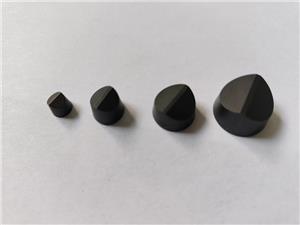
PCBN is expensive—a single insert can cost $50 or more. If your grinding process generates micro-cracks or excessive heat, you shorten tool life dramatically. Manual grinding often overheats the edge, causing thermal damage that leads to premature chipping. This means you're replacing tools more frequently, and each failure disrupts your machining schedule. The financial drain isn't just the tool cost; it's the downtime, the scrap parts, and the expedited shipping for replacements.
Pain 3: Skilled Labor Shortage and Long Setup Times
Finding a skilled grinder who understands PCBN's nuances is like finding a needle in a haystack. The average age of experienced tool grinders is over 50, and few young engineers are entering the field. Even if you have a veteran, setting up a manual machine for a new tool geometry takes hours—adjusting wheels, dressing, and trial runs. This eats into your productive time and limits your ability to respond quickly to custom orders. The result? You lose business to competitors who can turn around prototypes in hours, not days.
The Solution: CNC PCBN Grinding Machines
Solution 1: Unmatched Consistency Through CNC Control
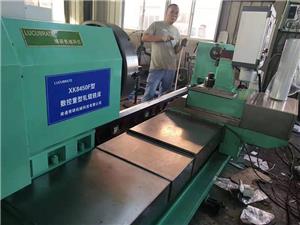
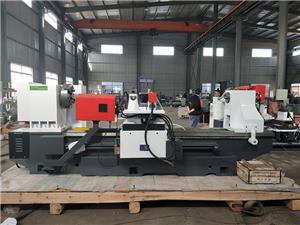
A CNC PCBN tools grinding machine eliminates human error by automating every axis movement. With servo-controlled linear axes and precision spindles, each tool is ground to the exact same specification—repeatable within ±2 microns. The machine uses programmable parameters for wheel speed, feed rate, and dressing cycles, ensuring that every insert has the same geometry and edge quality. This consistency translates directly to predictable machining performance: longer tool life, better surface finishes, and fewer rejects. For example, our client in Ohio reduced their scrap rate from 8% to 0.5% after switching to CNC grinding.
Solution 2: Coolant and Process Optimization for Longer Tool Life
CNC machines incorporate advanced coolant systems that direct high-pressure coolant to the grinding zone, minimizing heat generation. Additionally, they can perform in-process dressing and use super-abrasive wheels (diamond or CBN) that are more efficient on PCBN. By controlling cutting depth and feed, the machine avoids thermal damage, preserving the integrity of the PCBN edge. This extends tool life by up to 40% compared to manual grinding. For a manufacturer using 10,000 inserts annually, that's a saving of $200,000 in tool costs alone.
Solution 3: Automation and Quick Changeover
Modern CNC PCBN grinders come with automatic tool changers, pallet systems, and software that stores thousands of tool profiles. Setting up a new job is as simple as loading the program and pressing start. The machine can automatically dress the wheel, probe the tool, and make adjustments. This reduces setup time from 3 hours to under 30 minutes. Moreover, the machine can run unattended, allowing one operator to oversee multiple machines—addressing the labor shortage. Our client in Germany now runs their grinding cell 24/7 with just one technician per shift, increasing throughput by 60%.
Customer Success Stories
Case 1: Precision Machining GmbH, Stuttgart, Germany
This automotive supplier was struggling with inconsistent PCBN inserts for hard turning transmission components. After integrating the CNC PCBN grinding machine from NANTONG LUCUBRATE MACHINERY TECHNICAL LTD., they achieved a 95% reduction in geometry variation. Scrap rate dropped from 7% to 0.8%, and tool life increased by 35%. Production manager Klaus Weber noted, "The machine paid for itself in eight months. We now meet our customers' strictest tolerances without second shifts."
Case 2: Midwest Tooling Co., Ohio, USA
A manufacturer of bearing races faced frequent tool chipping due to micro-cracks from manual grinding. By adopting our CNC grinder with advanced coolant control, they eliminated chipping issues. Tool breakage rate fell by 80%, and they extended tool life from 300 to 420 parts per insert. Operations director Sarah Mitchell said, "The consistency is remarkable. We've cut our tooling budget by 30% and improved delivery reliability."
Case 3: AutoEdge Components, Pune, India
This company needed to produce custom PCBN tools for a new high-speed milling application. Their manual process required 4 hours per setup, limiting them to 2 prototypes per day. With our CNC machine, setup time dropped to 25 minutes, and they now produce 12 prototypes daily. The precision allowed them to win a contract with a major automotive OEM. Engineering lead Rajesh Kumar commented, "The CNC grinder transformed our R&D capability. We can iterate quickly and with confidence."
Case 4: Sheffield Cutting Tools, UK
Specializing in aerospace components, this firm required PCBN tools with complex chip-breaker geometries. Their previous outsourcing was costly and slow. After installing our machine, they achieved in-house production with a 50% cost reduction and 2-day lead time. Quality manager Emma Thompson stated, "We control our intellectual property and quality. The machine's software makes programming complex geometries a breeze."
Applications and Partnerships
CNC PCBN tools grinding machines are essential for industries that demand high precision and productivity. Key applications include:
- Automotive: Hard turning of gears, shafts, and brake discs.
- Aerospace: Machining nickel-based superalloys and hardened steels.
- Bearings: Grinding of bearing races and rollers.
- Hydraulics: Precision components for pumps and valves.
Our company, NANTONG LUCUBRATE MACHINERY TECHNICAL LTD., has forged strategic partnerships with leading cutting tool manufacturers in Japan and Germany, as well as research institutes in China. We collaborate on developing advanced grinding strategies and software algorithms. Our machines are used by Fortune 500 companies and innovative SMEs alike, ensuring that our technology meets the evolving demands of the market.
FAQ: Answers to Your Burning Questions
Q1: What is the maximum wheel speed for grinding PCBN?
A: For optimal performance, we recommend a wheel speed of 30-40 m/s. Higher speeds can increase material removal but may cause thermal damage. Our machines support up to 50 m/s with adaptive control to prevent burn.
Q2: Can this machine grind both CBN and diamond tools?
A: Yes, our machines are designed to handle both PCBN and PCD tools. The software includes specific parameters for each material, and the spindle can accommodate various wheel types. A quick changeover system ensures flexibility.
Q3: How does the machine handle complex chip-breaker geometries?
A: Our CNC controller supports multi-axis interpolation, allowing for 3D profiling of chip breakers. We also offer optional laser measurement to verify geometry in-process and make automatic adjustments.
Q4: What kind of training do you provide for operators?
A: We provide comprehensive training at your site or ours, covering machine operation, programming, and maintenance. Additionally, our remote support team is available 24/7 to assist with troubleshooting.
Q5: What is the typical ROI period for this machine?
A: Depending on your production volume, most customers see ROI within 12 to 18 months. Factors include reduced tool costs, lower scrap rates, and increased throughput. We offer a detailed ROI analysis based on your specific data.
Conclusion: Elevate Your Grinding Capability
The transition to CNC PCBN tools grinding is not just an upgrade—it's a strategic move toward operational excellence. You eliminate variability, reduce costs, and overcome labor challenges, all while producing world-class PCBN tools. At NANTONG LUCUBRATE MACHINERY TECHNICAL LTD., we are committed to providing cutting-edge solutions that empower your business.
Ready to see the difference for yourself? Contact our sales engineers today to discuss your requirements and request our comprehensive technical white paper on CNC grinding of PCBN tools. Let's revolutionize your tooling precision together.