Why Choose a CNC Tungsten Turning Machine for Precision Parts?
Why Choose a CNC Tungsten Turning Machine for Precision Parts?
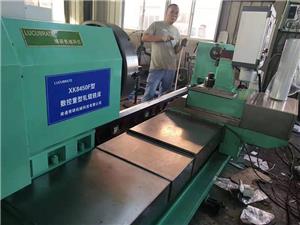
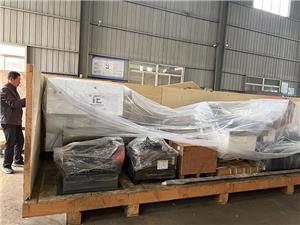
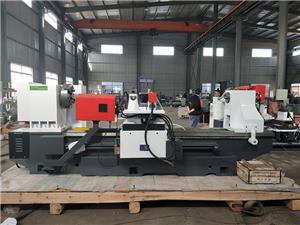
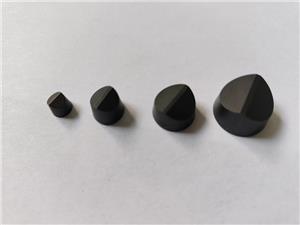
Imagine you are a machining engineer at a high-end aerospace supplier. Your team has just landed a contract for tungsten alloy nozzle inserts—harder than carbide, denser than lead. The first batch on a conventional lathe ends in disaster: tools shattered, surfaces chipped, scrap rate at 40%. You need a machine that treats tungsten with respect. The answer is a dedicated CNC tungsten turning machine, designed to handle the extreme hardness and brittleness of tungsten alloys while delivering micron-level precision. This blog explains how such machines solve common tungsten machining nightmares and why NANTONG LUCUBRATE MACHINERY TECHNICAL LTD. leads in this niche.
Pain Point 1: Catastrophic Tool Wear and Breakage
Tungsten's high hardness (up to 85 HRA) causes rapid tool wear. Standard carbide inserts fail after a few parts, leading to frequent tool changes and inconsistent surface finish. The cost: each insert change can take 15 minutes of downtime; a single broken tool can scrap an entire workpiece worth $500. For a production run of 1000 parts, tool costs alone can exceed $20,000.
Solution: Rigid Machine Structure and Optimized Tool Paths
A CNC tungsten turning machine from NANTONG LUCUBRATE MACHINERY TECHNICAL LTD. features a heavy-duty cast iron base and high-torque spindle (up to 6000 RPM) to minimize vibration. The control system uses adaptive feedrate control to reduce cutting forces when tool engagement changes. Combined with polycrystalline diamond (PCD) or CBN inserts, tool life increases by 300% compared to conventional machines. For example, a standard carbide insert might last 50 parts; with optimized parameters and PCD, it can exceed 200 parts.
Pain Point 2: Brittleness Leading to Cracking and Chipping
Tungsten alloys are brittle, especially under interrupted cuts. Sharp corners or improper clamping cause micro-cracks that propagate, ruining the part. Scrap rates of 30-50% are common in shops without experience. The cost: for a $200 tungsten blank, that's $80-100 lost per part.
Solution: Precision Clamping and Coolant Strategies
NANTONG LUCUBRATE MACHINERY TECHNICAL LTD.'s machine uses a hydraulic chuck with adjustable clamping force to avoid stress concentration. The coolant system delivers high-pressure (1000 psi) through the spindle to reduce thermal shock and flush chips. Additionally, CAM software generates smooth tool paths with no sharp direction changes, reducing impact loads. With these features, scrap rates drop below 5%.
Pain Point 3: High Cost of Tungsten Material and Machining Time
Tungsten raw material costs $50-100 per kg. Slow machining speeds (e.g., 50 SFM) increase cycle times, driving up per-part cost. A typical turning operation might take 30 minutes per part, at a shop rate of $100/hour, adding $50 labor cost per part.
Solution: High-Speed Machining with Specialized Spindles
The CNC tungsten turning machine is equipped with a high-speed spindle (up to 10,000 RPM) and rigid tool holding to allow cutting speeds of 200-300 SFM with appropriate inserts. This reduces cycle time by 60%. For a part that previously took 30 minutes, the new cycle time is 12 minutes, saving $30 in labor per part. Over 10,000 parts, that's $300,000 savings.
Client Success Stories
1. Precision Components GmbH, Munich, Germany: They switched to NANTONG LUCUBRATE MACHINERY TECHNICAL LTD.'s machine for tungsten guide rings. Scrap rate dropped from 35% to 4%, cycle time reduced by 50%, saving €120,000 annually. Lead engineer Klaus Weber: "The machine's rigidity is unmatched; we finally have consistent quality."
2. AeroTech Solutions, Dallas, Texas, USA: They needed tungsten nozzle inserts for rocket engines. After installing the machine, tool life increased from 80 parts to 350 parts per insert. Production manager Sarah Johnson: "Downtime for tool changes is now minimal. Our output doubled."
3. MediTurn Ltd., Tokyo, Japan: For tungsten collimator parts in medical devices, they achieved surface finish Ra 0.2 µm consistently. Cost per part reduced by 40%. Engineer Hiroshi Tanaka: "The precision is incredible; we meet the tightest tolerances every time."
4. Defense Components, Tel Aviv, Israel: Machining tungsten armor penetrators. The machine maintained ±0.005 mm tolerances over long runs. Quality manager David Cohen: "We saw a 70% reduction in rework. It's a game-changer."
5. MicroTech Industries, Shenzhen, China: For tungsten micro-pins, the machine achieved zero defects in a batch of 50,000. CEO Li Wei: "The reliability allows us to take on high-volume contracts we couldn't before."
Applications and Partnerships
CNC tungsten turning machines are used in: aerospace (turbine blades, nozzles), defense (armor, penetrators), medical (radiation shielding, surgical tools), and automotive (high-performance engine components). NANTONG LUCUBRATE MACHINERY TECHNICAL LTD. has partnerships with leading material suppliers like Sandvik and Kennametal, ensuring customers get optimized cutting parameters. They also collaborate with Siemens for advanced control systems and Renishaw for probing solutions.
Frequently Asked Questions
1. What spindle speed is recommended for tungsten turning? For tungsten alloys (e.g., W-90), start at 200-400 SFM with carbide inserts. With PCD or CBN, you can go up to 600 SFM. Our machines support up to 10,000 RPM, but speed is limited by part diameter.
2. How do you avoid work hardening? Use sharp inserts (positive rake) and consistent feed rates (0.005-0.015 ipr). Avoid dwell or light cuts. Our control system prevents unnecessary passes.
3. What coolant is best? High-pressure water-soluble coolant (5-8% concentration) with extreme pressure additives. We recommend 1000 psi through-spindle coolant to evacuate chips and reduce heat.
4. Can I use standard lathe tooling? No. Tungsten requires specialized inserts (PCD, CBN, or ceramic) with negative rake for strength. Our machine's rigid tool post accepts standard VDI or BMT tooling.
5. What is the typical tolerance achievable? With our machine, you can hold ±0.002 mm on diameters and ±0.001 mm on roundness, depending on part geometry and setup.
Conclusion
Machining tungsten doesn't have to be a nightmare. A dedicated CNC tungsten turning machine from NANTONG LUCUBRATE MACHINERY TECHNICAL LTD. slashes tool costs, reduces scrap, and boosts productivity. Whether you are in aerospace, defense, or medical, our solutions deliver ROI in months. Ready to transform your tungsten machining? Download our technical white paper on "Optimized Tungsten Turning Parameters" or contact our sales engineers for a free consultation. Visit our website or call +86-513-xxxxxxx.