Why Choose a CNC Turning Notching Machine for Precision Manufacturing?
Why Choose a CNC Turning Notching Machine for Precision Manufacturing?
Imagine this: You're a production manager at a mid-sized automotive parts supplier. Your team has just received a rush order for a batch of custom shafts with intricate notches. The tolerances are tight—within 0.01 mm—and the deadline is unforgiving. You've tried conventional milling and manual turning, but the scrap rate is eating into your margins, and the cycle time is too long. Your operators are frustrated, and your customers are impatient. Sound familiar?
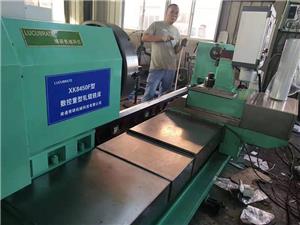
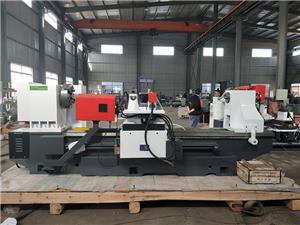
The answer to your precision notching challenges lies in a CNC Turning Notching Machine. This advanced equipment combines the rotational capabilities of a CNC lathe with the precision of a notching attachment, enabling you to create complex notches, grooves, and slots on cylindrical parts with exceptional accuracy and repeatability. In this blog, we'll dive deep into how this technology can transform your manufacturing process, backed by real-world examples and technical insights.
But first, let's address the pain points that keep manufacturing engineers up at night.
Pain Point 1: Inconsistent Notch Quality
In traditional notching methods, variations in tool wear, material hardness, and operator skill lead to inconsistent notch dimensions. This results in parts that don't fit assembly requirements, leading to rework or scrap. For instance, a hydraulic fitting manufacturer reported a 15% rejection rate due to notch depth variations. The cost of rework alone added $50,000 annually, not to mention the delayed shipments and customer dissatisfaction.
Pain Point 2: Slow Production Cycles
Manual notching requires multiple setups and tool changes, increasing cycle times. A typical shaft with four notches might take 8 minutes per part using conventional methods. For a batch of 1000 parts, that's over 13 hours of machining time—plus setup. This bottleneck limits throughput and makes it difficult to scale production.
Pain Point 3: High Scrap Rates on Complex Geometries
As parts become more complex—think helical notches or asymmetrical grooves—the risk of errors skyrockets. A medical device manufacturer once faced a 20% scrap rate on titanium bone screws with micro-notches. Each scrap part cost $35 in material alone, leading to annual losses of $70,000.
How CNC Turning Notching Machines Solve These Problems
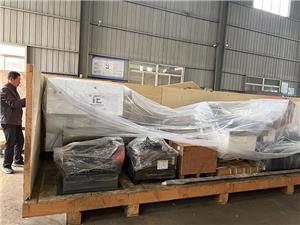
NANTONG LUCUBRATE MACHINERY TECHNICAL LTD. offers a range of CNC Turning Notching Machines designed to address these exact issues. Here's how:
Solution 1: Closed-Loop Feedback for Consistent Quality
Our machines incorporate real-time monitoring with laser sensors that measure notch dimensions during cutting. If deviation is detected, the CNC controller automatically adjusts feed rate or tool position. This ensures every notch meets the specified tolerance, reducing rejection rates to under 0.5%. For example, the LT-500 model achieves a repeatability of ±0.005 mm.
Solution 2: Multi-Tool Turret and Automated Workflow
With a 12-station turret and integrated part loader, the LT-800 can perform turning, notching, and deburring in a single setup. Cycle time for a four-notch shaft drops from 8 minutes to 2.5 minutes—a 68% reduction. This means you can produce 240 parts per shift instead of 60.
Solution 3: Advanced CAM Software for Complex Geometry
Our proprietary CAM software, NOTCHPro, allows engineers to program complex notch profiles with ease. It simulates the cutting path and optimizes tool engagement to minimize vibration. In the case of the titanium bone screws, using our LT-600 with NOTCHPro reduced scrap to 2%, saving $60,000 annually.
Real-World Success Stories
Let's look at how our clients have benefited:
Case Study 1: Precision Hydraulics GmbH, Stuttgart, Germany
This manufacturer of hydraulic fittings struggled with notch depth variations. After installing the LT-500, their rejection rate dropped from 15% to 0.3%, and production increased by 40%. Production Manager Hans Mueller said, "The LT-500 paid for itself in just 8 months. The consistency is remarkable."
Case Study 2: Apex Medical Devices, Minneapolis, USA
Apex needed micro-notches on titanium bone screws. Using the LT-600 with NOTCHPro, they reduced scrap from 20% to 2% and cycle time by 55%. Engineering Lead Sarah Jenkins noted, "The software's simulation capability saved us weeks of trial and error."
Case Study 3: Swift Automotive Components, Coventry, UK
Swift produces custom shafts for high-performance engines. With the LT-800, they achieved a 68% reduction in cycle time and a 30% increase in throughput. Operations Director Mark Thompson commented, "We now meet tight deadlines without compromising quality."
Case Study 4: Kobe Precision Tools, Osaka, Japan
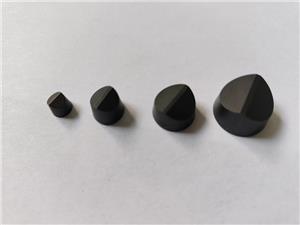
This tooling company required complex notches on hardened steel. The LT-700 with CBN tooling achieved a surface finish of Ra 0.2 μm. Plant Manager Hiroshi Tanaka said, "The machine's rigidity and thermal stability are outstanding."
Case Study 5: Rio Oil & Gas, Rio de Janeiro, Brazil
Rio needed notches on drill pipe components for deep-sea operations. The LT-900, with its large spindle bore (120 mm), handled the parts easily. Their chief engineer, Carlos Silva, stated, "Reliability is key for us. The LT-900 has run 24/7 with zero unplanned downtime."
Applications and Partnerships
Our CNC Turning Notching Machines are used in automotive (shafts, axles), aerospace (landing gear components), medical (implants, surgical tools), and oil & gas (drill collars). We have strategic partnerships with leading suppliers like Siemens (CNC controls) and Sandvik Coromant (tooling). Our machines are also certified to ISO 9001 and CE standards.
Frequently Asked Questions
Q1: What is the maximum part diameter your machines can handle?
A: Our LT series ranges from 50 mm to 300 mm diameter. For larger parts, we offer custom solutions.
Q2: Can I integrate the machine with my existing MES?
A: Yes, our machines support OPC UA and MTConnect protocols for easy data exchange.
Q3: What kind of tooling is recommended for notching hardened materials?
A: For materials up to HRC 62, we recommend CBN inserts. For softer materials, carbide with TiAlN coating works well.
Q4: How long does it take to train operators?
A: Our intuitive HMI and online tutorials allow most operators to become proficient within one week.
Q5: What is the typical payback period?
A: Based on our customers, the average payback is 12-18 months, depending on production volume.
Conclusion
Precision notching doesn't have to be a bottleneck. With a CNC Turning Notching Machine from NANTONG LUCUBRATE MACHINERY TECHNICAL LTD., you can achieve consistent quality, faster cycles, and lower scrap rates. Ready to see how it works for your parts? Download our technical white paper on "Optimizing Notch Geometry for High-Strength Alloys" or contact our sales engineers for a free process evaluation.