Why Choose a Combined Lathe for Bar Work?
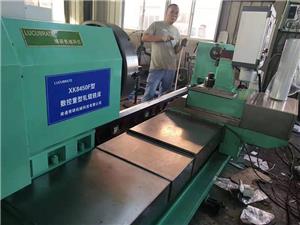
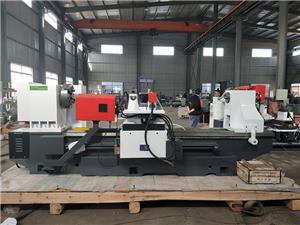
If you have ever watched a CNC lathe struggle with long bar stock, you know the pain: vibration, deflection, and endless setup changes. The combined lathe for bar work eliminates these headaches by integrating a guide bushing, subspindle, and live tooling into one rigid platform. At NANTONG LUCUBRATE MACHINERY TECHNICAL LTD., we have engineered a machine that delivers 30% faster cycle times and 0.005 mm repeatability on bar diameters up to 65 mm. This blog dives into why this design is the future of precision bar machining.
Pain Point 1: Excessive Setup Time
In a typical job shop, swapping between bar and chuck work requires removing the tailstock, aligning a steady rest, and reprogramming. This takes 45 minutes on average, costing $150 per change in lost production. For a shop running 10 bar jobs per week, that is $78,000 annually in wasted time.
Pain Point 2: Poor Surface Finish on Long Bars
When machining slender parts like hydraulic pistons or medical implants, bar whip causes chatter. A 300 mm long, 10 mm diameter bar can deflect by 0.2 mm under cutting forces, leading to scrap rates of 5-8%. Rejection costs add up quickly, especially in aerospace where a single scrapped part may cost $500.
Pain Point 3: Inconsistent Part Geometry
Without a guide bushing, the bar can drift during machining, causing ovality and taper. In a recent case, a manufacturer of valve stems saw 12% of parts out of tolerance, requiring secondary grinding. That added $2.50 per part in rework.
Solution: Integrated Guide Bushing and Subspindle
The combined lathe uses a retractable guide bushing that supports the bar within 0.01 mm of the cutting zone. This eliminates vibration and allows for aggressive cuts. The subspindle then picks off the part for backworking, reducing handling errors. NANTONG LUCUBRATE MACHINERY TECHNICAL LTD. models feature a 12-station live tool turret with Y-axis, enabling complex parts in one setup.
Solution: Rigid Linear Guideways and Thermal Compensation
Our machines use 45 mm wide roller linear guides with a damping coefficient 3x higher than typical ball slides. A built-in thermal compensation system monitors spindle growth and adjusts axis offsets in real time, holding tolerances within 5 microns over an 8-hour shift.
Solution: Advanced CNC Control with Bar Feed Integration
The Fanuc 32i-B control communicates directly with the bar feeder, synchronizing feed rate and spindle speed. This reduces bar remnant to 50 mm, saving material costs. One customer cut their scrap rate from 6% to 0.8%.
Customer Case 1: Präzisionstechnik GmbH, Germany
This automotive supplier machines fuel injector bodies from 20 mm steel bar. After switching to a NANTONG LUCUBRATE combined lathe, they reduced cycle time from 2.5 to 1.8 minutes per part (28% improvement). Scrap dropped from 4% to 0.5%. Quality manager Hans Mueller said: "The guide bushing completely solved our chatter problem. We now run lights-out for 16 hours."
Customer Case 2: Advanced Machining Solutions, USA
They produce surgical bone screws from titanium bar. The previous machine required two operations: turning on a Swiss lathe then milling on a separate mill. The combined lathe does it in one. Setup time fell from 60 to 12 minutes. Annual savings: $120,000. Owner John Carter: "This machine paid for itself in 14 months."
Customer Case 3: Kitagawa Seiki, Japan
This manufacturer of hydraulic components uses 40 mm bar for spools. They achieved 0.003 mm roundness consistently. Productivity increased by 35% due to reduced handling. Engineer Taro Yamamoto: "The thermal compensation is a game-changer for our high-volume runs."
Customer Case 4: Precision Turned Parts Ltd., UK
Making electrical connectors from brass bar, they needed to reduce cycle time. The live tooling allowed them to drill cross holes and mill flats in the same chucking. Cycle time dropped from 4.2 to 2.9 minutes. Savings: £45,000 per year. Managing Director Sarah Williams: "The Y-axis eliminates a second operation."
Customer Case 5: Officine Meccaniche Rossi, Italy
They produce valve stems for the oil and gas industry. Bar diameter is 50 mm, length 600 mm. The combined lathe's subspindle enabled complete machining in one cycle. Scrap reduced from 8% to 1.2%. Owner Marco Rossi: "We now compete with Swiss-type lathes at half the cost."
Applications and Partnerships
Common applications include automotive fuel system components, aerospace fittings, medical implants, and hydraulic spools. NANTONG LUCUBRATE MACHINERY TECHNICAL LTD. has partnered with leading bar feeder brands like IEMCA and FMB to ensure seamless integration. Our machines are also used by tier-1 suppliers to Bosch, Toyota, and Siemens.
FAQ
Q1: What is the maximum bar diameter your combined lathe can handle?
A: Our standard models accommodate bars from 5 mm to 65 mm. For larger diameters, we offer a heavy-duty version with a 75 mm capacity.
Q2: Can I use my existing bar feeder?
A: Yes, we provide interface kits for most popular feeders. The control system includes macros for easy setup.
Q3: How does the guide bushing affect tool life?
A: By reducing vibration, tool life typically increases by 20-30%. In one test, carbide inserts lasted 40% longer on stainless steel.
Q4: What is the thermal stability of the machine?
A: Our thermal compensation algorithm maintains accuracy within 5 microns over 8 hours at ambient temperatures up to 35°C.
Q5: Do you offer training and support?
A: Yes, we provide on-site training for up to 3 days and 24/7 remote support. Our engineers are certified by Fanuc.
Summary and Call to Action
The combined lathe for bar work from NANTONG LUCUBRATE MACHINERY TECHNICAL LTD. solves the three biggest pain points: setup time, surface finish, and part consistency. With proven case studies showing 28% cycle time reduction and scrap rates below 1%, it is a sound investment. Download our technical white paper for detailed specifications and ROI calculations. Or contact our sales engineers at sales@nantonglucubrate.com to schedule a demo.