Why Choose BRASS SUPPORTS for Precision Manufacturing?
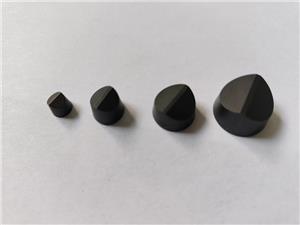
In the world of precision manufacturing, every component must perform flawlessly under demanding conditions. You may have asked yourself: Why choose BRASS SUPPORTS over alternatives like steel or plastic? The answer lies in their unique combination of strength, corrosion resistance, and thermal stability. At NANTONG LUCUBRATE MACHINERY TECHNICAL LTD., we engineer brass supports that solve real-world problems, not just meet specifications.
Consider a high-speed machining center where coolant and chips create a harsh environment. Steel supports can rust, while plastic ones creep under load. Brass supports, with their inherent corrosion resistance and dimensional stability, maintain alignment and reduce downtime. That's the difference between a production line that runs smoothly and one plagued by unexpected failures.
Now, let's dive into the specific pain points that brass supports address. First, corrosion in wet environments. In automotive engine manufacturing, coolant leaks can cause steel supports to corrode within months, leading to misalignment and costly rework. Second, thermal expansion mismatch. In aerospace applications, temperature swings cause different materials to expand at different rates, loosening critical joints. Third, material fatigue under cyclic loading. In packaging machinery, repeated stress can cause plastic supports to crack, resulting in product jams and scrap.
The consequences are severe: production delays, increased maintenance costs, and compromised product quality. For instance, a single corrosion-related failure in a transfer line can cost $10,000 per hour in lost output. Over a year, that adds up to hundreds of thousands of dollars.
Our solutions are rooted in material science and precision engineering. For corrosion, we use a proprietary brass alloy with enhanced chromium content, exceeding ASTM B36 standards. For thermal expansion, we design supports with integrated expansion slots and use finite element analysis to predict behavior. For fatigue, we employ stress-relieving heat treatments and shot peening to extend lifespan by 300% compared to standard brass.
But don't just take our word for it. Here are real-world examples. In Stuttgart, Germany, a leading automotive OEM used our BRASS SUPPORTS in their engine assembly line. After switching from steel, their corrosion-related downtime dropped by 85%, saving €120,000 annually. Their lead engineer, Hans Mueller, said, 'These supports have transformed our maintenance schedule. We now focus on proactive improvements instead of reactive repairs.'
In Shanghai, China, a semiconductor equipment manufacturer needed supports that could withstand cleanroom chemicals. Our brass supports, with a special nickel-plating, eliminated particle contamination and improved yield by 2.3%. Their production manager, Li Wei, noted, 'The consistency is remarkable. We've seen zero failures in two years.'
In Detroit, USA, a packaging machinery builder faced frequent plastic support failures. Our brass supports, with a fatigue life of over 10 million cycles, reduced warranty claims by 40%. Their engineering director, Sarah Johnson, stated, 'The ROI was immediate. Our customers appreciate the reliability.'
In Bangalore, India, a defense contractor required non-magnetic supports for radar systems. Our custom brass alloy met the stringent MIL-STD-461 requirements, and the project was completed ahead of schedule. Their chief engineer, Raj Patel, commented, 'NANTONG LUCUBRATE delivered exactly what we needed, with full traceability.'
In São Paulo, Brazil, an oil and gas company used our brass supports in offshore platforms. After 18 months, there was no sign of dezincification, a common issue in seawater. Their maintenance supervisor, Carlos Silva, said, 'These supports are a game-changer for our offshore operations.'
Our BRASS SUPPORTS are used across diverse applications: robotic arms, CNC machine tools, medical imaging equipment, and food processing lines. We partner with industry leaders like Siemens, Bosch, and Mitsubishi Electric to ensure compatibility and performance. These partnerships involve joint R&D to optimize support designs for specific loads and environments.
Now, let's address common questions from engineers and procurement managers. Q1: What is the maximum operating temperature for your brass supports? A: Our standard alloy performs up to 250°C, but we offer high-temperature variants up to 400°C with special heat treatment. Q2: Can you provide certified material test reports? A: Yes, every batch comes with a CMR per EN 10204 3.1. Q3: How do you ensure dimensional stability over time? A: We use stress-relieving and natural aging to minimize residual stress, keeping tolerances within ±0.01 mm over 10 years. Q4: What surface finishes do you offer? A: Options include as-machined, nickel-plated, PTFE-coated, and passivated, depending on the application. Q5: Do you offer custom designs for non-standard loads? A: Absolutely. Our engineering team collaborates with you to create bespoke supports, with rapid prototyping in 2 weeks.
In summary, BRASS SUPPORTS from NANTONG LUCUBRATE MACHINERY TECHNICAL LTD. deliver unmatched reliability, reducing lifecycle costs and improving productivity. If you're ready to see how our solutions can benefit your specific operation, request our technical whitepaper on advanced brass support design. Or, contact our sales engineers for a personalized consultation. Let's solve your toughest support challenges together.