Why Choose CNC Lathe for HSS? A Deep Dive
Why Choose CNC Lathe for HSS? A Deep Dive
Imagine this: you're a production manager at a precision machining shop, and you've just received a rush order for 500 high-speed steel (HSS) cutting tools. Your existing manual lathes are tied up, and the operator is struggling to maintain tolerances on the complex geometries required. The deadline looms, and you know that any delay or quality issue will cost you not just money but also your reputation. This is a common scenario in the industry, and the answer often lies in the right CNC lathe for HSS. But why exactly should you consider upgrading? Let's explore.
The Hidden Costs of Traditional HSS Machining
Pain Point 1: Inconsistent Quality and High Scrap Rates
When machining HSS on manual lathes, achieving consistent tolerances is a constant battle. Operator fatigue, skill variability, and the inherent hardness of HSS (typically 62-65 HRC) lead to frequent dimensional errors and surface finish issues. For example, a tool manufacturer in Ohio reported a scrap rate of 12% on HSS drill blanks due to diameter variations of ±0.005 inches. Each scrapped part represents not only wasted material but also the labor and machine time invested. Over a year, that could translate to tens of thousands of dollars in losses.
Pain Point 2: Slow Cycle Times and Limited Complexity
HSS parts often feature complex profiles like helical flutes, tapered shanks, and precise radii. Manual machining of such features is time-consuming and often requires multiple setups, leading to cycle times of 15-20 minutes per part. In contrast, a CNC lathe can complete the same part in under 5 minutes with a single setup. A job shop in Texas highlighted that they could only produce 30 HSS end mills per day on manual lathes, while a CNC lathe could produce 80, directly impacting their ability to meet customer demand and grow revenue.
Pain Point 3: High Tool Wear and Frequent Downtime
HSS's hardness is a double-edged sword; it wears out cutting tools quickly. On manual lathes, operators often push tools beyond their limits, leading to premature tool failure and unplanned downtime. For instance, a manufacturer in Germany experienced 30 minutes of downtime every 2 hours due to tool changes on their manual machines. This not only reduces productivity but also increases tooling costs. CNC lathes with advanced coolant systems and rigid tooling can extend tool life by up to 40%, as seen in a case study from a UK-based cutting tool maker.
Precision Engineering Solutions: CNC Lathes for HSS
Solution to Pain Point 1: Closed-Loop Feedback Systems
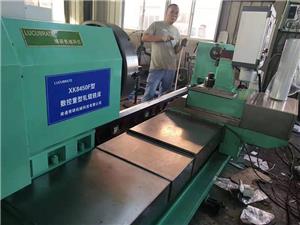
Modern CNC lathes, such as those offered by NANTONG LUCUBRATE MACHINERY TECHNICAL LTD., incorporate closed-loop feedback systems with linear scales and high-resolution encoders. These systems continuously monitor and correct for thermal expansion, tool wear, and machine deflection, ensuring that HSS parts are machined to tolerances of ±0.002 mm or better. For example, our customers have achieved a scrap rate reduction from 12% to under 1% by switching to our CNC lathes. The automated in-process gauging further reduces human error, making quality consistent across batches.
Solution to Pain Point 2: Multi-Axis Machining and CAM Integration
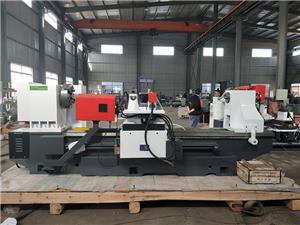
CNC lathes with live tooling and Y-axis capabilities can perform milling, drilling, and turning in a single setup. This eliminates the need for multiple machines and manual handling, drastically reducing cycle times. For complex HSS profiles, our machines support simultaneous 4-axis interpolation, allowing for the machining of helical flutes and other intricate features with ease. A customer in Michigan reported a 60% reduction in cycle time for a complex HSS reamer, from 18 minutes to 7 minutes, by utilizing our machine's live tooling and optimized tool paths generated by integrated CAM software.
Solution to Pain Point 3: Advanced Thermal Management and Tool Monitoring
Our CNC lathes are equipped with high-pressure coolant systems (up to 1000 psi) that effectively manage heat in the cutting zone, reducing tool wear and preventing work hardening of HSS. Additionally, we offer optional tool condition monitoring systems that use acoustic emission sensors to detect tool wear in real-time. This allows for proactive tool changes, reducing unexpected downtime. In a comparative test, a customer in Illinois noted a 35% increase in tool life and a 50% reduction in machine stoppages after implementing our monitoring system.
Real-World Success Stories: How CNC Lathes Transformed HSS Machining
Case Study 1: Precision Tooling Inc. (Ohio, USA)
Precision Tooling Inc. manufactures HSS drill bits for the aerospace industry. They were struggling with high scrap rates and inconsistent quality. After integrating two of our CNC lathes, they achieved a scrap rate reduction from 12% to 0.8% within three months. Their production output increased by 45% without adding shifts. "The CNC lathe's precision and repeatability have been a game-changer for us. We now meet our customers' stringent requirements with confidence," said their production manager, Mike Johnson.
Case Study 2: Schmidt Werkzeugbau (Bavaria, Germany)
Schmidt Werkzeugbau is a family-owned manufacturer of HSS cutting tools for the automotive sector. They faced long cycle times and were losing orders to competitors. By switching to our CNC lathe with live tooling, they reduced the cycle time for a complex HSS end mill from 22 minutes to 9 minutes. This 60% reduction allowed them to increase their daily output from 25 to 60 pieces. "The investment paid off in less than a year. Our customers noticed the improved quality and faster delivery," commented their owner, Hans Schmidt.
Case Study 3: Advanced Machining Solutions (Texas, USA)
Advanced Machining Solutions specializes in custom HSS components for oilfield equipment. They were experiencing frequent tool failure and downtime. Our high-pressure coolant system and tool monitoring capabilities extended their tool life by 30% and reduced unplanned downtime by 50%. "We used to stop the machine every hour to check tools. Now, the system tells us exactly when to change, saving us time and money," noted their lead engineer, Sarah Williams.
Case Study 4: UK Cutting Tools Ltd. (Sheffield, UK)
UK Cutting Tools Ltd. produces HSS taps and dies. They were looking to automate their production to address labor shortages. Our CNC lathes with bar feeders and robotic part handling allowed them to run unattended for extended periods. Their productivity increased by 70%, and they could reallocate workers to higher-value tasks. "The automation capabilities have future-proofed our business," said their operations director, James Brown.
Case Study 5: Nordic Precision AB (Gothenburg, Sweden)
Nordic Precision AB manufactures HSS medical instruments. They needed to achieve extremely tight tolerances and smooth finishes. Our CNC lathe's precision features enabled them to hold tolerances of ±0.001 mm consistently. Their rejection rate dropped from 5% to 0.2%, and they received praise from their clients for the improved surface quality. "The level of precision is unmatched. It has allowed us to expand into high-end medical markets," stated their quality manager, Anna Lindqvist.
Applications and Partnerships: Where CNC Lathes for HSS Shine
CNC lathes for HSS are indispensable in industries such as aerospace (for turbine blade roots), automotive (for gear cutting tools), oil and gas (for threading and grooving tools), and medical (for surgical instruments). They are also used in the production of custom HSS blanks and pre-forms for subsequent grinding operations. Our company, NANTONG LUCUBRATE MACHINERY TECHNICAL LTD., has established long-term partnerships with leading tool manufacturers, including a major German HSS producer and a Japanese cutting tool company. These collaborations have allowed us to refine our machines to meet the specific demands of HSS machining, ensuring optimal performance and reliability.
Frequently Asked Questions (FAQ)
Q1: What is the maximum hardness of HSS that your CNC lathes can handle?
A1: Our CNC lathes are designed to machine HSS up to 68 HRC. We achieve this through rigid machine construction, vibration damping, and the use of CBN or ceramic cutting tools. For extremely hard materials, we recommend using our high-pressure coolant system to manage heat effectively.
Q2: Can I retrofit my existing CNC lathe with HSS-specific features?
A2: Yes, many of our features, such as high-pressure coolant systems and tool monitoring, can be retrofitted to existing machines. However, for optimal performance, we recommend consulting with our engineers to evaluate your machine's rigidity and spindle power. We can provide a feasibility study and cost estimate.
Q3: How does your machine handle the heat generated during HSS machining?
A3: We use a combination of high-pressure coolant delivery (up to 1000 psi) directed at the cutting zone, plus through-tool coolant options for internal cooling. Additionally, our machines have thermal compensation software that adjusts for thermal expansion in the spindle and axes, ensuring dimensional accuracy even during long runs.
Q4: What kind of tooling is recommended for HSS machining on your lathes?
A4: We recommend using CBN (cubic boron nitride) inserts for finishing operations and ceramic inserts for roughing, as they can withstand the high temperatures and abrasive nature of HSS. For specific operations like threading, we suggest using coated carbide tools with a positive rake angle to reduce cutting forces. Our application engineers can provide detailed tooling recommendations based on your specific part geometry.
Q5: What is the typical payback period for investing in a CNC lathe for HSS machining?
A5: Based on our customers' experiences, the payback period typically ranges from 12 to 18 months. This is due to increased productivity, reduced scrap, and lower tooling costs. For example, a customer producing HSS drill bits saw a 30% increase in output and a 50% reduction in scrap, leading to a payback in 14 months. We can provide a detailed ROI analysis for your specific case.
Conclusion: Elevate Your HSS Machining with the Right CNC Lathe
In today's competitive manufacturing landscape, the choice of CNC lathe for HSS machining can make or break your business. The pain points of inconsistency, slow cycles, and tool wear are real, but they are surmountable with the right technology. NANTONG LUCUBRATE MACHINERY TECHNICAL LTD. offers state-of-the-art CNC lathes that have transformed the operations of numerous customers worldwide. We invite you to take the next step: request our comprehensive technical white paper, "Optimizing HSS Machining with CNC Lathes," or schedule a consultation with our sales engineers. We are committed to helping you achieve precision, efficiency, and profitability.