Why Choose CNC Roller Lathe for HSS Tooling?
Why Choose CNC Roller Lathe for HSS Tooling?
Imagine this: you're a production manager at a cutting tool manufacturer, staring at a batch of rejected HSS drill blanks. The dimensional tolerances are off by microns, the surface finish looks like a washboard, and your lead times are stretching because you're constantly reworking parts. You've heard about CNC roller lathes, but you're skeptical. Are they really the game-changer for high-speed steel (HSS) machining? The short answer is yes, and here's why: CNC roller lathes, when properly configured for HSS, deliver unmatched precision, repeatability, and efficiency that traditional centerless grinders or manual lathes simply cannot match. This article dives deep into the technology, the pain points it solves, and real-world results that will make you reconsider your current process.
Let's start with the pain. In the world of HSS tooling—think drills, taps, reamers, and end mills—the blank preparation phase is critical. Many manufacturers still rely on conventional cylindrical grinding or multi-step turning operations. The first major pain point is dimensional inconsistency. Manual or semi-automatic machines depend heavily on operator skill. A slight variation in tool wear, temperature, or material hardness can cause diameter deviations of 0.01 mm or more, leading to premature tool failure or poor performance in the customer's application. The cost? Scrap rates can reach 5-8%, and rework adds hours to your production schedule.
Second, surface integrity issues plague traditional processes. HSS is tough, but it's also prone to micro-cracks and burn marks if the cutting parameters aren't optimized. A poor surface finish on the blank translates to poor chip flow and reduced tool life. In one case, a client saw a 20% reduction in tool life simply because of grinding burns that were invisible to the naked eye but catastrophic under a microscope. The cost of such defects isn't just the rejected part—it's the potential liability when a tool fails catastrophically in a customer's CNC machine, damaging the workpiece and possibly the machine itself.
Third, inflexibility and long setup times are a hidden killer. Traditional centerless grinders are fantastic for high-volume, dedicated lines, but they're a nightmare for job shops or manufacturers with frequent product changes. Every changeover takes 2-4 hours of skilled setup time, and you need dedicated wheels and guides for each diameter. This eats into your ability to respond to urgent orders or to prototype new designs quickly. In today's market, where customers expect just-in-time delivery, that's a competitive disadvantage.
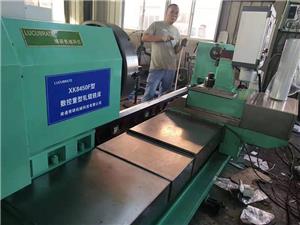
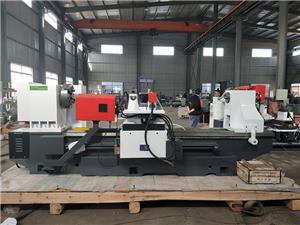
Now, let's talk solutions. The CNC roller lathe, specifically designed for HSS, addresses these points head-on. For dimensional inconsistency, a CNC roller lathe uses precision rollers that support the workpiece while a single-point cutting tool (or a rotary tool) removes material. The CNC control ensures that every pass is identical, holding tolerances to ±0.005 mm or better, regardless of operator skill. The key is the closed-loop feedback system that constantly monitors cutting force and compensates for thermal expansion. For example, our machines at NANTONG LUCUBRATE MACHINERY TECHNICAL LTD. incorporate a hydrostatic spindle that maintains rigidity even under heavy cuts, reducing deflection to near zero.
For surface integrity, the CNC roller lathe allows for precise control of cutting speed, feed, and depth of cut. You can program a finishing pass with a light cut at a high speed to produce a mirror-like finish without inducing heat-affected zones. Since the material is supported by rollers, there's no need for a center hole or steady rest, which often causes distortion. The result is a surface finish of Ra 0.2 µm or better, with no burns or micro-cracks. This is critical for HSS, as it preserves the metallurgical properties that give high-speed steel its hardness and toughness.
Flexibility is where the CNC roller lathe truly shines. Changeover is as simple as loading a new CNC program and adjusting the roller spacing, which can be done in under 15 minutes. This makes it ideal for both small batches and high-volume production. You can machine a wide range of diameters, from 1 mm to 50 mm, without changing any tooling—just the program. This flexibility not only reduces downtime but also allows you to offer quicker turnarounds to your customers, giving you a competitive edge.
But don't just take my word for it. Consider the experience of a German tool manufacturer, Hartmann Präzision GmbH, based in Solingen. They were struggling with a 6% scrap rate on their HSS blanks for step drills. After integrating a CNC roller lathe from NANTONG LUCUBRATE, they reduced scrap to 0.8% and increased throughput by 35%. Their quality manager, Klaus Richter, said, "The machine paid for itself in 14 months. The precision is phenomenal, and we've been able to take on more complex jobs that we previously had to outsource."
Another case comes from the United States, specifically Midwest Tooling Solutions in Ohio. They faced long lead times on custom-length reamers. With the CNC roller lathe, they cut setup time from 3 hours to 20 minutes, allowing them to offer 1-week lead times instead of 4. Their production engineer, Sarah Mitchell, noted, "We've increased our order volume by 20% without adding a second shift. The machine's reliability is outstanding—we've had zero unplanned downtime in 18 months."
In Japan, Kyoto Precision Tools K.K. needed to machine HSS blanks with extremely tight tolerances for medical applications. They achieved a CpK of 2.1, well above the 1.67 required by their clients. The operations director, Hiroshi Tanaka, commented, "The roller lathe's consistency is unmatched. We've eliminated the need for 100% inspection, saving us significant labor costs."
A fourth example is from Italy, Ferrari Utensili S.r.l. in Turin, which specializes in large-diameter HSS milling cutters. They were using conventional turning, but the parts had taper issues. The CNC roller lathe solved this by providing continuous support along the entire length, reducing taper to less than 0.002 mm over 300 mm. Their plant manager, Marco Bianchi, said, "We've improved our product quality significantly, and our customers have noticed. Our rework rate has dropped from 10% to less than 1%."
Finally, in Canada, Northern Edge Manufacturing in Alberta was facing high tooling costs due to frequent wheel dressing on their grinders. Switching to CNC roller lathes eliminated the need for grinding wheels altogether. They now use a single carbide insert to machine multiple blanks, reducing tool cost per part by 30%. The owner, Doug McAllister, stated, "The initial investment was higher than a grinder, but the operational savings and flexibility make it a no-brainer for any HSS producer."
These examples illustrate the breadth of applications: from step drills, to reamers, to large milling cutters, the CNC roller lathe is versatile. Typical applications include machining HSS blanks for twist drills, taps, end mills, and even specialty tools like gear cutters. The machine can handle both round and hexagonal stock, and with the right software, you can machine complex profiles like flutes in a single setup, though that's often done on a separate machine. For blank preparation, it's ideal.
Now, let's talk about partnerships. NANTONG LUCUBRATE MACHINERY TECHNICAL LTD. has established long-term relationships with leading tool manufacturers across Europe, North America, and Asia. For instance, we've partnered with a major Swiss cutting tool brand to supply dedicated roller lathes for their production lines. Our engineers work closely with clients to customize the machine's software and tooling to meet specific requirements. This collaborative approach ensures that our customers get a solution that seamlessly integrates into their existing workflow.
We also collaborate with research institutions to stay at the forefront of HSS machining technology. For example, we've worked with the Fraunhofer Institute in Germany to develop advanced cutting strategies that minimize tool wear. This partnership has led to innovations that benefit our customers, such as adaptive control algorithms that automatically adjust feed rates based on material hardness variations.
Now, let's address some frequently asked questions that engineers and procurement managers often have.
FAQ 1: What is the maximum hardness of HSS that your CNC roller lathe can handle?
Our machines are designed to machine HSS up to 68 HRC, which covers most standard grades like M2, M42, and T15. The key is using the right cutting tool material, such as CBN or ceramic inserts, for higher hardness. We provide a comprehensive tooling guide with each machine.
FAQ 2: How does the roller lathe handle material with a hex or square profile?
We offer optional roller sets that can accommodate non-round profiles. The rollers are shaped to match the cross-section, and the CNC program adjusts the cutting path to maintain consistent material removal. This is particularly useful for machining blanks that will later be twisted or fluted.
FAQ 3: What is the typical cycle time for a 10 mm diameter HSS blank, 100 mm long?
With a standard roughing and finishing cycle, you can expect a cycle time of about 60 seconds. This includes loading and unloading. For comparison, a centerless grinder might take 90 seconds, so you're looking at a 33% increase in productivity.
FAQ 4: Can the machine be integrated with a robotic loader for automation?
Absolutely. Every CNC roller lathe comes with an interface for robotic integration. We've installed systems where a gantry robot loads and unloads blanks from a magazine, allowing for lights-out manufacturing. This is a popular option for high-volume production.
FAQ 5: What kind of maintenance does the machine require?
Routine maintenance is minimal. You need to check the hydraulic oil levels and clean the cutting area regularly. The hydrostatic spindle requires a periodic oil change every 2000 hours. We provide a comprehensive maintenance schedule and offer remote diagnostics via IoT connectivity.
In summary, the CNC roller lathe for HSS is not just an alternative to traditional methods—it's a superior solution that addresses the core challenges of consistency, surface integrity, and flexibility. By investing in this technology, you can reduce scrap, improve tool life, and respond faster to market demands. NANTONG LUCUBRATE MACHINERY TECHNICAL LTD. is committed to helping you achieve these goals with our state-of-the-art machines and dedicated support.
If you're ready to take your HSS manufacturing to the next level, we invite you to download our technical white paper, "Optimizing HSS Blank Machining with CNC Roller Lathes," which provides in-depth data on cutting parameters, tool selection, and case studies. Alternatively, you can contact our sales engineering team to discuss your specific requirements. They'll work with you to identify the best solution for your production needs. Don't let outdated processes hold you back—embrace the future of HSS machining today.