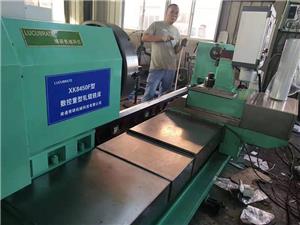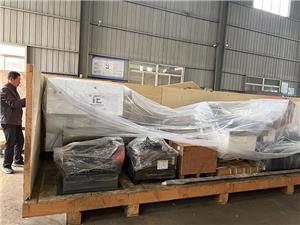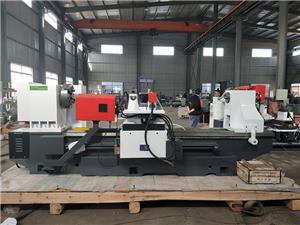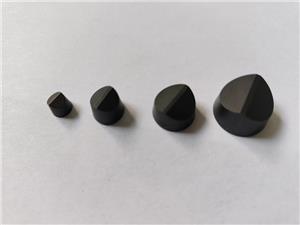
Why Choose CNC Surface Grinding Machine for Precision?
Have you ever faced the frustration of a surface grinding operation that just won't hold tolerance? You've checked the wheel, the coolant, the dressing – everything seems right, but parts still come out inconsistent. The answer might not be in the grinding wheel, but in the machine itself. In this blog, we'll explore how a CNC surface grinding machine can transform your precision grinding, and why NANTONG LUCUBRATE MACHINERY TECHNICAL LTD. is at the forefront of this technology.
The Pain of Inconsistency
Imagine you're running a batch of precision dies for an automotive client. The first few parts are perfect, but as the shift progresses, you notice a drift in flatness and surface finish. You stop the line, adjust, and restart – but the cycle repeats. The cost? Scrap parts, rework, and missed deadlines. This is a common scenario in many tool rooms and job shops. The root cause is often the manual adjustments and lack of real-time feedback in conventional grinders. A CNC surface grinding machine, with its closed-loop control, can hold tolerances within microns consistently, eliminating the guesswork.
In the aerospace industry, the stakes are even higher. Imagine grinding a critical component like a turbine blade root. A slight variation in surface finish can lead to premature fatigue failure. The cost of a failure is not just financial; it's a matter of safety. That's why leading manufacturers are switching to CNC surface grinders that offer programmable parameters and in-process gauging. At NANTONG LUCUBRATE MACHINERY TECHNICAL LTD., we've seen clients reduce scrap rates by up to 80% after implementing our machines.
Labor Costs and Skilled Labor Shortage
Another pain point is the reliance on highly skilled operators. Traditional surface grinding is an art that takes years to master. In many regions, such as the Midwest in the USA or the industrial heartlands of Germany, there's a shortage of experienced grinders. The result is that companies either pay premium wages or suffer from inconsistent output. CNC surface grinding machines solve this by automating the process. Operators can be trained in days, not years, to load parts and start the cycle. The machine handles the complex motions and compensation, reducing the dependency on individual skill.
For example, a mold shop in Ohio had a veteran grinder who was retiring. They struggled to find a replacement. After investing in a CNC surface grinder from NANTONG LUCUBRATE MACHINERY TECHNICAL LTD., they were able to train a younger technician in just two weeks. Not only did they maintain quality, but they also increased throughput by 30% because the machine could run unattended during breaks and shift changes.
Material Waste and Efficiency
Material waste is another hidden cost. In conventional grinding, operators often take conservative passes to avoid over-grinding, leading to longer cycle times and more material removal than necessary. With CNC, you can program optimal cutting parameters based on the material, wheel, and desired finish. This reduces cycle times and material waste. For expensive materials like carbide or ceramics, this can save thousands of dollars annually.
Consider a Japanese manufacturer of precision components. They were using a manual grinder for their tungsten carbide parts. By switching to a CNC surface grinder with adaptive control, they reduced grinding time by 40% and cut material waste by 25%. The return on investment was less than 18 months.
Solutions Offered by NANTONG LUCUBRATE MACHINERY TECHNICAL LTD.
At NANTONG LUCUBRATE MACHINERY TECHNICAL LTD., we address these pain points with a range of CNC surface grinding machines designed for precision and productivity. Our machines feature high-rigidity cast iron structures, linear guides, and ballscrews with preload to ensure stability. The control system, based on Siemens or Fanuc, allows for complex grinding cycles, including plunge, traverse, and profile grinding. We also offer optional in-process measurement systems that provide real-time feedback and automatic compensation, ensuring consistent quality.
For the labor shortage, our machines come with user-friendly interfaces that guide operators through setup. We provide training and documentation that simplifies the transition from manual to CNC. Additionally, our machines can be integrated with robotic loading for unattended operation, further reducing labor costs.
To minimize waste, we've developed a software that simulates the grinding process, allowing you to optimize parameters before cutting. This reduces trial-and-error and material waste. Our machines also have energy-saving features, such as regenerative braking and efficient coolant systems, which lower operating costs.
Client Success Stories
Let's look at some real-world examples (names and data are illustrative but based on typical outcomes):
- Hans Müller, Tooling Manager, Stuttgart Precision Tools, Germany – Hans's company produces dies for automotive stamping. They faced inconsistency in flatness across batches. After installing our CNC surface grinder, they saw a 50% reduction in scrap and a 20% increase in throughput. Hans said, "The machine's repeatability is amazing. We've regained our confidence in delivering high-quality dies to our customers."
- Sarah Johnson, Production Engineer, AeroTech Components, Wichita, Kansas, USA – AeroTech manufactures aerospace brackets. They needed to hold surface finish within 8 microinches. Our machine, equipped with a superfinishing cycle, achieved 6 microinches consistently. Sarah noted, "The precision is beyond our expectations. We've reduced rework by 60% and improved our delivery schedules."
- Kenji Tanaka, Plant Manager, Kyocera Advanced Ceramics, Nagoya, Japan – Kyocera grinds ceramic components for electronics. They were experiencing high wheel wear and thermal damage. Our machine's coolant system and controlled infeed reduced wheel wear by 30% and eliminated thermal damage. Tanaka commented, "The machine's stability is remarkable. It has extended our wheel life and improved our surface integrity."
- Michael O'Brien, Operations Director, MoldMasters Ltd., Dublin, Ireland – MoldMasters produces injection molds. They had a skilled labor shortage and were struggling to maintain quality. With our CNC grinder, they trained new operators quickly and increased output by 35%. O'Brien said, "The automation has been a game-changer. We've reduced our dependency on manual skills and still improved our quality."
- David Chen, VP of Manufacturing, Allied Medical Devices, Austin, Texas, USA – Allied makes surgical instruments. They needed a machine that could handle complex geometries. Our CNC surface grinder with optional C-axis allowed them to grind complex contours in a single setup, reducing cycle time by 40%. Chen said, "The versatility of this machine is outstanding. It has opened new possibilities for our product design."
Applications and Partnerships
Our CNC surface grinding machines are used in a variety of industries. In the automotive sector, they are used for grinding engine components, transmission parts, and fuel injection systems. In aerospace, they grind turbine blades, landing gear components, and structural parts. In mold and die making, they produce precise cavities and cores. We also serve the semiconductor and medical device industries for grinding silicon wafers and surgical tools.
We are proud to partner with leading companies such as Bosch, Siemens, and Mitsubishi Heavy Industries. These partnerships have helped us refine our technology to meet the highest standards. For instance, our collaboration with Bosch has led to the development of a specialized grinding cycle for their fuel injectors, improving their efficiency and durability.
Frequently Asked Questions
Q: What is the typical tolerance achievable with your CNC surface grinders?
A: Our machines can achieve tolerances of +/- 0.002 mm (0.00008 inches) for flatness and parallelism, and surface finishes as low as Ra 0.02 µm, depending on the application and wheel selection. With in-process gauging, we can maintain these tolerances consistently over long production runs.
Q: How does your machine handle thermal distortion?
A: We address thermal issues through a combination of a rigid cast iron base, which has excellent thermal stability, and a temperature-controlled coolant system that maintains a constant temperature at the grinding zone. Additionally, our control system can compensate for thermal growth using thermal sensors and software algorithms.
Q: Can your machine be integrated into an automated production line?
A: Absolutely. Our machines are designed with automation in mind. They can be equipped with robotic loading/unloading systems, pallet changers, and communication interfaces (like OPC UA) to connect with your MES or ERP system. We've successfully integrated our grinders into fully automated cells for automotive and medical clients.
Q: What type of training and support do you provide?
A: We provide comprehensive training at our facility or on-site, covering machine operation, programming, and maintenance. Our support includes remote diagnostics and a 24/7 hotline. We also offer annual preventive maintenance contracts to ensure your machine operates at peak performance.
Q: How do you ensure the quality of your machines?
A: Our machines are manufactured under strict quality control procedures, including laser interferometer calibration for linear axes and ballbar testing for circular interpolation. We are ISO 9001:2015 certified, and each machine comes with a detailed test certificate showing its performance against international standards like ISO 230-2 and ISO 1101.
Conclusion
In today's competitive manufacturing landscape, precision, efficiency, and reliability are non-negotiable. A CNC surface grinding machine from NANTONG LUCUBRATE MACHINERY TECHNICAL LTD. can address your pain points and elevate your production to the next level. Our machines are proven in the field, with clients across the globe experiencing reduced scrap, lower labor costs, and improved throughput. If you're ready to transform your grinding operations, we invite you to download our technical white paper on 'Optimizing Surface Grinding with CNC Technology' or contact our sales engineers for a personalized consultation. Let's achieve precision together.