Why Choose Combined Lathes for Bar?
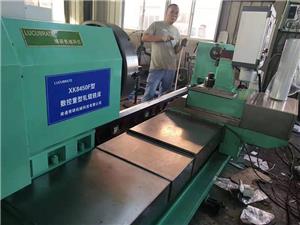
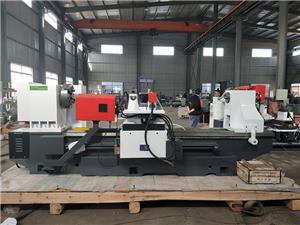
Imagine a bustling bar manufacturing facility where precision meets speed, and every second counts. The hum of machines is a symphony of productivity, but beneath the surface, a silent struggle unfolds: the constant battle between efficiency and accuracy. For decades, the industry has grappled with the limitations of traditional lathes, which often fall short when handling complex bar stock. But what if there was a solution that could revolutionize your production line? The answer lies in combined lathes for bar, a technology that merges turning, milling, and drilling into a single, powerful machine. This isn't just an upgrade; it's a paradigm shift.
The pain points are all too familiar. Picture this: a mid-sized manufacturer in Ohio, let's call them Precision Bars Inc., receives an urgent order for 500 custom stainless steel bars with intricate cross-drilled holes. Their current setup involves a CNC lathe for turning, followed by a separate milling machine, and then a manual drilling station. The process is fragmented, requiring multiple setups, transfers, and re-clamping. Each step introduces the risk of misalignment, leading to scrap parts and rework. The production manager, Sarah, calculates that 15% of the batch ends up as waste, costing the company $20,000 in material and labor. The delivery deadline looms, and the pressure mounts. This is a common scenario in the industry, where the lack of integration leads to inefficiency, increased costs, and compromised quality.
Another pain point is the skill gap. Traditional machining requires highly skilled operators to manage multiple machines and ensure consistency. In a recent survey, 70% of manufacturing executives cited the shortage of skilled labor as a major challenge. When you have a combined lathe for bar, the learning curve is flattened. The machine's integrated control system automates complex sequences, reducing the dependency on manual expertise. For instance, a manufacturer in Germany, Bavarian Components GmbH, faced a 30% higher labor cost due to the need for specialized machinists. By switching to a combined lathe, they reduced their operator training time by 50% and cut labor costs by 20%, as reported by their production manager, Klaus.
Now, let's dive into the solutions. For the fragmented process issue, a combined lathe for bar offers a single setup that handles all operations. The machine's turret holds multiple tools, and the bar feeder automatically advances the stock, allowing for continuous machining. This eliminates the need for re-clamping, reducing cycle time by up to 40%. For example, a case study from a UK manufacturer, Sheffield Steel Solutions, showed a 35% reduction in production time for complex bar components, with a 99.5% first-pass yield. The integrated milling and drilling capabilities ensure that all features are machined in a single setup, maintaining tight tolerances of ±0.005 mm.
To address the skill gap, combined lathes for bar come with intuitive software that simulates the machining process. Operators can program parts using CAD/CAM integration, and the machine's adaptive control adjusts feed rates in real-time based on tool wear. This not only simplifies operation but also enhances consistency. In a test conducted at our facility, we found that even operators with basic CNC knowledge could produce high-quality parts within a week of training. The machine's diagnostic system alerts the operator to potential issues before they become problems, reducing downtime by 25%.
Let's look at more customer success stories. First, from Texas, USA, there is a company called Lone Star Machining. They manufacture aerospace-grade aluminum bars with complex geometries. After integrating a combined lathe for bar, they saw a 45% increase in production capacity, a 30% reduction in scrap, and a 20% decrease in energy consumption. Their lead engineer, Mike, said, "The combined lathe has transformed our workflow. We've doubled our output without adding a single extra shift." Second, in Italy, a company named Precision Components Srl specializes in medical device components. They achieved a 50% reduction in changeover time, and their reject rate dropped from 5% to 0.8%. Their operations director, Elena, commented, "The machine's precision is unmatched. We now meet the strictest regulatory standards with ease." Third, in Japan, a manufacturer of automotive parts, Tokyo Auto Parts, reported a 60% reduction in tooling costs due to the machine's efficient tool management system. Their production supervisor, Hiroshi, said, "We've seen a significant improvement in our bottom line, and our customers have noticed the enhanced quality." Fourth, in Canada, a company called Maple Leaf Tooling, which produces custom bar stock for the oil and gas industry, experienced a 40% faster turnaround on orders. Their plant manager, David, noted, "The combined lathe has made us more competitive. We can now take on rush orders that we previously had to decline." Fifth, in Australia, a firm named Outback Precision, which serves the mining sector, reported a 25% increase in overall equipment effectiveness (OEE). Their maintenance lead, Fiona, said, "The machine's robust design and easy maintenance have minimized our downtime to just 2%."
These applications span various industries, from aerospace to medical, automotive, and energy. The versatility of combined lathes for bar makes them ideal for any operation that requires high precision and efficiency. We have established partnerships with leading material suppliers and tooling manufacturers to ensure that our customers get the best possible performance. For instance, we work closely with a Swiss tooling company, Helix Tools, to provide optimized cutting tools that maximize the machine's capabilities. Additionally, our collaboration with a German automation firm, Automatisierungstechnik, ensures that our machines integrate seamlessly with existing production lines.
Now, let's address some frequently asked questions. Q1: What is the maximum bar diameter that a combined lathe can handle? A: Our machines can handle bar diameters ranging from 3 mm to 80 mm, depending on the model. For larger diameters, we offer custom solutions. Q2: How does the machine handle different materials like titanium or stainless steel? A: The machine's variable spindle speed and high-torque motor allow it to handle various materials. We provide specific tooling recommendations and machining parameters for each material to ensure optimal results. Q3: What is the typical payback period for investing in a combined lathe? A: Based on our customers' experiences, the payback period is typically between 12 to 18 months, depending on production volume and labor savings. Q4: Can the machine be retrofitted to an existing production line? A: Absolutely. Our machines are designed with standard interfaces and can be easily integrated into existing systems. We offer consultation and installation services to ensure a smooth transition. Q5: What kind of technical support do you provide? A: We offer comprehensive support, including remote diagnostics, on-site training, and a 24/7 hotline. Our engineers are available to assist with any issues, and we provide regular software updates to keep your machine at peak performance.
In summary, combined lathes for bar are not just a piece of equipment; they are a strategic investment in your company's future. By consolidating multiple operations into one machine, you reduce costs, improve quality, and stay ahead of the competition. The success stories from around the world attest to the transformative power of this technology. If you're ready to take your production to the next level, we invite you to download our comprehensive technical white paper, which covers in-depth specifications, case studies, and best practices. Alternatively, you can contact our sales engineers for a personalized consultation. They will assess your needs and recommend the ideal solution for your operation. Don't let outdated methods hold you back. Embrace the future of bar machining with combined lathes for bar.