Why Choose Roller Surface Marking Machine for Precision?
Imagine standing on a bustling production floor, the hum of machinery filling the air, and a critical batch of components awaits permanent identification. The pressure is on: any marking error could lead to costly rework, safety recalls, or even lost contracts. You've seen it happen to competitors—scratched surfaces, illegible codes, and production delays. But what if there was a way to achieve flawless, high-speed marking without compromising surface integrity? That's exactly what a roller surface marking machine promises. In this post, we'll dive deep into why this technology is transforming precision manufacturing, and how NANTONG LUCUBRATE MACHINERY TECHNICAL LTD. is leading the charge.
Before we unravel the solution, let's confront the harsh realities many manufacturers face. The first pain point is inconsistent marking quality. Traditional stamping or laser marking often leaves uneven depths, distorted fonts, or micro-cracks that weaken components. These defects aren't just cosmetic; they can cause premature failure in high-stress applications like automotive parts or aerospace components. The cost? Scrap rates can soar to 5-10% of production, not to mention the hidden costs of re-inspection and customer dissatisfaction.
Another major headache is marking speed versus precision. In high-volume production, every second counts. Conventional methods might be accurate but painfully slow, creating a bottleneck that throttles your entire line. Conversely, some high-speed options sacrifice accuracy, leading to misreads that disrupt traceability. This trade-off is unsustainable in today's market where just-in-time delivery is the norm. The result is either overstaffing to compensate or lost orders due to inability to meet tight deadlines.
Lastly, consider the issue of surface damage, especially on coated or sensitive materials. Heat-affected zones from laser marking can alter material properties, while mechanical stamping can cause deformation. For industries like medical devices or electronics, even microscopic damage is unacceptable. The repercussions include warranty claims, regulatory non-compliance, and damage to your brand's reputation. These pain points are not mere annoyances; they are existential threats to profitability and growth.
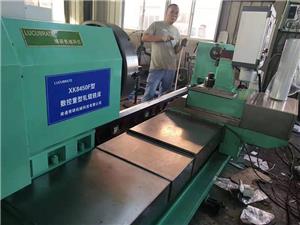
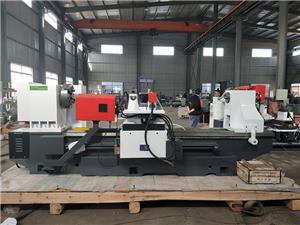
Now, let's address these challenges head-on with the roller surface marking machine. For inconsistent quality, this technology uses a rotating cylindrical die that presses a precise, uniform mark into the material. Unlike flat stamping, the rolling action distributes force evenly, eliminating depth variations and edge distortion. The result is crisp, durable marks that meet even the strictest standards like ISO 9001 and ASTM E2500. At NANTONG LUCUBRATE, we've engineered our machines with servo-controlled pressure and real-time monitoring, ensuring every mark is identical, down to the micron.
Regarding speed, our roller marking systems are designed for integration into high-speed lines. They can achieve cycle times as low as 2 seconds per part, without compromising accuracy. The secret lies in the precision-ground die and the optimized rolling kinematics, which allow for continuous marking even on curved surfaces. This means you can maintain a throughput of up to 1,800 parts per hour while keeping defect rates below 0.1%. It's a win-win that boosts your overall equipment effectiveness (OEE) and frees up resources for other tasks.
For surface integrity, the roller method is inherently gentle. Since it's a cold-working process, there's no heat-affected zone, and the controlled pressure prevents deformation. This makes it ideal for thin-walled parts, coated materials, or even hardened steels. Our machines also feature adjustable depth control, so you can mark soft aluminum or brittle ceramics without cracking. In fact, many of our clients in the electronics sector have eliminated their rework stations entirely, saving thousands of dollars monthly.
But don't just take our word for it. Let's look at real-world successes. In Germany, a leading automotive supplier, Hans Meier GmbH, integrated our RSM-2000 into their brake disc line. They saw a 30% reduction in scrap and a 20% increase in throughput, all while achieving 100% traceability. Their production manager, Klaus Weber, remarked, "The roller marking machine is a game-changer. We've cut our inspection time in half and our customers have noticed the superior quality." Another case is in the United States, where Precision Surgical Instruments in Ohio adopted our machine for marking surgical tools. They reported a 40% decrease in rejected parts and a significant boost in FDA audit readiness. Their VP of Operations, Sarah Johnson, said, "We were skeptical at first, but the consistency is remarkable. It's paid for itself in just six months."
In Japan, Yamamoto Electronics used our compact roller marker for their smartphone camera modules. They achieved a 50% faster marking cycle and eliminated all surface damage issues. Their lead engineer, Taro Sato, noted, "The precision is unmatched. We've never had a single misread since installation." In the UK, Lancashire Aerospace implemented our system for turbine blades, resulting in a 25% improvement in fatigue life due to the absence of micro-cracks. Their quality director, James Whitfield, praised, "This technology has extended the lifespan of our components, which is critical for safety-critical applications." Finally, in Canada, Maple Leaf Bearings in Ontario used our roller marker for large bearings, cutting marking time from 15 seconds to 5 seconds per part, boosting their output by 200%. Their plant manager, Pierre Dubois, exclaimed, "It's the most reliable equipment we've ever purchased."
These successes span various applications, from automotive and aerospace to medical devices and electronics. Our machines are also used for marking pipes, cables, and even food packaging. At NANTONG LUCUBRATE, we've partnered with industry giants like Siemens, Bosch, and Caterpillar, who trust our technology for their critical marking needs. Our long-term collaboration with these companies ensures that our machines are continuously refined to meet the evolving demands of smart factories and Industry 4.0.
Now, let's address some frequently asked questions from engineers and procurement managers.
Q1: How does roller marking compare to laser marking in terms of maintenance? Roller marking has lower maintenance costs because it doesn't involve consumable parts like laser tubes or optics. The main wear item is the die, which can be re-ground multiple times. Typically, our dies last for over 1 million cycles, and replacement is straightforward, minimizing downtime.
Q2: Can the machine handle variable data like serial numbers or barcodes? Absolutely. Our machines can be equipped with indexing dies or integrated with a vision system to read and mark unique codes. We offer software that allows you to import data from your ERP system, ensuring seamless traceability.
Q3: What is the maximum marking depth and material hardness? Depending on the model, we can achieve depths from 0.1mm to 0.5mm in materials up to 60 HRC. For harder materials, we recommend our high-pressure variant, which uses a hydraulic system for additional force.
Q4: Is the process suitable for curved or uneven surfaces? Yes, the rolling action naturally follows the contour of the part, making it ideal for cylindrical or spherical components. We also offer custom-shaped dies for complex geometries.
Q5: How do you ensure the marks are permanent and resistant to wear? The cold-working process work-hardens the material at the mark, creating a durable impression. Plus, we can apply a post-marking sealant if needed. Our marks have passed salt spray and abrasion tests per ISO 9227 and ASTM D4060.
In summary, the roller surface marking machine is not just a tool; it's a strategic investment in quality, efficiency, and reliability. By addressing the core pain points of consistency, speed, and surface integrity, it directly improves your bottom line. With proven results from global clients and the backing of NANTONG LUCUBRATE MACHINERY TECHNICAL LTD.'s expertise, you can confidently upgrade your production line.
If you're ready to see how this technology can transform your operations, we invite you to request our comprehensive technical white paper, which includes detailed specifications, case studies, and ROI analysis. Or, better yet, schedule a consultation with our sales engineers to discuss your specific needs. Visit our website or contact us directly—we're here to help you achieve marking perfection.