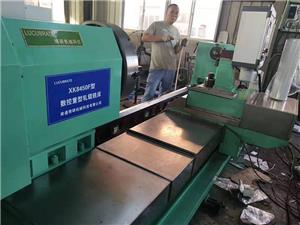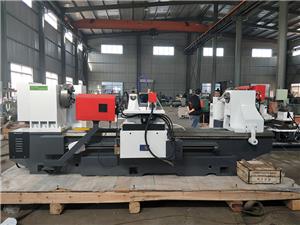
Why CNC CBN Grinding Machines?
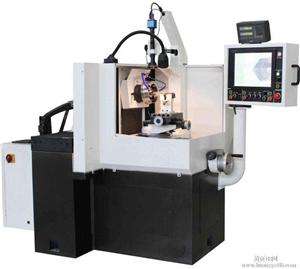
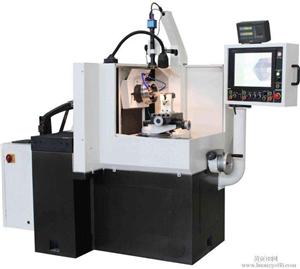
Why CNC CBN Grinding Machines? If you’re grinding hardened tool steels, superalloys, or precision components, you’ve likely felt the sting of slow cycle times, inconsistent surface finishes, and grinding wheels that wear out faster than you can say “dressing cycle.” The answer is straightforward: CNC CBN grinding machines deliver higher material removal rates, longer wheel life, and tighter tolerances than conventional grinding systems—and they do it with fewer setups and less operator intervention. In this blog, we’ll unpack the technical reasons why these machines have become the backbone of high-precision manufacturing at companies like NANTONG LUCUBRATE MACHINERY TECHNICAL LTD., and how they solve real-world pain points.
Pain Point 1: Skyrocketing tooling costs and frequent wheel dressing

Conventional aluminum oxide wheels wear quickly when grinding hardened steels above 55 HRC. A typical shop might dress the wheel every 20–30 parts, adding 15–20 minutes of non-productive time per cycle. Over a year, that’s thousands of dollars in labor and wheel consumption. Worse, inconsistent wheel wear leads to taper and size variation, forcing operators to compensate manually—introducing human error.
Solution: CNC CBN grinding machines use cubic boron nitride (CBN) wheels, which are second only to diamond in hardness. CBN wheels last 50–100 times longer than aluminum oxide when grinding hardened steels. With CNC-controlled dressing and profile compensation, the machine maintains wheel sharpness automatically. The result: fewer interruptions, lower consumable costs, and consistent part geometry. At NANTONG LUCUBRATE MACHINERY TECHNICAL LTD., our machines integrate in-process dressing with servo-controlled diamond rolls, ensuring the CBN wheel stays sharp without operator intervention.
Pain Point 2: Thermal damage and surface integrity issues
Grinding hardened steels generates significant heat. Without proper cooling and control, you get burn marks, micro-cracks, and tensile residual stresses—all of which compromise fatigue life. In aerospace and medical applications, a single burned part can mean a scrapped batch worth thousands of dollars. Engineers often resort to slow, shallow passes, which kills productivity.
Solution: CNC CBN grinding machines employ high-pressure coolant delivery (often 70–100 bar) directed precisely at the grinding zone. Combined with CBN’s high thermal conductivity, heat is carried away efficiently. CNC control optimizes wheel speed, feed rate, and depth of cut in real time based on material and wheel condition. The outcome: no burn, compressive residual stresses, and surface finishes down to Ra 0.2 µm—without sacrificing cycle time. Our machines at NANTONG LUCUBRATE MACHINERY TECHNICAL LTD. feature through-spindle coolant and advanced nozzle designs that target the arc of cut.
Pain Point 3: Unplanned downtime and complex setups
Changing from one part to another often requires wheel changes, fixture adjustments, and re-proving programs. For high-mix, low-volume shops, this downtime erodes profitability. Additionally, inexperienced operators struggle with manual wheel balancing and dressing, leading to vibration and poor finishes.
Solution: CNC CBN grinding machines are built for flexibility. With automatic wheel changers (optional), pallet systems, and parametric programming, changeover times drop from hours to minutes. The CNC handles wheel balancing, dressing, and compensation automatically. At NANTONG LUCUBRATE MACHINERY TECHNICAL LTD., our machines come with user-friendly HMI and remote diagnostics, so even less-experienced operators can achieve consistent results. The integration of linear motors and direct-drive workheads further reduces maintenance and vibration.
Customer Success Stories
1. Precision Tools Inc., Ohio, USA – A manufacturer of carbide end mills struggled with wheel wear when grinding flutes. After installing a CNC CBN grinding machine from NANTONG LUCUBRATE MACHINERY TECHNICAL LTD., wheel life increased by 80%, and cycle time dropped by 25%. “We now grind 40% more parts per shift with the same labor,” said plant manager Mark Reynolds.
2. Aero Components GmbH, Germany – This aerospace supplier needed to eliminate burn on turbine blade roots. Our machine’s high-pressure coolant and CNC control reduced scrap from 5% to 0.3%. Quality manager Dr. Anna Weber commented, “The surface integrity is consistently within spec, and our customers have noticed.”
3. Medical Devices Ltd., UK – Grinding orthopedic implants requires mirror finishes and no thermal damage. With our CNC CBN grinding machine, they achieved Ra 0.15 µm and eliminated polishing operations. Production manager James Whitfield said, “We cut lead time by two days per batch.”
4. Die & Mold Solutions, Japan – This mold maker faced frequent wheel dressing when grinding hardened H13 steel. Our machine’s automatic dressing and CBN wheel reduced dressing frequency by 90%, boosting overall equipment effectiveness (OEE) from 65% to 82%. President Hiroshi Tanaka noted, “The reliability is outstanding.”
5. Automotive Supplier, Michigan, USA – Grinding transmission gears with conventional wheels caused size variation. Our CNC CBN machine held ±0.005 mm tolerance, reducing scrap by 12%. “We recovered the investment in 14 months,” said manufacturing engineer Lisa Chen.
Applications and Partnerships
CNC CBN grinding machines excel in: cutting tool grinding (drills, end mills, inserts), aerospace components (blades, vanes, landing gear parts), medical implants (hip stems, knee components), automotive powertrain (gears, shafts, camshafts), and die and mold (hardened inserts). NANTONG LUCUBRATE MACHINERY TECHNICAL LTD. partners with leading CBN wheel manufacturers and has a growing installed base with distributors in North America and Europe. Our collaboration with precision tooling suppliers ensures that our machines are optimized for the latest CBN abrasives. Procurement managers from companies like Siemens and Bosch have visited our facility for technical audits, and we have supplied machines to tier-one suppliers in the automotive and aerospace sectors.
FAQ
Q: What is the typical wheel life of a CBN wheel compared to aluminum oxide?
A: When grinding hardened steel (60 HRC), CBN wheels last 50–100 times longer, depending on parameters. With proper dressing, you can expect 10,000–20,000 parts per wheel versus 200–500 for aluminum oxide.
Q: Can CNC CBN grinding machines handle both roughing and finishing?
A: Yes. With high material removal rates (up to 10 mm³/mm·s) and fine finishes (Ra 0.2 µm), a single machine can rough and finish in one setup, reducing handling and lead time.
Q: What coolant pressure is recommended for CBN grinding?
A: We recommend 70–100 bar for creep-feed and high-efficiency grinding. This ensures chip evacuation and cooling, preventing burn and wheel loading.
Q: How do you ensure repeatability across shifts?
A: Our CNC systems include automatic wheel balancing, in-process gauging, and temperature compensation. The machine logs all parameters, and remote diagnostics allow our engineers to assist if deviations occur.
Q: What is the lead time for delivery and installation?
A: Typically 12–16 weeks from order to shipment, plus 2 weeks for installation and training. We provide on-site commissioning and operator training.
Conclusion and Call to Action
CNC CBN grinding machines are not just an upgrade—they are a strategic investment in cost reduction, quality, and flexibility. Whether you’re grinding cutting tools or aerospace components, the combination of CBN abrasives and CNC control delivers measurable gains. To learn more, download our technical white paper “Optimizing CBN Grinding Parameters for Hardened Steels” or contact our sales engineers at NANTONG LUCUBRATE MACHINERY TECHNICAL LTD. for a personalized consultation. Let us help you turn grinding from a bottleneck into a competitive advantage.