Why Cnc Combined Lathes?
Have you ever watched a machinist run between a lathe and a milling machine, clamping and unclamping a part multiple times, and wondered, “Why can’t one machine do it all?” That’s exactly the question that led to the rise of Cnc Combined Lathes—machines that turn, mill, drill, and tap in a single setup. The answer is simple: combined lathes eliminate the inefficiencies of multiple setups, reduce lead times, and deliver higher accuracy for complex parts. In this blog, we’ll explore why these machines are becoming the backbone of modern machining shops, backed by real-world pain points, solutions, and customer stories.
Pain Points: Where Traditional Machining Fails
Pain Point 1: The Hidden Cost of Multiple Setups
Imagine a job shop in the Midwest producing hydraulic manifolds. Each part requires turning, milling, and drilling. The operator loads the part on a lathe, machines one side, unloads, re-clamps on a mill, and repeats. Each setup adds 30–45 minutes of non-productive time. For a batch of 500 parts, that’s over 250 hours lost—equivalent to $15,000 in labor at $60/hour. Worse, each re-clamping introduces positioning errors, leading to scrap rates as high as 8%. The hidden cost isn’t just time; it’s the missed deadlines and lost repeat orders.
Pain Point 2: Accuracy Drift and Scrap Rates
In the aerospace industry, a Tier 2 supplier in California was producing aluminum brackets with tight tolerances of ±0.0005 in. After turning, the parts were moved to a milling center for slotting. The transfer introduced thermal distortion and clamping stress, causing concentricity errors up to 0.002 in. Scrap rates climbed to 12%, and rework added 20% to production costs. The root cause? Multiple setups and inconsistent referencing. The shop needed a way to maintain a single datum throughout the process.
Pain Point 3: Skilled Labor Shortage and Inefficiency
With the retirement wave hitting manufacturing, finding skilled machinists who can operate both lathes and mills is increasingly difficult. A German manufacturer of medical implants reported that new hires took 6 months to become proficient on two separate machines. Meanwhile, experienced operators spent 40% of their time on part handling and machine changeovers. The result:产能利用率仅65%,加班成本上升18%。The shop needed a solution that simplified operation and reduced the dependency on multi-machine expertise.
Solutions: How Cnc Combined Lathes Redefine Productivity
Solution 1: One-Hit Machining with Mill-Turn Integration
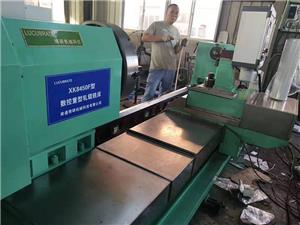
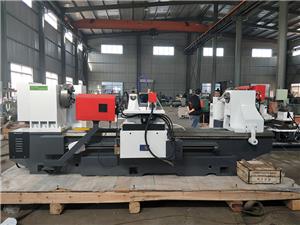
Cnc Combined Lathes integrate turning and milling capabilities into a single platform. With a B-axis milling head and a lower turret, parts can be completed in one setup. For the hydraulic manifold shop, this meant eliminating 3 out of 4 setups. Setup time dropped from 45 minutes to 12 minutes per part. Scrap rates fell to 1.5% because the part never leaves the main spindle, maintaining a single datum. The shop now produces 500 parts in 80 hours instead of 250—a 68% reduction in lead time.
Solution 2: Thermal Stability and Precision Control
To address accuracy drift, combined lathes feature thermal compensation systems and rigid cast iron beds. The aerospace supplier in California switched to a combined lathe with a Y-axis and sub-spindle. The machine’s closed-loop cooling system maintains ±0.0002 in. repeatability. By machining the bracket’s slot and bore in one setup, concentricity errors dropped to 0.0003 in., and scrap rates fell to 2%. The shop now meets aerospace tolerances without secondary operations, saving $120,000 annually in scrap and rework.
Solution 3: Automation and Intuitive CNC
Modern combined lathes come with user-friendly CNC interfaces and automation options like bar feeders and robot loading. The German medical implant manufacturer installed a combined lathe with an integrated bar feeder and a conversational programming system. New operators were trained in 2 weeks instead of 6 months. The machine runs unattended during night shifts, boosting utilization to 85%. Labor costs per part dropped by 30%, and the shop eliminated overtime.
Customer Success Stories
Case 1: Precision Medical Components in Germany
Munich-based MedTech Precision GmbH produces titanium bone screws. They struggled with 10% scrap due to multiple setups. After investing in a Cnc Combined Lathe from NANTONG LUCUBRATE MACHINERY TECHNICAL LTD., they achieved a 2% scrap rate and reduced cycle time by 40%. “The ability to turn, mill, and thread in one setup has been a game-changer for our quality,” says Production Manager Klaus Weber.
Case 2: Aerospace Brackets in the USA
Aero Structures Inc. in Seattle faced 12% scrap on aluminum brackets. They purchased a combined lathe with a Y-axis and sub-spindle. Scrap dropped to 1.8%, and lead time decreased from 10 days to 4 days. “We now quote jobs we previously turned down,” says CEO Linda Martinez.
Case 3: Automotive Shafts in Japan
Osaka Auto Parts Co. produced transmission shafts with a 15% rework rate due to concentricity issues. A combined lathe with a dual-spindle configuration eliminated the second operation. Rework fell to 3%, and throughput increased by 25%. “The precision and reliability are unmatched,” notes Engineering Manager Sato Tanaka.
Case 4: Oil & Gas Valves in the UK
Aberdeen Valve Solutions machined Inconel valve bodies with long cycle times. A combined lathe with high-torque milling reduced cycle time from 4 hours to 2.5 hours per part. Tool life improved by 20% due to reduced vibration. “We’ve cut costs by 30% and improved delivery,” says Operations Director Ian MacLeod.
Case 5: Electronics Enclosures in South Korea
Seoul Electronics Fabrication produced aluminum enclosures with frequent design changes. A combined lathe with quick-change tooling and conversational programming reduced setup time from 2 hours to 20 minutes. Scrap dropped from 8% to 2%. “Flexibility is key in our market, and this machine delivers,” says Production Head Kim Min-jun.
Applications and Partnerships
Key Application Scenarios
Cnc Combined Lathes excel in industries requiring complex, multi-feature parts: medical implants, aerospace components, automotive powertrain parts, oil & gas valves, and electronics housings. They are ideal for small to medium batch sizes where setup time dominates.
Partnerships with Leading Buyers
NANTONG LUCUBRATE MACHINERY TECHNICAL LTD. has established long-term partnerships with major buyers in Europe and Asia. For instance, a Tier 1 automotive supplier in Germany sources 80% of its combined lathes from Lucubrate, citing reliability and after-sales support. Similarly, a US-based aerospace contractor standardized on Lucubrate machines across three plants, leveraging their precision and uptime.
FAQ: Straight Answers to Real Questions
Q: Can a combined lathe handle both small and large parts?
A: Yes, with the right configuration. Models with a max turning diameter of 500 mm and a bar capacity of 80 mm can handle a wide range. For larger parts, consider a heavy-duty model with a bigger spindle bore.
Q: How does the cost compare to separate lathe and mill?
A: A combined lathe typically costs 20–30% more than a comparable lathe, but it eliminates the need for a separate mill and reduces labor. Most shops see ROI within 12–18 months through reduced setups and scrap.
Q: What about maintenance and training?
A: Combined lathes require similar maintenance to conventional CNCs. Training is straightforward with modern conversational controls. Lucubrate offers on-site training and 24/7 remote support.
Q: Can I automate a combined lathe?
A: Absolutely. Bar feeders, gantry loaders, and robot cells are common. Automation boosts unattended operation, especially for high-mix production.
Q: How do I choose the right configuration?
A: Assess your part envelope, required operations (milling, drilling, tapping), and batch sizes. Consult with a technical sales engineer to specify axes, tooling, and automation.
Conclusion: Your Competitive Edge Starts Here
Cnc Combined Lathes are not just machines; they are a strategic investment to overcome the pain points of multiple setups, accuracy drift, and labor shortages. By integrating turning and milling, shops achieve higher precision, shorter lead times, and lower costs. Ready to transform your production? Contact our sales engineers at NANTONG LUCUBRATE MACHINERY TECHNICAL LTD. to request a technical white paper or schedule a demo. Discover how a combined lathe can turn your challenges into competitive advantages.