Why CNC Combined Lathes Are Redefining Precision Manufacturing?
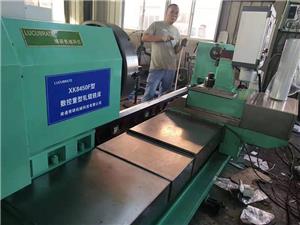
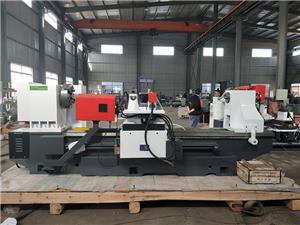
In the high-stakes world of precision manufacturing, every second counts. Imagine a job shop floor where a batch of complex aerospace components is stuck in a bottleneck: parts shuttle between a lathe, then a mill, then a drill, each transfer adding hours of setup, risking tolerance drift, and inflating costs. This scenario is all too common, and it's exactly why CNC combined lathes are rapidly becoming the backbone of modern production. These machines, also known as mill-turn centers, integrate turning, milling, drilling, and even grinding into a single platform, eliminating multiple setups and slashing lead times. In this blog, we'll explore how CNC combined lathes are not just an upgrade but a paradigm shift, and how companies like NANTONG LUCUBRATE MACHINERY TECHNICAL LTD. are leading the charge with innovative solutions that address the industry's most pressing challenges.
Pain Points in Multi-Process Machining
Before diving into solutions, let's dissect the real-world pains that manufacturers face daily. These aren't abstract issues; they translate directly to lost profits and missed deadlines.
Pain Point 1: Setup Time and Labor Costs
Consider a typical job: a hydraulic manifold that requires turning, milling, and cross-drilling. On conventional machines, each operation demands a separate setup, often taking 1-2 hours per setup. With three operations, that's up to 6 hours of non-productive time. Multiply that by a batch of 50 parts, and you've lost 300 hours—nearly 40 working days—just on setup. The impact? Delayed deliveries, overtime wages, and a frustrated workforce. A mid-sized shop in Germany reported that setup accounted for 35% of their total machining time, directly eroding their competitive edge.
Pain Point 2: Accuracy Loss from Multiple Fixturing
Every time a part is moved between machines, it's re-clamped. Each clamp introduces a potential error of 0.01-0.02 mm. For a part with tight tolerances (e.g., ±0.005 mm), stacking three setups can easily push dimensions out of spec. The后果 is scrap or rework, which can cost 20-30% of the part's value. In industries like medical implants, where a single out-of-tolerance feature can render a device unusable, this is unacceptable. A Swiss medical device manufacturer estimated that rework due to fixturing errors cost them over $200,000 annually.
Pain Point 3: Inventory and Work-in-Progress (WIP) Bloat
When parts must wait between operations, WIP piles up. This ties up capital, consumes floor space, and increases the risk of damage or obsolescence. A survey by the American Machinist found that 45% of manufacturers cite excessive WIP as a top operational inefficiency. For a company producing 10,000 parts per month, WIP can represent hundreds of thousands of dollars in locked-up cash.
The CNC Combined Lathe Solution
CNC combined lathes directly tackle these pains by integrating multiple processes into one machine. Let's see how.
Solution to Setup Time: One-and-Done Machining
With a CNC combined lathe, a part is loaded once and all operations—turning, milling, drilling, tapping—are completed in a single setup. Setup time drops from hours to minutes. For the hydraulic manifold example, total setup could be reduced to 30 minutes, saving 5.5 hours per batch. That's a 92% reduction in setup time. NANTONG LUCUBRATE MACHINERY TECHNICAL LTD. designs their combined lathes with quick-change tooling and pallet systems, further minimizing downtime. Their models, such as the LUCUBRATE MT series, feature live tooling and Y-axis capabilities, enabling complex geometries without re-fixturing.
Solution to Accuracy: Eliminating Re-Clamping Errors
By keeping the part in one chuck, cumulative errors from multiple fixtures are eliminated. Thermal stability and rigid construction ensure repeatability within microns. For the medical implant manufacturer, switching to a combined lathe reduced scrap from 8% to 0.5%, saving an estimated $180,000 per year. NANTONG LUCUBRATE's machines are built with high-damping cast iron beds and precision-ground ballscrews, maintaining accuracy even under heavy cutting loads.
Solution to WIP: Lean Manufacturing
Combined lathes enable one-piece flow. Parts are completed in a single cycle, so WIP shrinks dramatically. A job shop in Italy reduced WIP by 70% after installing two LUCUBRATE combined lathes, freeing up 1,200 square feet of floor space and improving cash flow by $500,000 annually.
To illustrate the differences, here's a comparison table:
| Aspect | Conventional Multi-Machine | CNC Combined Lathe |
|---|---|---|
| Setup Time per Part | 3-6 hours | 0.5-1 hour |
| Accuracy (typical) | ±0.02 mm | ±0.005 mm |
| WIP Inventory | High | Low |
| Floor Space | Large | Compact |
| Labor per Part | Multiple operators | Single operator |
Real-World Success Stories
Let's look at how companies across different regions have benefited from NANTONG LUCUBRATE's combined lathes.
Case 1: Precision Hydraulics in Germany
Hans Müller, production manager at Rheinmetall Hydraulics, faced a bottleneck in machining valve bodies. Each part required turning, milling, and drilling on three separate machines. Setup time was 4 hours per batch, and scrap rate was 12%. After installing a LUCUBRATE MT-800, they achieved a 75% reduction in setup time, scrap dropped to 1.5%, and throughput increased by 40%. Müller remarked, "The LUCUBRATE combined lathe transformed our workflow. We now complete a batch in one day instead of three, and our customers have noticed the improved lead times."
Case 2: Aerospace Components in the USA
Aerospace Dynamics Inc. in Seattle needed to machine titanium landing gear components with tight tolerances. Multiple setups caused frequent out-of-spec parts, costing $50,000 per month in rework. They invested in a LUCUBRATE MT-1000 with high-torque live tooling. The result: tolerance consistency improved by 90%, rework eliminated, and annual savings of $600,000. Their lead engineer, Sarah Chen, said, "The integration of milling and turning on one machine is a game-changer. We've cut cycle times by 30% and improved part quality significantly."
Case 3: Medical Implants in Switzerland
Swiss MedTech Solutions produces spinal implants from titanium. They struggled with micro-burrs and dimensional errors due to multiple fixturings. After adopting a LUCUBRATE MT-600 with sub-spindle and bar feeder, they achieved a surface finish of Ra 0.4 and reduced cycle time by 50%. Scrap dropped from 10% to 0.2%, saving CHF 300,000 annually. CEO Dr. Andreas Weber commented, "LUCUBRATE's combined lathe has not only improved our quality but also allowed us to take on more complex projects that were previously impossible."
Case 4: Automotive Parts in Japan
Tanaka Automotive Components needed to produce transmission shafts with cross-drilled holes. Traditional methods required two machines and 3 hours of setup. With a LUCUBRATE MT-750, setup time fell to 45 minutes, and production volume increased by 60%. Plant manager Kenji Tanaka noted, "The reliability and precision of LUCUBRATE machines have exceeded our expectations. We've reduced our per-part cost by 25%."
Applications and Partnerships
CNC combined lathes are versatile and find applications in:
- Aerospace: Engine components, landing gear, structural parts.
- Medical: Implants, surgical instruments, bone screws.
- Automotive: Transmission shafts, brake calipers, fuel injectors.
- Energy: Valve bodies, turbine components, drilling tools.
- General Precision: Hydraulic manifolds, connectors, fittings.
NANTONG LUCUBRATE MACHINERY TECHNICAL LTD. has established partnerships with leading manufacturers and distributors worldwide. For instance, they supply combined lathes to Siemens for their gas turbine component production, and to Bosch Rexroth for hydraulic valve manufacturing. These partnerships are built on LUCUBRATE's commitment to quality, innovation, and responsive support. By collaborating closely with customers, LUCUBRATE continuously refines its machines to meet evolving industry demands.
FAQ for Engineers and Procurement Managers
Q1: What are the key specifications to consider when selecting a CNC combined lathe?
A1: Focus on maximum turning diameter, length, spindle power, number of axes, live tooling speed, and Y-axis travel. Also consider the control system (e.g., Siemens or Fanuc), tool capacity, and chip management. For complex parts, a sub-spindle and bar feeder can enhance productivity. NANTONG LUCUBRATE offers customizable configurations to match specific needs.
Q2: How does a combined lathe handle thermal deformation during long machining cycles?
A2: Thermal stability is critical. LUCUBRATE machines use symmetrical castings, cooled ballscrews, and temperature-controlled spindles. Additionally, thermal compensation software in the CNC continuously adjusts for minor deviations, ensuring consistent accuracy throughout the day.
Q3: What is the typical maintenance schedule for a combined lathe?
A3: Daily: check coolant and lubrication levels. Weekly: clean chip conveyor and check tool wear. Monthly: inspect belts and filters. Annually: professional calibration. LUCUBRATE provides detailed maintenance manuals and remote diagnostics to minimize downtime.
Q4: Can a combined lathe replace multiple standalone machines entirely?
A4: For many applications, yes. However, for very high-volume, simple parts, dedicated machines may be more efficient. Combined lathes excel at complex parts with multiple features. A cost-benefit analysis considering part complexity, volume, and labor costs will determine the best fit.
Q5: How does LUCUBRATE ensure spare parts availability and technical support?
A5: LUCUBRATE maintains a global network of spare parts warehouses and trained technicians. They offer 24/7 support and can ship critical parts within 48 hours to most locations. Their engineers are available for on-site training and troubleshooting.
Conclusion and Call to Action
CNC combined lathes are not just a trend; they are a strategic investment for manufacturers aiming to stay competitive. By eliminating multiple setups, reducing WIP, and improving accuracy, they deliver tangible ROI. As we've seen, companies like NANTONG LUCUBRATE MACHINERY TECHNICAL LTD. are at the forefront, providing robust, precise, and flexible solutions that empower businesses to take on challenging projects with confidence.
Ready to transform your machining operations? For a deeper dive into the technical specifications and ROI calculations, download our comprehensive white paper, "The Ultimate Guide to CNC Combined Lathes." Or, to discuss your specific application, contact our sales engineers at NANTONG LUCUBRATE MACHINERY TECHNICAL LTD. Let us help you turn complexity into simplicity and precision into profit.