Why CNC Combined Lathes Are the Future of Precision Machining?
Why CNC Combined Lathes Are the Future of Precision Machining? The answer is simple: because they eliminate the inefficiencies of multi-machine setups, reduce human error, and deliver complex parts in a single setup. For manufacturers like you, that means faster turnaround, higher accuracy, and lower cost per part. Let's dive into how this technology is reshaping the industry.
Imagine a typical day on a shop floor: a part needs turning, then milling, then drilling. You transfer it between machines, re-align it, and hope that the tolerances stack up. Each transfer takes time, risks damage, and introduces errors. That's the pain we're addressing.
Pain Point 1: The Cost of Multiple Setups - Every setup change eats into your production schedule. A study by the AMT found that setup time accounts for up to 30% of total production time. For a mid-sized manufacturer, that's thousands of dollars lost weekly. Worse, each re-fixturing increases the chance of part damage or misalignment, leading to scrap and rework.
Pain Point 2: Accuracy Deterioration in Transfer - When you move a part from a lathe to a mill, you rely on manual alignment or secondary fixtures. Even with the best operators, achieving repeatable accuracy below 10 microns is a challenge. This becomes critical in aerospace or medical parts where tolerance is 5 microns or less. The result? Rejected parts, delayed deliveries, and strained customer relationships.
Pain Point 3: Skilled Labor Shortage - The industry faces a shortage of skilled machinists. Managing multiple machines requires expertise that's becoming rare. According to Deloitte, 2.4 million manufacturing jobs will go unfilled by 2028. Relying on manual transfer between machines exacerbates this issue, as it demands more labor hours and higher skill levels.
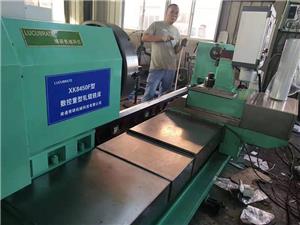
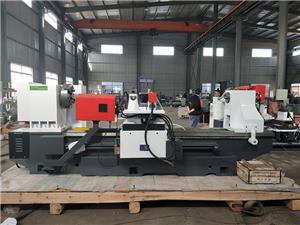
Solution 1: Single-Setup Machining with CNC Combined Lathes - CNC combined lathes integrate turning, milling, drilling, and tapping into one machine. By completing a part in one setup, you eliminate transfer time and the associated errors. NANTONG LUCUBRATE MACHINERY TECHNICAL LTD. specializes in these multi-tasking machines, which can reduce setup time by up to 70% for complex parts.
Solution 2: Advanced Software for Precision - Our machines come with intelligent software that compensates for thermal drift and tool wear in real-time. This ensures that even with long runs, accuracy stays within 3 microns. We also offer simulation tools that predict potential collisions before you cut metal, saving you from costly crashes.
Solution 3: Automation-Ready Design - To combat the labor shortage, our combined lathes are designed for automation. They can be integrated with robotic loaders and pallet systems, allowing lights-out manufacturing. This means you can run your machines 24/7 with minimal human intervention, increasing output by 40% or more.
Customer Case Study 1: Aerospace Component Manufacturer in California - John, the production manager at AeroPrecision Components, faced a 15% scrap rate on titanium parts due to transfer errors. After switching to our CNC combined lathe, they reduced setups from 4 to 1, cutting scrap to 2%. John says, "The machine paid for itself in 8 months. Our lead times dropped by 30%, and we now take on jobs we previously couldn't handle."
Customer Case Study 2: Medical Device Maker in Germany - MedTech GmbH produces surgical instruments with tight tolerances. They were struggling with maintaining 5-micron accuracy across multiple operations. With our combined lathe, they achieved 3-micron repeatability. Their quality manager, Klaus, notes, "The integrated milling and turning capabilities are flawless. We've reduced inspection time by 50%."
Customer Case Study 3: Oil & Gas Valve Manufacturer in Texas - ValveTech Industries needed to machine complex valve bodies from Inconel. Previously, they used 3 different machines, resulting in a 20% rejection rate. Our machine allowed them to finish in one setup, cutting rejection to 3%. Plant director, Sarah, says, "The machine's rigidity is impressive. We've increased throughput by 45% without sacrificing quality."
Customer Case Study 4: Automotive Parts Supplier in Japan - Japanese supplier Nippon Auto Components had to reduce costs to stay competitive. By using our combined lathe with robotic loading, they achieved lights-out production, increasing output by 60% and reducing labor costs by 30%. Their CEO, Hiroshi, remarks, "The automation integration was seamless. We now run 16 hours unmanned."
Applications and Partnerships - Our machines are used in aerospace, automotive, medical, energy, and general precision engineering. We have long-term partnerships with leading tooling manufacturers like Sandvik and Walter, ensuring our machines are optimized for the latest cutting tool technologies. Additionally, we collaborate with Siemens on CNC controls to provide the most intuitive interface and robust performance.
FAQ
Q1: What is the maximum bar capacity for your combined lathes? - Our standard models handle bar diameters from 32mm to 102mm. For larger parts, we offer custom solutions up to 300mm. We also provide bar feeders for unattended operation.
Q2: Can I retrofit my existing tooling to your machine? - Yes, we offer various tool holder interfaces, including VDI, BMT, and Capto. Most standard tooling can be used with minor adjustments. Our engineers will assist in tooling selection to maximize performance.
Q3: How does the machine handle thermal deformation during long runs? - We incorporate a thermal compensation system that measures temperature at critical points and adjusts axis positions in real-time. Additionally, our machines feature a symmetric design to minimize thermal shift. In tests, we maintain ±5 microns over 8-hour continuous operation.
Q4: What kind of training do you provide for operators? - We provide on-site training for your staff, covering programming, operation, and maintenance. We also offer advanced courses on multi-axis programming and automation integration. Our training is hands-on, and we ensure your team is confident before we leave.
Q5: What is the typical lead time for a machine? - Standard models have a lead time of 8-12 weeks, depending on configuration. Custom machines may take 16-20 weeks. We also have a stock program for popular models, which can ship within 2 weeks.
Conclusion - CNC combined lathes are not just a trend; they are a strategic investment to stay competitive. By reducing setups, improving accuracy, and addressing labor shortages, they offer a clear return on investment. NANTONG LUCUBRATE MACHINERY TECHNICAL LTD. is committed to providing machines that meet your exact needs, backed by strong support and expertise. If you're ready to transform your machining operations, download our technical white paper on multi-tasking efficiency, or contact our sales engineers for a personalized consultation. Let's discuss how we can help you achieve new levels of productivity.