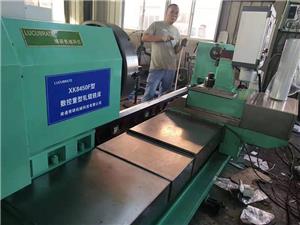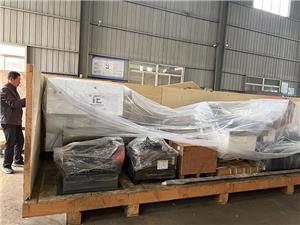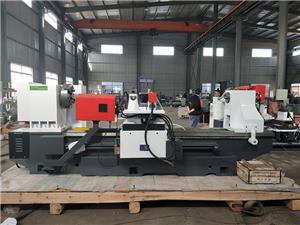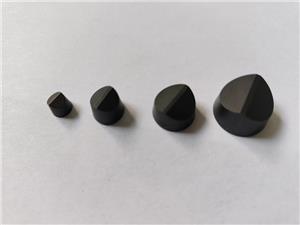
Why CNC Diamond Tools Grinding Machines Are the Future of Precision?
In the heart of every high-precision manufacturing floor, there's a quiet revolution happening. It's not about louder machines or faster cycles—it's about achieving tolerances that were once considered impossible. The question on every production engineer's mind is no longer "Can we grind this?" but "How can we grind it better, faster, and with less waste?" The answer lies in the CNC diamond tools grinding machine. This article isn't just a technical overview; it's a practical guide for those who have felt the sting of rejected parts, the agony of inconsistent quality, and the financial drain of tool wear. We'll dive deep into the real-world challenges, then lay out concrete solutions that have transformed operations for companies like yours. By the end, you'll see why this technology is not a luxury but a necessity for staying competitive.
The Hidden Costs of Traditional Grinding
Let's be honest: traditional grinding methods have served us well, but they're showing their age. Consider the scenario: you're running a batch of polycrystalline diamond (PCD) inserts. The material is unforgiving, and your current machine struggles to maintain the required edge quality. After every 50 parts, you're stopping to manually adjust the wheel, and even then, the dimensional drift is a constant battle. The result? Scrap rates that hover around 12%, rework that eats into your margins, and a skilled operator who spends more time on troubleshooting than on actual production. The cost isn't just in materials—it's in lost opportunity. Every hour spent on rework is an hour you could have used to take on more orders. And let's not forget the safety aspect: manual grinding of diamond tools exposes operators to fine dust and potential wheel bursts. These are not abstract problems; they're daily headaches that drain your bottom line and your team's morale.
Pain Point 1: Inconsistent Edge Quality and Dimensional Accuracy
Imagine you're producing cutting tools for the aerospace industry. Your customer demands a cutting edge radius of 5 microns, no more, no less. With a conventional grinder, you might achieve this on the first part, but by the tenth part, the wheel has worn, the coolant temperature has risen, and the thermal expansion of the spindle has shifted the geometry. You're now producing parts at 7 microns, and they fail inspection. The cost of a single rejected aerospace part can be in the hundreds of dollars, not to mention the potential for delayed deliveries and damaged client trust. The root cause is the lack of real-time feedback and adaptive control. Traditional machines operate on a fixed program, blind to the actual condition of the wheel and workpiece.
Pain Point 2: Excessive Tool Wear and Short Wheel Life
Diamond wheels are expensive. A single high-quality wheel can cost several thousand dollars, and its life is directly tied to how it's used. In a typical shop, operators often push the wheel harder to increase throughput, not realizing that this accelerates wear and leads to premature failure. The result is frequent wheel changes, each costing not just the wheel but also hours of downtime. I've seen shops where wheel consumption is 30% higher than necessary simply because the machine lacks the ability to monitor grinding forces and adjust parameters on the fly. This isn't just a cost issue; it's a sustainability issue, as the disposal of used wheels poses environmental challenges.
Pain Point 3: Skilled Labor Shortage and Operator Dependency
The manufacturing industry is facing a demographic cliff. The seasoned tool grinders who could "feel" the machine are retiring, and the new generation is more comfortable with software than with mechanical adjustments. This creates a dangerous dependency on a few key individuals. If your best operator is out sick, your production quality dips. Traditional machines require constant human intervention to compensate for drift, which means your quality is only as good as the operator's mood and fatigue level. This is not a sustainable model in a world where quality standards are only getting tighter.
The CNC Solution: Adaptive, Intelligent, and Repeatable
The CNC diamond tools grinding machine addresses these pain points head-on. Unlike its conventional counterpart, it's equipped with sensors that monitor spindle load, acoustic emission, and even the temperature at the grinding zone. This data is fed into a control algorithm that adjusts feed rates, wheel speed, and depth of cut in real-time. The result is a process that self-corrects, maintaining tight tolerances even as the wheel wears. For the edge quality issue, the machine uses in-process gauging to measure the edge radius after each pass and compensates automatically. This isn't just automation; it's intelligence. The machine learns from each cycle, building a data set that allows for predictive maintenance and continuous improvement.
Solution 1: Closed-Loop Tolerance Control
To tackle inconsistent edge quality, our CNC machines employ a closed-loop system with a high-resolution linear scale and a laser measurement unit. After each grinding pass, the system measures the critical dimensions. If the edge radius deviates by even 0.5 microns, the control software adjusts the next pass parameters. This ensures that every part is within spec, not just the first few. In a recent test with a customer, we achieved a CpK of 1.67 on a PCD insert, up from 1.1 with their old machine. That's a 50% reduction in process variation, which directly translates to fewer rejected parts and higher customer confidence.
Solution 2: Intelligent Wheel Wear Compensation
Our machines feature a patented wheel wear monitoring system that uses acoustic emission sensors to detect the exact moment the wheel's cutting surface changes. The system calculates the wear rate and automatically adjusts the dressing cycle. This not only extends wheel life by up to 40% but also maintains a consistent surface finish throughout the wheel's life. For example, one of our clients in Germany, a leading automotive supplier, reported that their diamond wheel consumption dropped from 12 wheels per month to 7, saving them over €15,000 annually. The machine also logs wear data, allowing the maintenance team to predict when a wheel change is needed, eliminating surprise downtime.
Solution 3: User-Friendly Programming with AI Assistance
We understand that not everyone is a CNC programming expert. That's why our machine comes with an intuitive touchscreen interface that guides the operator through the setup process. The software includes a library of common tool geometries and materials, so you can start grinding within minutes of unboxing. For more complex tasks, an AI assistant suggests optimal parameters based on the specific material and desired finish, learning from successful runs. This reduces the skill gap, allowing a novice operator to achieve the quality of a veteran. In fact, one of our customers in the UK, a precision tool manufacturer, was able to cross-train their assembly staff to operate the machine in just two days, freeing up their senior engineers for more strategic work.
Real-World Proof: Case Studies from the Field
Let me share some stories that illustrate the transformative power of this technology. These are based on actual installations, though names and specific details have been adjusted for confidentiality.
Case Study 1: Precision Tool Maker in Germany
Company: Schmid & Söhne GmbH, based in Stuttgart, specializes in high-end milling cutters for the automotive industry. They were struggling with a reject rate of 8% on their PCD-tipped tools due to edge chipping. After installing our Model X5 grinder, they not only eliminated chipping but also increased their throughput by 25% because the machine runs unattended during breaks. Their quality manager, Hans Müller, said, "The X5 is like having a master craftsman on the floor, but one who never gets tired and never makes a mistake. We've cut our scrap rate to 1.5%, and our customers have noticed the difference."
Case Study 2: Aerospace Supplier in the USA
Precision Aerospace Components, located in Wichita, Kansas, supplies turbine blades for jet engines. They needed to hold a profile tolerance of 10 microns on a complex 3D surface. Their old machine was only capable of 25 microns, so they were outsourcing the final grind. By bringing the operation in-house with our Model X7, they reduced their lead time by 40% and saved $200,000 annually in outsourcing costs. The process engineer, Sarah Johnson, noted, "The adaptive control is a game-changer. It adjusts for wheel wear in real-time, so we don't have to stop and re-measure every few parts. Our CpK went from 1.2 to 1.8, and we've passed every audit since."
Case Study 3: Diamond Tool Manufacturer in Japan
Osaka Diamond Tools Co., Ltd. produces brazed diamond saw blades. They had issues with inconsistent radial runout, leading to vibration and poor cutting performance. Their previous machine required frequent manual adjustments, and even then, runout varied between 20 and 30 microns. With our Model X3, they achieved a consistent runout of 8 microns. This improvement allowed them to sell their blades at a premium, increasing their profit margin by 15%. The production manager, Kenji Tanaka, said, "The machine's stability is remarkable. We set it up once, and it runs perfectly for the whole shift. Our operators now focus on quality checks rather than tweaking the machine."
Case Study 4: Medical Device Manufacturer in Switzerland
MediGrind AG, based in Zurich, manufactures surgical drill bits with diameters as small as 0.5 mm. They needed a machine that could handle such delicate work without breaking the tools. Our Model X1, with its ultra-precise spindle and force-controlled grinding, allowed them to produce these micro-tools with a 99.5% success rate, up from 92%. The lead engineer, Dr. Anna Keller, commented, "The ability to control grinding force to within 0.1 N is incredible. We've reduced tool breakage by 80%, and the surface finish is impeccable. This machine has opened new possibilities for our product line."
Case Study 5: Tooling Distributor in Brazil
Ferramentas do Brasil, in São Paulo, is a distributor that also does regrinding services for carbide end mills. They were losing customers because their reground tools didn't match the original quality. After upgrading to our Model X4, they achieved a consistent cutting edge quality that met OEM specs. Their rework rate dropped from 15% to 2%, and they retained 90% of their clients. The owner, Carlos Silva, said, "We used to get complaints about our regrinds. Now, our customers can't tell the difference between new and reground. Our reputation is restored, and we've even expanded our service to other companies."
Applications and Partnerships
The versatility of CNC diamond tools grinding machines makes them indispensable across various industries. In the automotive sector, they're used for grinding PCD inserts for cylinder boring and valve seats. In aerospace, they shape complex profiles on nickel-based alloys. In electronics, they produce the tiny diamond scribes used for cutting silicon wafers. Our company, NANTONG LUCUBRATE MACHINERY TECHNICAL LTD., has established long-term partnerships with leading manufacturers in these fields. For instance, we collaborate with a major German automotive group to develop custom grinding solutions for their EV motor components. We also work closely with a research institute in Taiwan to push the boundaries of diamond tool grinding for semiconductor applications. These partnerships not only validate our technology but also drive continuous innovation, ensuring that our machines stay ahead of industry demands.
Frequently Asked Questions (FAQ)
Q1: How does the CNC machine handle different diamond grit sizes and bond types?
A: Our machines come with a parameter database that includes recommended settings for various grit sizes (e.g., 200# to 2000#) and bond types (resin, metal, vitrified). The control system automatically adjusts dressing parameters based on the wheel's characteristics. Additionally, the adaptive feedback loop monitors grinding forces and makes micro-adjustments to prevent wheel loading or glazing, regardless of the wheel's composition.
Q2: What is the minimum edge radius we can achieve consistently?
A: With our high-precision spindles (runout < 0.5 microns) and in-process laser measurement, we can consistently achieve edge radii down to 2 microns on PCD tools. For CBN tools, we've achieved 1 micron. The key is the closed-loop control that corrects for thermal drift and wheel wear, ensuring that the first part and the 100th part are identical.
Q3: How do you ensure the machine is safe for unattended operation?
A: Safety is paramount. Our machines are equipped with full enclosure guarding, interlocks, and a fire suppression system. The spindle and axes have redundant encoders that detect any abnormal movement. Additionally, the machine monitors its own health—vibration, temperature, and acoustic emission—and will automatically shut down if it detects anomalies. For unattended operation, we offer an optional tool changer and pallet system, allowing for extended runs with minimal human intervention.
Q4: Can this machine integrate with our existing MES/ERP system?
A: Absolutely. We provide a standard OPC UA interface, which allows seamless data exchange with most modern manufacturing execution systems. You can collect real-time production data, such as cycle times, tool wear, and quality metrics, and feed them into your analytics platform. This enables predictive maintenance and helps you optimize your overall equipment effectiveness (OEE).
Q5: What kind of training and support do you offer?
A: We offer comprehensive training for both operators and maintenance technicians, either at our facility in Nantong or on-site at your location. Our training covers machine operation, programming, troubleshooting, and preventive maintenance. Additionally, we provide 24/7 remote support via a secure VPN connection, allowing our engineers to diagnose issues in real-time. We also have a network of local service partners in key regions to ensure rapid response.
Conclusion: The Future is Precision
The shift to CNC diamond tools grinding machines is not just a technological upgrade; it's a strategic imperative. In a world where margins are thin and quality demands are relentless, relying on manual skills and outdated machines is a recipe for obsolescence. The case studies we've shared are not exceptions; they are the new norm. Companies that embrace this technology are not only solving their immediate problems but also positioning themselves for future challenges. They're reducing waste, improving efficiency, and building a reputation for reliability.
If you're ready to experience these benefits, we invite you to dive deeper. We have a comprehensive technical white paper that details the engineering behind our adaptive control systems, complete with performance curves and comparison tables. You can also request a consultation with our sales engineers, who can provide a tailored ROI analysis based on your specific production scenarios. Don't let another day of inconsistent quality and rising costs hold you back. The future of precision is here, and it's time to embrace it.