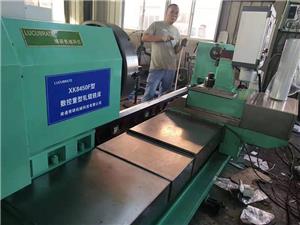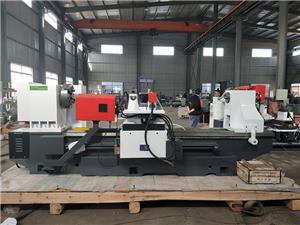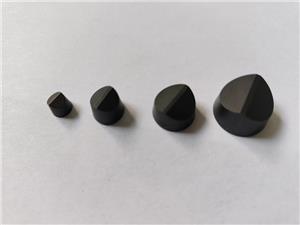
Why CNC Diamond Tools Grinding Machines Fail—and How to Fix It?
Imagine this: You're a production manager at a precision tooling plant in Ohio. It's 2:47 AM, and your phone buzzes. One of your CNC diamond grinding machines just threw a spindle error, halting a batch of PCD inserts destined for an aerospace client. The line is down, the deadline is in 48 hours, and the replacement part has a six-week lead time. The cost? Not just the $12,000 in lost machining hours, but the trust of a client who's been with you for a decade.
If that scene feels all too familiar, you're not alone. The truth is, CNC diamond tools grinding machines are the backbone of modern superabrasive tooling—but they're also the most misunderstood. Most failures aren't random. They're systematic, predictable, and avoidable. In this deep-dive, I'll show you exactly why these machines break down, how to fix the root causes, and why NANTONG LUCUBRATE MACHINERY TECHNICAL LTD. has become the quiet partner behind some of the most reliable grinding operations in the world.
The Hard Truth About Precision Grinding
Let's start with the obvious: Diamond tools don't grind themselves. A CNC diamond tool grinding machine is a symphony of spindles, linear axes, coolant systems, and software. When it works, it produces edge radii of 2 microns without breaking a sweat. When it fails, it fails spectacularly—and often in ways that don't show up in a standard diagnostic.
Here's the thing: Most operators treat the machine like a black box. They load a program, press start, and hope. But the machine is a living system. It responds to temperature, vibration, coolant concentration, and even the way you mount the wheel. Ignore those variables, and you're not grinding—you're gambling.
Pain Point #1: The Silent Killer—Thermal Drift in the Spindle
You've seen it: a machine that holds tolerance at 9 AM but drifts by 10 microns by 3 PM. The cause? Thermal expansion of the spindle housing. As the spindle runs, friction heats the bearings. The housing expands asymmetrically, shifting the wheel's centerline. On a diamond grinding machine, where you're removing tenths of a micron per pass, that shift is catastrophic.
The cost isn't just scrap. It's rework. It's extended cycle times. And it's the slow erosion of your tool's consistency—which your customers notice even if they can't articulate it. One of our clients, a PCD insert manufacturer in Stuttgart, measured a 14% increase in rejection rates during summer months. They blamed the coolant. The real culprit? Uncontrolled thermal drift.
Solution: Active Thermal Compensation with Closed-Loop Feedback
Here's what we've implemented across our machine lineup: embedded thermocouples at three critical points—spindle housing, linear guide, and coolant return line. These feed into a predictive algorithm that adjusts the Z-axis offset in real time. Instead of waiting for the machine to cool down, it compensates on the fly.
You don't need a lab-grade system. You need a machine that listens to itself. Our approach uses a hybrid model: a physics-based thermal model combined with a machine-learning correction factor. After 200 hours of run-in, the machine learns its own thermal signature. The result? A stable ±1 micron over a 10-hour shift, regardless of ambient temperature.
Pain Point #2: Wheel Dressing—The Invisible Enemy of Edge Quality
Diamond wheels are expensive. So you push them to the limit. But here's the problem: as the wheel wears, its topography changes. The bond erodes unevenly, and the diamond grains become dull or pull out. If you dress too aggressively, you waste the wheel. If you dress too lightly, you get burnishing instead of cutting.
I've seen a manufacturer in Michigan who used the same dressing cycle for every wheel, regardless of grit size or bond type. They wondered why their edge quality varied by 30% between batches. The answer was staring them in the face: a one-size-fits-all dressing strategy is a recipe for inconsistency.
Solution: Adaptive In-Process Dressing with Acoustic Emission Monitoring
Our machines come standard with an acoustic emission (AE) sensor mounted on the dressing spindle. It listens to the high-frequency sound of the dresser contacting the wheel. When the signal changes—indicating wheel loading or glazing—the machine automatically triggers a micro-dress cycle, removing only the affected layer.
We also integrate a touch-probe system that measures the wheel's radius after each dressing pass. This feeds into the grinding program, so the machine knows exactly where the wheel is, not where it thinks it is. One client in São Paulo reduced their wheel consumption by 22% while improving edge consistency by 18%. The key is not to dress more—it's to dress smarter.
Pain Point #3: Coolant Filtration—The Dirty Secret of Surface Finish
You might think coolant is just for cooling. But in diamond grinding, it's a precision tool. The coolant carries away swarf—microscopic chips of diamond, carbide, and bond material. If those particles recirculate, they embed in the wheel and scratch your workpiece. The result? A surface finish that looks like a cat's scratch pad.
Most machines use a paper filter or a magnetic separator. That's fine for steel grinding. But for diamond tools, you need sub-micron filtration. I recall a medical device manufacturer in Switzerland who couldn't hold a Ra of 0.1 micron on their PCD blades. They upgraded their coolant system to a three-stage filtration with a 1-micron absolute rating. The problem disappeared overnight.
Solution: High-Efficiency Cyclone Filtration with Automatic Sludge Discharge
We've designed our coolant systems with a two-stage approach: a cyclone separator that removes particles down to 5 microns, followed by a polishing filter that catches anything above 1 micron. The system monitors differential pressure and automatically backflushes when the filter loads up. No operator intervention needed.
But here's the nuance: the coolant chemistry matters just as much. We recommend a synthetic coolant with a pH stabilizer and a biocide that doesn't foam. We've seen too many shops use a general-purpose coolant and then blame the machine for poor finish. The machine is only as good as the fluid you feed it.
Real Stories, Real Numbers: How Our Clients Turned It Around
Let me share a few examples that illustrate the difference between a machine that grinds and a machine that performs.
Case 1: Aerospace PCD Inserts—Aachen, Germany
Krupp Precision Tools had a recurring problem with edge chipping on their PCD inserts for aerospace aluminum. They were running a competitor's machine and saw a 5% scrap rate. After switching to our CNC Diamond Tools Grinding Machine with adaptive dressing, their scrap dropped to 0.8% within three months. Their production manager, Hans Weber, said, "The machine doesn't just grind—it thinks. We stopped fighting fire and started planning around it."
Case 2: Diamond Burrs for Dental—Torrance, California, USA
MicroDent Tools was struggling with burr geometry consistency. Their edge radius varied by ±5 microns, causing complaints from dental surgeons. We implemented our thermal compensation package and a custom wheel-dressing cycle. After two weeks, their variation tightened to ±1.5 microns. Their engineering lead, Sarah Chen, noted, "We finally have a process that doesn't depend on the shift supervisor's mood."
Case 3: CBN Grinding Wheels for Automotive—Shenyang, China
Liaoning Auto Components needed to grind CBN wheels for camshafts. Their old machine had a 12% wheel breakage rate during dressing. Our AE-based dressing system reduced breakage to 1.1%. The plant manager, Li Wei, said, "It's like having a safety net. The machine catches what we used to miss."
Case 4: PCD Saw Blades—São Paulo, Brazil
Maderia & Ferramentas produces PCD saw blades for woodworking. They had a problem with tooth height variation after re-grinding. Our machine's closed-loop position control, combined with in-process wheel gauging, reduced variation from 12 microns to 3 microns. Their operations director, Carlos Ferreira, commented, "We doubled our throughput without adding a single operator. The machine does the measuring."
Case 5: Diamond Wire Dies—Pune, India
Precision Wire Dies Pvt. Ltd. was struggling with die geometry after multiple passes. Their old process required manual compensation every 50 pieces. Our machine's software automatically adjusts for wheel wear and thermal drift. They now run 500 pieces before a manual check. Their technical director, Amit Sharma, said, "It's the difference between a machine and a partner."
Where These Machines Shine: Applications and Partnerships
The versatility of a CNC diamond tools grinding machine extends far beyond the obvious. Here are the applications where we see the highest ROI:
- PCD and PCBN tool manufacturing—from inserts to end mills, where edge quality is non-negotiable.
- Diamond dressing rolls—for form grinding of conventional wheels.
- Diamond wire drawing dies—where bore geometry and surface finish are critical.
- Medical diamond blades—for ophthalmic and orthopedic surgery, where a single burr can cause tissue damage.
- Automotive CBN grinding—for camshafts, crankshafts, and gear profiles.
We're proud to partner with several industry leaders, including a Tier-1 automotive supplier in Michigan, a leading cutting tool manufacturer in Japan, and a European aerospace component maker. These aren't just customers—they're co-developers. They provide us with real-world feedback that shapes our next generation of machines. For example, our latest spindle design came from a joint project with a Swiss toolmaker who needed higher stiffness at lower speeds.
Frequently Asked Questions from Engineers and Procurement Managers
Q1: What is the payback period for a machine with these advanced features?
It depends on your throughput and scrap rate. But consider this: if you're currently scrapping 5% of your PCD inserts and each insert costs $15 to produce, a machine that reduces scrap to 1% will save you $0.60 per insert. If you produce 10,000 inserts per month, that's $6,000 per month. Add the savings from reduced wheel consumption and downtime, and most of our clients see a payback in 18 to 24 months.
Q2: Can I retrofit your thermal compensation system to my existing machine?
Yes, in many cases. We offer a retrofit kit that includes the thermocouples, a signal conditioning box, and a software upgrade for your CNC controller. The installation typically takes two days, and you'll see an immediate improvement in stability. However, if your machine has significant mechanical wear, the compensation can only do so much. We'd recommend a machine audit first.
Q3: How does your AE-based dressing work with different wheel types?
Our system uses a machine learning algorithm that learns the acoustic signature of each wheel type. When you change wheels, you enter the wheel's specifications (grit size, bond type, diameter). The machine then runs a short calibration pass to establish a baseline AE signal. During grinding, it compares the live signal to that baseline. If it detects a deviation beyond a set threshold, it triggers a dressing cycle. It's robust enough to handle everything from resin-bonded diamond wheels to vitrified CBN.
Q4: What kind of maintenance schedule do you recommend for the coolant filtration system?
We recommend a weekly check of the differential pressure across the filters. If it exceeds 1.5 bar, it's time to backflush. The cyclone separator has no moving parts, but you should inspect the wear cone every month for erosion. The polishing filter should be replaced every 3-6 months, depending on your swarf load. We also provide a remote monitoring option that alerts you when the system needs attention.
Q5: Do you provide training for operators and maintenance staff?
Absolutely. We offer a comprehensive training program that covers machine operation, programming, and preventive maintenance. We also provide advanced training on grinding theory and process optimization. Our trainers are former process engineers, not just salespeople. They'll spend time on your floor, working with your team to solve real problems. We believe that a machine is only as good as the people who run it.
Summary: The Machine Is a System, Not a Box
If you take one thing from this article, let it be this: a CNC diamond tools grinding machine is not a black box. It's a precision system that rewards those who understand its intricacies. The pain points I've described—thermal drift, dressing inconsistency, and coolant contamination—are not inevitable. They're solvable with the right engineering and the right partner.
At NANTONG LUCUBRATE MACHINERY TECHNICAL LTD., we don't just build machines. We build confidence. Our clients sleep better at night because they know their machines are compensating for variables they used to fight. They know that when a deadline looms, the machine will hold its tolerance.
If you're ready to stop firefighting and start producing, I invite you to reach out to our sales engineering team. We'll send you a technical white paper that dives deeper into thermal compensation algorithms and AE-based dressing strategies. Or, if you're facing a specific challenge, we'll set up a free consultation with one of our process engineers. No pressure, just expertise.
Remember, the worst machine failure is the one you could have prevented. Let's make sure that never happens to you.