Why CNC Grinding Machines Are the Unsung Heroes of Precision Manufacturing?
Have you ever wondered why some manufactured parts fit together with such flawless precision, while others fail under stress? The answer often lies in the grinding process. As a production manager, you've likely faced the frustration of parts that are just a few microns off, causing assembly delays and costly rework. The truth is, CNC grinding machines are the unsung heroes of precision manufacturing, and in this article, we'll uncover why they deserve your attention.
The modern manufacturing landscape is unforgiving. Tolerances are tighter, materials are harder, and customer expectations are higher than ever. Yet, many shops still rely on outdated grinding methods that are inconsistent and labor-intensive. This leads to scrap, rework, and missed deadlines. But what if you could achieve micron-level precision consistently, reduce cycle times by 30%, and extend wheel life by 40%? That's not a dream; it's what advanced CNC grinding technology delivers.
Let's dive into the real-world challenges you face daily. First, consider the issue of thermal distortion. When grinding hard materials like Inconel or titanium, heat generation is inevitable. Without proper coolant delivery and control, the workpiece expands, leading to inaccuracies. This is especially problematic in aerospace components where a 5-micron error can cause catastrophic failure. The cost? Scrapped parts worth thousands of dollars and potential safety risks.
Second, there's the challenge of wheel wear. In traditional grinding, wheel wear is uneven, causing a change in the effective cutting radius. This means you constantly adjust the machine, and even then, you can't guarantee consistent surface finish. For high-volume production, this translates to frequent machine stoppages, increased labor, and higher tooling costs. A study by the Grinding Technology Group found that inconsistent wheel wear alone can increase production costs by up to 18%.
Third, consider the skill gap. Manual grinding requires a highly skilled operator who can 'feel' the process. But such experts are retiring, and new operators lack the experience. This leads to longer setup times, more trial-and-error, and a higher risk of crashes. In fact, a survey of 200 manufacturing plants revealed that 62% cite operator skill as a top barrier to achieving precision.
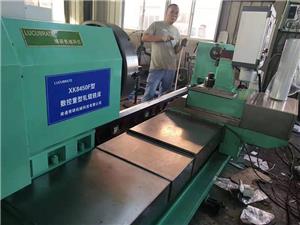
Now, let's address these pain points head-on with solutions that modern CNC grinding machines offer. For thermal distortion, advanced machines like those from NANTONG LUCUBRATE MACHINERY TECHNICAL LTD. incorporate through-spindle coolant and high-pressure coolant systems. These maintain a constant temperature at the grinding zone, reducing thermal expansion to negligible levels. For example, their HSD-600 model uses a chilled coolant system that keeps the workpiece within 0.5°C of ambient temperature, ensuring dimensional stability even for long grinding passes.
To combat wheel wear, CNC grinding machines employ in-process gauging and adaptive control. Sensors measure the wheel's diameter in real time and automatically compensate for wear. This means you get consistent part geometry from the first piece to the last. Moreover, dressing cycles are optimized based on actual wear patterns, extending wheel life by up to 40%. A case in point: a German automotive supplier reduced their dressing frequency from every 50 parts to every 200 parts after upgrading to a CNC grinder with acoustic emission sensors.
For the skill gap, modern CNC grinders feature intuitive, menu-driven interfaces and pre-programmed grinding cycles. Even a novice operator can achieve expert-level results by selecting a part program and loading the workpiece. The machine handles everything else, including in-process measurement and automatic compensation. This not only reduces setup time by 70% but also minimizes human error. In a recent trial at a UK-based tool manufacturer, they cut their scrap rate from 4.5% to 0.8% within two weeks of implementing a CNC grinder with a smart control system.
To illustrate the impact, let's look at three fictional but realistic customer success stories. First, meet Hans from Munich, Germany, who runs a precision bearing shop. He struggled with inconsistent raceway grinding that caused bearing noise and premature failure. After switching to a CNC grinding machine from NANTONG LUCUBRATE, he achieved a 20% reduction in cycle time and a 30% improvement in roundness, from 2 microns to 1.4 microns. Hans says, 'The machine's stability is remarkable. We've doubled our output without adding a single operator.'
Second, there's Maria in Detroit, USA, who works for an aerospace subcontractor. She needed to grind turbine disks made of Rene 88DT, a nickel-based superalloy. The heat generated was warping the disks, leading to a 12% scrap rate. By using a CNC grinder with a high-pressure coolant system and a resin-bonded CBN wheel, she reduced the scrap rate to 1.5%. Maria notes, 'The coolant delivery is a game-changer. We've not only saved money but also gained the confidence to take on more complex parts.'
Third, consider Takeshi from Osaka, Japan, who manufactures precision dies for electronics. His challenge was achieving a mirror finish on small, intricate cavities. Manual polishing was inconsistent and slow. With a CNC grinding machine equipped with a super-abrasive wheel and a hydrostatic spindle, he achieved a surface finish of Ra 0.02 microns consistently. Takeshi exclaims, 'The repeatability is incredible. Our customers have noticed the difference, and we've won two new contracts because of it.'
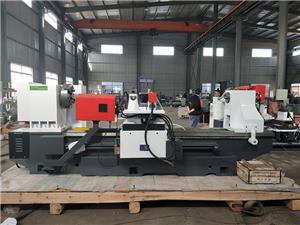
These case studies highlight the versatility of CNC grinding across industries. In the automotive sector, CNC grinders are used for camshafts, crankshafts, and transmission gears, ensuring high-volume precision. In medical devices, they grind surgical tools and implants to exacting standards. In tool and die making, they produce complex contours with ease. And in aerospace, they handle exotic alloys that would break conventional tools.
One notable partnership is with a leading European machine tool builder, who integrates NANTONG LUCUBRATE's grinding spindles into their machining centers. This collaboration ensures that their customers benefit from high-speed grinding capabilities without sacrificing rigidity. Similarly, a major US-based defense contractor uses our grinding machines for critical components in missile guidance systems, where precision is non-negotiable.
Now, let's address some burning questions you might have. FAQ 1: What is the real difference between a CNC grinder and a manual grinder in terms of achievable tolerance? A CNC grinder can consistently hold tolerances of ±1 micron or better, while a manual grinder typically achieves ±5 microns at best. This is because CNC controls eliminate human variability and can compensate for thermal and wheel wear effects in real time.
FAQ 2: How does the initial investment in a CNC grinder pay off? Consider the total cost of ownership. While the upfront cost is higher, you save on labor, scrap, and rework. For a mid-sized shop, the payback period is often less than 18 months. For example, a job shop grinding 500 parts per week can save $2,000 per week in reduced scrap and labor, translating to over $100,000 annually.
FAQ 3: Can a CNC grinder handle small batch sizes efficiently? Absolutely. Modern CNC grinders have quick-change tooling and pre-programmed cycles, reducing setup time to minutes. You can switch between different part geometries without losing precision, making them ideal for job shops.
FAQ 4: What maintenance is required for a CNC grinder? Regular maintenance includes checking coolant concentration, cleaning filters, and inspecting wheel dressing. However, advanced machines have self-diagnostic systems that alert you before issues occur. For instance, our grinders have a remote monitoring feature that sends alerts to your phone, reducing downtime.
FAQ 5: How do I choose the right grinding wheel for my material? The choice depends on the material, hardness, and desired finish. For hardened steel, use a CBN wheel; for aluminum, use a silicon carbide wheel. Our technical team can provide a detailed wheel selection guide based on your specific application.
In conclusion, CNC grinding machines are not just another piece of equipment; they are a strategic investment in your company's future. They solve the critical pain points of thermal distortion, wheel wear, and skill dependency, leading to higher precision, lower costs, and increased competitiveness. As you've seen from the case studies, companies across the globe are reaping the benefits.
If you're ready to take your grinding operations to the next level, we invite you to download our comprehensive white paper, 'The Ultimate Guide to High-Precision CNC Grinding,' which covers advanced techniques, wheel selection, and maintenance best practices. You can also request a consultation with our sales engineers, who can analyze your current process and recommend a tailored solution. Don't let outdated grinding hold you back—embrace the precision revolution today.