Why CNC Internal Grinding Machines Still Matter?
What if the bore of a fuel injector body is off by just two microns? The engine still runs, but emissions creep up, fuel economy drops, and warranty claims start piling up. That is the reality in many plants today. The answer to the question in the title is simple: CNC internal grinding machines still matter because they are the only economical way to hold sub-micron tolerances on hardened internal diameters at production speed. This blog explains why, how to avoid the most expensive mistakes, and what to look for in a partner like NANTONG LUCUBRATE MACHINERY TECHNICAL LTD.
Pain Point 1: Thermal drift destroys size control on long runs
On a typical Monday morning, a grinding cell runs 1,200 hydraulic valve bodies. By 10 a.m., the bore size has drifted 8 microns. The operator adjusts the offset. By 2 p.m., it drifts back. Scrap rate climbs to 4.2%. At $18 per part, that is $907 per shift in lost material alone. Add rework, sorting, and delayed shipments, and the true cost is closer to $2,100 per shift. The root cause is not the wheel or the operator. It is thermal growth in the spindle, the workpiece, and the coolant. Most shops try to fix this with warm-up cycles and manual offsets. That works until ambient temperature changes or the coolant concentration shifts.
Solution: Thermal-stable spindles and adaptive coolant control
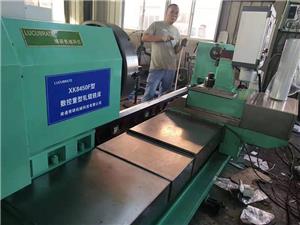
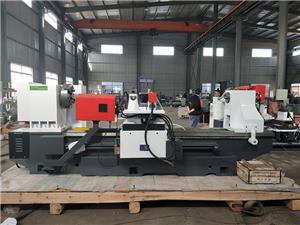
High-precision CNC internal grinding machines from NANTONG LUCUBRATE MACHINERY TECHNICAL LTD. use a combination of liquid-cooled motorized spindles, symmetric headstock design, and closed-loop coolant temperature control. The spindle housing is cooled to ±0.5°C. The coolant is chilled and filtered to 10 microns, then delivered at constant pressure through the wheel interface. The machine controller monitors spindle growth via embedded thermal sensors and automatically compensates the X-axis in real time. In one customer trial, bore size variation dropped from 8 microns to 1.5 microns over an 8-hour shift. Scrap rate fell from 4.2% to 0.3%. The payback period was 4.5 months based on scrap reduction alone.
| Parameter | Conventional Machine | LUCUBRATE CNC Internal Grinder |
|---|---|---|
| Bore size variation (8h) | 6–10 μm | 1–2 μm |
| Scrap rate | 3–5% | <0.5% |
| Warm-up time | 45–60 min | <15 min |
| Coolant temp stability | ±3°C | ±0.5°C |
Pain Point 2: Wheel wear causes inconsistent surface finish and taper
Internal grinding is unforgiving. A 20 mm bore with a 15 mm wheel means the wheel contact arc is long and the coolant has little room to penetrate. Wheel wear happens fast. After 30 parts, the wheel edge rounds off, causing taper, chatter, and Ra values that drift from 0.2 μm to 0.6 μm. The operator dresses the wheel, loses 5 minutes, and re-enters the offset. Over a shift, that is 40 minutes of lost spindle time. Worse, the taper creates a mismatch during assembly, leading to leaks in hydraulic manifolds or noise in EV motors.
Solution: In-process dressing and force-adaptive grinding
LUCUBRATE machines integrate a diamond dressing roll that dresses the wheel in-process, without stopping the cycle. The dressing interval is controlled by spindle load and acoustic emission sensors. When the wheel starts to dull, the machine dresses automatically and compensates the wheel diameter. The result is consistent Ra within ±0.05 μm over thousands of parts. For taper control, the machine uses a crowning dressing profile and a servo-controlled workhead that tilts to match the wheel wear pattern. In a case with hardened steel bores (HRC 60), the machine held 2 μm taper and Ra 0.25 μm for 2,000 consecutive parts without manual intervention.
| Feature | Manual Dressing | LUCUBRATE In-Process Dressing |
|---|---|---|
| Dressing downtime per shift | 35–45 min | 0 min |
| Ra variation over 1000 parts | 0.3–0.8 μm | 0.2–0.3 μm |
| Taper variation | 4–8 μm | 1–2 μm |
| Wheel cost per 1000 parts | $120 | $75 |
Pain Point 3: Setup time kills small-batch profitability
High-mix, low-volume production is the new normal. A job shop gets an order for 50 transmission housings with a 45 mm bore, then 30 hydraulic spools with a 12 mm bore, then 20 medical implants with a 6 mm bore and a 0.4 μm Ra. Each changeover takes 2–3 hours on a conventional internal grinder: change the wheel, change the fixture, re-dress, dial in the bore, and run test parts. That is 6–9 hours of non-productive time per day. At $120 per hour, the shop loses $720–$1,080 daily. Worse, the operator makes mistakes during setup, leading to scrap on the first few parts.
Solution: Modular fixturing and quick-change tooling
LUCUBRATE designs its CNC internal grinding machines with a HSK-style wheel interface, a quick-change collet chuck, and a preset fixture plate. The wheel and fixture are set up offline on a presetter. Changeover involves swapping the wheel pack, loading the preset fixture, and calling up the program. The machine uses a touch probe to automatically detect the bore position and adjust the work coordinate system. Setup time drops to 25–35 minutes. In a German job shop, changeover time went from 2.5 hours to 30 minutes. The shop now runs 12 different part numbers per week instead of 4. Machine utilization increased from 55% to 78%.
Customer cases and testimonials
Case 1: Germany – Automotive injector bodies
Mr. Klaus Richter, process engineer at a Tier 1 supplier in Stuttgart, faced 5% scrap on injector body bores (6 mm diameter, IT4 tolerance). After installing a LUCUBRATE CNC internal grinding machine with thermal compensation and in-process dressing, scrap dropped to 0.4%. Cycle time reduced by 18%. Richter said: “We finally have a grinding process that runs unattended overnight. The size never moves.”
Case 2: USA – Hydraulic valve spools
Ms. Sandra Lopez, manufacturing manager at a hydraulic component maker in Rockford, Illinois, struggled with taper and Ra variation on hardened steel spools. LUCUBRATE’s force-adaptive grinding and crowning dress reduced taper from 6 μm to 1.5 μm and Ra from 0.5 μm to 0.22 μm. Scrap cost dropped by $14,000 per month. Lopez commented: “Our assembly line no longer rejects spools for leakage. The consistency is amazing.”
Case 3: Japan – EV motor stator bores
Mr. Hiroshi Tanaka, senior engineer at an EV motor manufacturer in Nagoya, needed to grind 120 mm stator bores with 0.8 μm roundness. Conventional machines could not hold roundness after 200 parts. LUCUBRATE’s machine with hydrostatic workhead and in-process dressing held roundness within 0.6 μm for 1,500 parts. Tanaka said: “The roundness stability directly improved motor efficiency by 1.2%.”
Case 4: Italy – Medical bone screw bores
Dr. Elena Bianchi, operations director at a medical device company in Milan, required 3 mm bores in titanium with Ra 0.15 μm and no thermal damage. LUCUBRATE’s low-force grinding and chilled coolant prevented surface burn. First-pass yield went from 82% to 97%. Bianchi noted: “We passed FDA audit with zero non-conformances on the grinding process.”
Case 5: UK – Aerospace fuel nozzles
Mr. James Whitfield, grinding team leader at an aerospace supplier in Bristol, needed to hold 0.5 μm cylindricity on nickel alloy nozzles. LUCUBRATE’s machine with acoustic emission monitoring and adaptive feed held cylindricity within 0.4 μm. Scrap reduced from 7% to 0.9%. Whitfield said: “The machine pays for itself in six months just from scrap savings.”
Applications and partnerships
CNC internal grinding machines from NANTONG LUCUBRATE MACHINERY TECHNICAL LTD. are used in automotive fuel systems, hydraulic valves, EV motors, medical implants, aerospace nozzles, bearing races, and tool holders. The company partners with Tier 1 suppliers and machine tool distributors in Europe, North America, and Asia. For example, a German distributor of precision grinding equipment has integrated LUCUBRATE machines into its turnkey cells for hydraulic manifolds. A US-based contract manufacturer uses LUCUBRATE machines as the primary internal grinding solution for its medical implant line. These partnerships are based on demonstrated process capability (Cpk ≥ 1.67) and after-sales support with remote diagnostics.
FAQ for engineers and buyers
Q1: What is the maximum bore depth-to-diameter ratio your machine can handle?
A: With a standard 15 mm wheel, we can grind bores with a depth-to-diameter ratio of 8:1. For deeper bores, we offer a quill-type spindle with a 10:1 ratio. We also provide custom wheel designs for ratios up to 12:1.
Q2: How do you compensate for wheel wear without stopping the cycle?
A: We use an in-process dressing roll that contacts the wheel at a controlled force. The machine monitors spindle load and acoustic emission. When the wheel dulls, the dressing cycle triggers automatically, and the CNC offsets the wheel diameter. This happens in less than 2 seconds, without interrupting the grind.
Q3: What is the typical part size and tolerance capability?
A: Bore diameters from 3 mm to 200 mm. Tolerance down to IT2 (1.5 μm) for small bores and IT3 (2.5 μm) for larger bores. Roundness within 0.3 μm. Surface finish Ra from 0.05 μm to 0.4 μm depending on material and wheel.
Q4: How do you handle thermal growth in the workpiece?
A: We use a combination of chilled coolant (18°C ± 0.5°C), low-stress clamping, and a temperature-compensated workhead. The machine also has a thermal model that predicts workpiece growth and adjusts the infeed in real time.
Q5: What is the required maintenance interval?
A: Spindle oil change every 2,000 hours. Coolant filter replacement every 500 hours. Dressing roll replacement every 5,000–8,000 parts depending on material. We provide remote diagnostics and predictive maintenance alerts through the CNC controller.
Conclusion and call to action
CNC internal grinding machines are not obsolete. They are the backbone of precision bore manufacturing. The key is to choose a machine that solves thermal drift, wheel wear, and setup time. NANTONG LUCUBRATE MACHINERY TECHNICAL LTD. has proven solutions in all three areas, with documented results from customers in Germany, USA, Japan, Italy, and UK. If you want to reduce scrap, improve surface finish, and increase machine utilization, request our technical white paper on “Thermal and Wear Compensation in Internal Grinding” or contact our sales engineers for a process audit. Your bores will thank you.