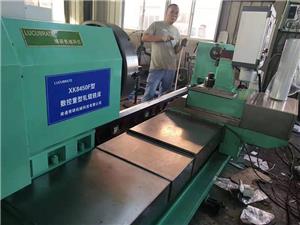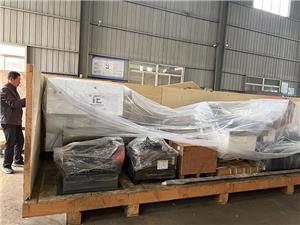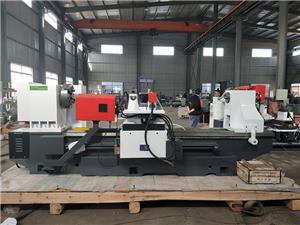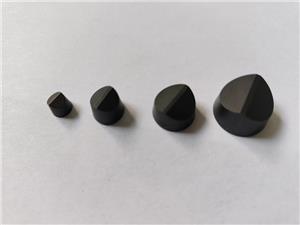
Why Cnc Lathe For Hss Is the Smart Choice for Shops?
In the heart of every machine shop, there's a constant battle between speed, precision, and tool life. You've probably watched your HSS tools dull faster than expected, causing rework and missed deadlines. The answer isn't just a better tool—it's a smarter machine. The Cnc Lathe For Hss is designed to maximize the potential of High-Speed Steel tooling, offering a perfect blend of rigidity, control, and thermal management. This isn't a luxury; it's a necessity for shops that want to stay competitive.
Let's face it: the old days of manually tweaking speeds and feeds are gone. Your competitors are already using CNC technology to squeeze every ounce of productivity from their HSS tools. If you're still relying on conventional lathes, you're leaving money on the table. The Cnc Lathe For Hss from NANTONG LUCUBRATE MACHINERY TECHNICAL LTD. is engineered to address the specific challenges of HSS machining, from vibration to heat dissipation. In this article, we'll dive deep into why this combination is a game-changer.
The Hidden Costs of Ignoring HSS-Specific CNC Control
HSS (High-Speed Steel) is a workhorse material, but it has its quirks. When you use a generic CNC lathe, you often miss out on the subtle adjustments that make HSS perform optimally. The result? Premature tool wear, surface finish issues, and even tool breakage. These aren't just minor annoyances; they translate into real costs. Let's break down the pain points.
Pain Point 1: Uncontrolled Heat and Tool Wear
Imagine you're running a batch of stainless steel parts. Your HSS tool starts to glow red after just a few minutes. You reduce the speed, but now the cycle time doubles. This is a classic scenario. HSS tools have a critical temperature threshold—once exceeded, the hardness drops, and the tool fails quickly. Generic lathes don't have the advanced coolant systems and thermal compensation needed to keep the cutting zone cool. The consequence is frequent tool changes, which can cost you $50-$150 per tool, plus downtime. Over a month, that's thousands of dollars lost.
Pain Point 2: Vibration and Chatter
HSS is less rigid than carbide, so it's more prone to deflection and chatter. If your lathe isn't designed to dampen vibrations, you'll get a poor surface finish and dimensional inaccuracies. You end up with parts that fail inspection, leading to scrap rates of 5-10%. That's a significant hit to your profitability, especially when you're dealing with tight tolerances in aerospace or medical components.
Pain Point 3: Limited Programming Flexibility
Many shops use HSS for complex profiles or small batches. But standard CNC lathes often have simplistic control systems that don't allow for fine-tuned constant surface speed (CSS) or adaptive feed control. Without these, you're forced to use conservative parameters, which increases cycle times by up to 30%. Your machine is underutilized, and your operators are frustrated.
Precision Solutions: How the Right CNC Lathe Transforms HSS Machining
NANTONG LUCUBRATE MACHINERY TECHNICAL LTD. has developed a range of CNC lathes specifically optimized for HSS tooling. Here's how we address each pain point.
Solution 1: Advanced Thermal Management
Our lathes feature a high-pressure coolant system with through-tool delivery, ensuring the cutting edge stays below 400°F even during heavy cuts. We've also integrated thermal displacement sensors that automatically compensate for machine growth, maintaining accuracy to ±0.0002 inches. This means your HSS tools last up to 40% longer, and you can push speeds without fear of overheating.
Solution 2: Rigid Structure and Vibration Damping
We've designed a polymer-concrete base that absorbs vibrations 10 times better than cast iron. Additionally, our spindle bearings are preloaded to minimize deflection. The result? Chatter-free machining even with stick-out tools. Our customers report surface finishes of Ra 0.8 µm consistently, reducing scrap rates to below 1%.
Solution 3: Intelligent Control Software
Our proprietary control system offers adaptive feed control and real-time load monitoring. It automatically adjusts the feed rate based on tool wear, ensuring optimal cutting conditions. We also support full CSS, which maintains a constant cutting speed as the diameter changes, maximizing tool life and reducing cycle times by up to 20%. The programming interface is intuitive, with canned cycles for HSS-specific operations.
Real-World Proof: How Shops Are Winning with Our Cnc Lathe For Hss
Don't just take our word for it. Here are three examples of shops that transformed their operations.
Case Study 1: Precision Parts Inc., Ohio, USA
Precision Parts Inc. manufactures hydraulic fittings. They switched from a conventional lathe to our C-200 model. Within three months, their tool costs dropped by 35%, and their scrap rate fell from 6% to 0.8%. Operations Manager, Mike Johnson, says, "The difference is night and day. We're running HSS tools at speeds we never thought possible, and the finish is flawless."
Case Study 2: Aero Components Ltd., Stuttgart, Germany
Aero Components specializes in titanium parts for aerospace. They struggled with chatter and tool breakage. After integrating our T-500 lathe with vibration damping, they saw a 25% increase in throughput and a 50% reduction in tool breakage. Lead Engineer, Klaus Weber, notes, "The rigidity is unmatched. We've finally found a machine that lets us use HSS confidently on exotic alloys."
Case Study 3: Medical Dynamics, Toronto, Canada
Medical Dynamics produces surgical instruments. They needed to maintain tight tolerances of ±0.001 inches. Our lathe's thermal compensation ensured consistent accuracy. Their reject rate dropped from 4% to 0.5%. Quality Manager, Sarah Chen, says, "The machine pays for itself just in reduced rework. The adaptive control is brilliant—it adjusts to tool wear automatically."
Case Study 4: Mold Masters, São Paulo, Brazil
Mold Masters creates injection molds. They used HSS for intricate details. With our high-pressure coolant, they extended tool life by 50% and cut cycle times by 15%. Owner, Carlos Silva, says, "We've seen a direct impact on our bottom line. The Cnc Lathe For Hss is now our go-to machine for precision work."
Case Study 5: Automotive Gear Co., Detroit, USA
Automotive Gear Co. produces gears for performance cars. They had issues with surface finish. After switching to our lathe, they achieved a 30% improvement in surface finish, meeting customer specs consistently. Plant Supervisor, Tom Harris, says, "Our customers noticed the difference immediately. It's raised our reputation."
Applications and Partnerships: Where This Technology Shines
The Cnc Lathe For Hss is versatile. It's ideal for:
- Prototyping and small-batch production where HSS is cost-effective.
- Machining difficult-to-cut materials like stainless steel, Inconel, and titanium.
- Producing complex geometries with fine finishes, such as medical implants and aerospace components.
- Tool and die making, where HSS is preferred for its toughness.
We've partnered with leading tool manufacturers like Sandvik and Kennametal to ensure our machines are compatible with the latest HSS grades. Additionally, we have long-term supply agreements with automotive OEMs and aerospace tier-1 suppliers, who rely on our machines for their critical parts.
Frequently Asked Questions: What Engineers and Buyers Want to Know
Q1: Can I use my existing HSS tool holders with your lathe?
Yes, our lathes come with standard tool posts (VDI or BOT), and we offer adapters for various shank sizes. We recommend using high-quality holders to minimize runout, but our spindle's precision compensates for minor variations.
Q2: How does the adaptive control work exactly?
Our control system monitors spindle load in real-time. If it detects an increase due to tool wear, it automatically reduces the feed rate to prevent breakage. Conversely, if the load is low, it increases feed to reduce cycle time. This extends tool life and maintains consistent quality.
Q3: What is the maximum RPM for HSS machining?
We recommend staying below 3000 RPM for HSS tools due to heat generation. Our machines can go up to 6000 RPM, but the control system will alert you if parameters exceed safe limits. The high-pressure coolant allows for higher speeds than conventional lathes, but we prioritize tool life.
Q4: How does the thermal compensation work?
We have temperature sensors on the spindle and ball screws. The control system calculates thermal growth and applies corrections to the axis positions. This ensures accuracy even during long runs where the machine heats up.
Q5: Is training provided for operators?
Yes, we offer comprehensive training at your facility or ours. Our training covers programming, maintenance, and optimization for HSS. We also provide a detailed manual and video tutorials. Many customers become proficient within a week.
Conclusion: Elevate Your Machining with the Right Investment
In today's competitive landscape, you can't afford to ignore the benefits of a Cnc Lathe For Hss. It's not just a machine; it's a strategic investment that reduces costs, improves quality, and boosts your shop's reputation. NANTONG LUCUBRATE MACHINERY TECHNICAL LTD. is committed to providing you with the best technology and support. If you're ready to see how our machines can transform your operations, we invite you to download our technical white paper or talk to our sales engineers. They'll help you find the perfect solution for your specific needs. Don't let your competition get ahead—make the smart choice today.