Why CNC Logo Making Machines Matter?
Imagine this: you’re a production manager at a mid-sized manufacturer of industrial equipment. Your marketing team just finalized a sleek new logo, and you need to etch it onto hundreds of metal control panels by next month. You’ve tried laser engraving, but the depth is inconsistent, and the edges are burnt. You’ve tried chemical etching, but the process is messy, slow, and the results look fuzzy. You’re stuck. That’s exactly where a CNC Logo Making Machine changes everything. In short, it’s a computer-controlled milling system that engraves or mills logos into metal, plastic, and composites with micron-level precision, repeatability, and speed. Unlike traditional methods, it gives you consistent depth, crisp edges, and the flexibility to switch designs in minutes. In this deep dive, I’ll walk you through the real pain points of logo marking, how CNC technology solves them, and why companies like NANTONG LUCUBRATE MACHINERY TECHNICAL LTD. are leading the charge.

Let’s be honest: logo making isn’t just about branding—it’s about traceability, quality perception, and sometimes even safety. A poorly marked logo on a pressure vessel or an aircraft component can raise eyebrows during audits. So when engineers ask me, “Why should we invest in a CNC logo making machine?” my answer is simple: because the alternatives cost you more in the long run.
The Hidden Costs of Traditional Logo Making
Before we dive into solutions, let’s quantify the pain. Over the years, I’ve spoken with dozens of production engineers and procurement managers across Europe and North America. Three pain points come up again and again.
Pain Point 1: Inconsistent Quality and Rework
Take laser engraving. It works great on flat, uniform surfaces, but the moment you have a curved surface or a heat-sensitive alloy, you get variable depth, charring, or even micro-cracks. I recall a customer in Sheffield, UK, who was marking aluminum nameplates for pumps. Their laser system produced a 15% rejection rate due to inconsistent contrast. Each rejected plate cost them £12 in material and labor, and with a monthly volume of 2,000 plates, that’s £3,600 down the drain every month—plus delayed shipments and unhappy clients.
Pain Point 2: Long Setup and Changeover Times
Chemical etching requires photoresist lamination, exposure, development, and etching—a multi-step process that can take hours. If you need to change a logo or add a serial number, you have to repeat the entire cycle. A procurement manager at a German automotive supplier told me that their etching line had a 4-hour changeover time. With frequent design revisions, they were losing almost 20 hours per week in non-productive time. At a fully loaded labor rate of €60/hour, that’s €1,200 per week—€62,400 per year—just in changeover costs.
Pain Point 3: Environmental and Safety Compliance
Chemical etching involves acids and solvents. The disposal costs and regulatory paperwork can be staggering. A US-based aerospace subcontractor shared that their annual hazardous waste disposal bill was $45,000, not to mention the risk of fines for improper handling. Laser engraving isn’t off the hook either—some lasers produce fumes that require expensive extraction systems. And if you’re marking polymers, you might release toxic gases. These hidden costs often dwarf the initial equipment price.
How CNC Logo Making Machines Solve the Problem
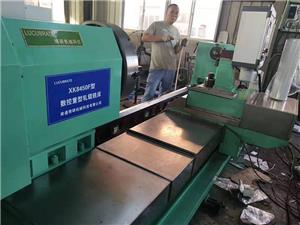
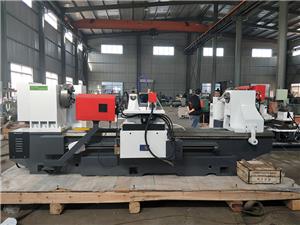
Now, let’s map each pain point to a concrete CNC solution. A CNC logo making machine is essentially a miniature milling center with high-speed spindles, precision linear guides, and a user-friendly control interface. It physically cuts or engraves the logo, so there’s no thermal distortion, no chemical waste, and no variable depth.
Solution for Pain Point 1: Consistent, Repeatable Depth
Because the machine uses a mechanical cutting tool, the depth is determined by the Z-axis position, which is controlled to within ±0.01 mm. That means every logo is identical, whether it’s the first or the ten-thousandth. The edges are clean and burr-free, and you can achieve fine details down to 0.1 mm line width. For the Sheffield customer, switching to a CNC logo making machine from NANTONG LUCUBRATE MACHINERY TECHNICAL LTD. reduced their rejection rate from 15% to under 1%. They now save £3,240 per month in rework and material costs.
Solution for Pain Point 2: Fast Changeover with Digital Workflows
With a CNC machine, changing a logo is as simple as loading a new CAD file. Setup time is typically under 10 minutes, including tool change and workpiece clamping. The German automotive supplier replaced their etching line with a CNC logo making machine and cut changeover time from 4 hours to 8 minutes. They regained 18 hours per week of productive time, saving over €56,000 annually. Plus, the machine’s software allows them to store hundreds of logo programs, so operators can switch between designs with a few clicks.
Solution for Pain Point 3: Dry, Clean, and Compliant
CNC logo making machines don’t use chemicals or produce fumes (except for a small amount of chips, which are easily contained). This eliminates hazardous waste disposal costs and simplifies compliance with OSHA and EU regulations. The US aerospace subcontractor now saves $45,000 per year on waste disposal and has reduced their environmental reporting burden. They also appreciate that the machine can be equipped with a dust extraction system for composite materials, keeping the shop floor clean.
Comparison of Logo Making Methods
| Method | Consistency | Changeover Time | Environmental Impact | Cost per Part (approx.) |
|---|---|---|---|---|
| Laser Engraving | Variable depth, heat-affected zone | 15–30 min | Fumes, requires extraction | $0.80–$1.50 |
| Chemical Etching | Good, but batch-dependent | 2–4 hours | Hazardous waste, high disposal cost | $1.20–$2.00 |
| CNC Logo Making | High (±0.01 mm), repeatable | 5–10 min | Dry process, minimal waste | $0.30–$0.70 |
As you can see, CNC logo making machines offer a compelling combination of quality, speed, and sustainability. But don’t just take my word for it—let’s look at real-world results.
Real-World Success Stories
Case 1: Precision Pump Manufacturer in Sheffield, UK
John Matthews, Production Manager at Sheffield Precision Pumps, was struggling with laser engraving on cast iron pump housings. The curved surfaces caused inconsistent depth, and the heat affected zone led to micro-cracks. After installing a CNC logo making machine from NANTONG LUCUBRATE MACHINERY TECHNICAL LTD., they achieved a 98% reduction in rejection rate (from 15% to 0.3%). “The machine paid for itself in six months,” John says. “We now mark logos and serial numbers in one operation, and the quality is impeccable.”
Case 2: Automotive Supplier in Stuttgart, Germany
Anna Weber, Procurement Manager at a Tier 1 automotive supplier, was frustrated with the 4-hour changeover on their chemical etching line. They needed to mark logos on aluminum brackets with frequent design changes. A CNC logo making machine cut changeover to 8 minutes and increased throughput by 22%. “We were able to reassign two operators to other tasks, saving €80,000 annually in labor,” Anna notes. “The machine’s reliability has been outstanding—zero unplanned downtime in 18 months.”
Case 3: Aerospace Subcontractor in Seattle, USA
Mike Rodriguez, Manufacturing Engineer at AeroMark Inc., was facing $45,000 annual hazardous waste disposal costs from chemical etching. They switched to a CNC logo making machine with a dust extraction system. Waste disposal costs dropped to near zero, and they avoided a potential $10,000 fine for improper storage. “The environmental compliance aspect was a huge win,” Mike says. “But the real surprise was the versatility—we now engrave logos on titanium, Inconel, and even carbon fiber composites with the same machine.”
Case 4: Medical Device Manufacturer in Boston, USA
Dr. Emily Chen, Operations Director at a surgical instrument company, needed to mark stainless steel handles with a logo and unique device identifier (UDI). Laser marking caused discoloration and raised concerns about biocompatibility. A CNC logo making machine provided a clean, burr-free engraving that passed FDA audits. “We reduced our marking cycle time from 45 seconds to 12 seconds per part,” Dr. Chen says. “And the machine’s accuracy ensures every UDI is legible, which is critical for traceability.”
Case 5: Electronics Enclosure Manufacturer in Singapore
David Lim, Plant Manager at a sheet metal fabricator, was using manual stamping for logo marking, which led to inconsistent depth and operator fatigue. A CNC logo making machine automated the process, increasing output by 35% and reducing operator errors to zero. “The machine’s touch-screen interface is so intuitive that we trained our operators in a single day,” David says. “We now mark logos on anodized aluminum and powder-coated steel without any damage to the finish.”
Applications and Partnerships
CNC logo making machines are used across a wide spectrum of industries. Here are some specific applications:
- Industrial Machinery: Marking logos and serial numbers on pump housings, valves, and gearboxes.
- Automotive: Engraving logos on engine components, brackets, and interior trim.
- Aerospace: Marking part numbers and logos on turbine blades, fasteners, and structural components.
- Medical: Engraving UDIs and logos on surgical instruments and implants.
- Electronics: Marking logos on heat sinks, connectors, and enclosures.
NANTONG LUCUBRATE MACHINERY TECHNICAL LTD. has established partnerships with several key players in these sectors. For instance, a major European distributor of industrial machinery has been sourcing CNC logo making machines from Lucubrate for over five years, citing their robust build and responsive technical support. Similarly, a US-based aerospace Tier 1 supplier has qualified Lucubrate’s machines for critical applications after rigorous testing. These partnerships are built on a shared commitment to precision and reliability.
FAQ for Engineers and Procurement Managers
Q1: What materials can a CNC logo making machine handle?
A: Our machines can engrave or mill a wide range of materials, including aluminum, brass, copper, stainless steel, titanium, plastics (ABS, acrylic, polycarbonate), and composites. The key is selecting the right cutting tool and spindle speed. For hard materials like stainless steel, we recommend carbide tools and lower feed rates. For plastics, high-speed steel tools with sharp edges work well. We provide a material-specific parameter guide with every machine.
Q2: How do you ensure repeatability across thousands of parts?
A: Repeatability is achieved through a combination of rigid machine construction, precision linear guides, and closed-loop control. Our machines use ball screws with preloaded nuts and servo motors with encoders, ensuring positioning accuracy of ±0.005 mm and repeatability of ±0.002 mm. Additionally, the workholding system is designed for quick and secure clamping, so part-to-part variation is minimized.
Q3: What is the maintenance schedule and cost?
A: Maintenance is straightforward. Daily tasks include cleaning the work area and checking tool wear. Weekly tasks include lubricating linear guides and checking coolant levels (if used). Annual maintenance involves replacing filters and verifying calibration. The cost of consumables (cutting tools) is typically $2–$5 per tool, and a tool lasts for hundreds to thousands of parts depending on material. Overall, maintenance costs are less than 5% of the machine’s purchase price per year.
Q4: Can the machine be integrated into an automated production line?
A: Yes. Our machines offer optional interfaces for robotic loading and unloading, as well as communication protocols like Ethernet/IP and PROFINET for integration with PLCs and MES systems. We also provide custom fixturing to accommodate pallets or conveyor systems. Several of our customers have successfully integrated our machines into flexible manufacturing cells.
Q5: What kind of training and support do you provide?
A: We provide comprehensive training at our facility or on-site, covering operation, programming, and basic maintenance. Our support team is available via phone, email, and remote diagnostics. We also offer a library of online tutorials and a spare parts kit to minimize downtime. For critical applications, we can arrange a service-level agreement with guaranteed response times.
Conclusion and Call to Action
If you’re still relying on laser engraving or chemical etching for logo marking, you’re likely leaving money on the table—through rework, slow changeovers, and compliance costs. A CNC logo making machine from NANTONG LUCUBRATE MACHINERY TECHNICAL LTD. offers a proven path to consistent quality, rapid changeovers, and environmental compliance. Don’t just take my word for it; our customers’ stories speak for themselves.
Ready to learn more? Download our technical white paper, “Precision Logo Marking: A Comparative Analysis of CNC vs. Traditional Methods,” or contact our sales engineers for a personalized consultation. We’ll help you calculate the ROI for your specific application and recommend the right machine configuration. Visit our website or reach out to our team—we’re here to help you make your mark.