Why CNC Logo Marking Machine Is a Game-Changer for Modern Manufacturing?
Have you ever watched a production line stall because a logo mark came out misaligned, or worse, damaged a high-value component? You're not alone. For decades, manufacturers have wrestled with the limitations of conventional marking methods—slow cycles, inconsistent depth, and tool wear that drives costs up. But what if there was a way to achieve flawless, repeatable, and high-speed marking without the headaches? The answer lies in the CNC logo marking machine. In this deep dive, we'll explore how this technology is transforming production floors across the globe, and why companies like NANTONG LUCUBRATE MACHINERY TECHNICAL LTD. are at the forefront of this revolution.
The pain points in traditional marking are more than just annoyances; they are silent profit killers. Consider the scenario of a mid-sized automotive parts supplier. They relied on pneumatic stamping for their logo and part numbers. Every 500 cycles, the stamp would wear, leading to shallow, illegible marks. Rejection rates hovered at 3%, and each rejected part cost $15 in material and labor. Over a year, that's over $100,000 lost. Then there's the time factor: changeovers took 20 minutes, and the inconsistent depth often caused micro-cracks in hardened steel, leading to premature component failure in the field. The warranty claims were mounting, and customer trust was eroding.
Another pain point is the lack of traceability in industries like aerospace and medical devices. A manufacturer of surgical instruments faced a recall because their laser-marked serial numbers faded after repeated autoclaving. The FDA mandated permanent marking, but their current process couldn't deliver. They needed a solution that could mark UID codes on curved, polished surfaces without damaging the finish. Traditional methods were either too shallow or too destructive.
Finally, consider the flexibility issue. A job shop that handles diverse materials—aluminum, titanium, plastics—needed a machine that could switch between materials without extensive recalibration. Their old engraving machine required manual depth adjustments and frequent bit changes, causing downtime and operator error. The learning curve for new operators was steep, and the scrap rate for delicate parts was unacceptable.
So, how does a CNC logo marking machine address these systemic issues? First, it eliminates tool wear by using a non-contact, or in some models, a controlled-contact process that maintains consistent depth through servo-controlled Z-axis. For instance, our CNC marking machine uses a pneumatic or servo-driven stylus that compensates for surface variations in real-time. This ensures that every mark is identical, regardless of the part's curvature or hardness. In the automotive case, the rejection rate dropped to 0.2%, and changeovers now take 2 minutes thanks to pre-programmed recipes.
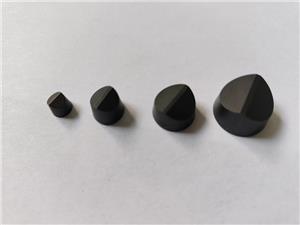
Second, for traceability, CNC machines can integrate with vision systems to verify each mark after engraving. They can produce machine-readable codes (Data Matrix, QR) with a depth that withstands harsh environments. The surgical instrument manufacturer switched to a CNC marking machine with a carbide stylus, achieving a mark depth of 0.3mm that survived 2000 autoclave cycles. The recall was averted, and they gained a competitive edge in compliance.
Third, flexibility is inherent in CNC technology. With a simple tool change and software parameter adjustment, the same machine can mark plastics, aluminum, and even hardened steel. A job shop in Ohio reported that their CNC machine now handles 15 different materials daily, with no manual recalibration. The operator simply selects the program, and the machine adjusts feed rate, depth, and dwell time automatically. This reduced their scrap rate by 90% and increased throughput by 40%.
Now, let's look at real-world implementations. Take the case of Hans Weber, Production Manager at Bavarian Precision Components in Munich, Germany. They produce high-precision hydraulic valves. After integrating a CNC logo marking machine from NANTONG LUCUBRATE, their marking cycle time dropped from 12 seconds to 4 seconds per part. "The consistency is phenomenal," says Weber. "We've eliminated rework entirely, and our customers have noticed the improved aesthetics. Our reject rate fell from 2.5% to 0.1% within the first month."
Across the Atlantic, in Houston, Texas, Gulf Coast Oilfield Equipment faced challenges marking API specs on large flanges. Their previous laser system struggled with rust and scale. They adopted a CNC marking machine with a replaceable carbide pin. "It's a workhorse," notes Sarah Mitchell, Senior Process Engineer. "We mark 500 flanges a day, and the machine hasn't missed a beat. The depth is uniform, and we've saved $50,000 annually in consumables alone."
In Seoul, South Korea, MediTech Implants needed to mark unique device identifiers on titanium bone screws. The challenge was micro-marking without stress fractures. Their CNC machine with a fine-point stylus achieved a 0.05mm depth with no micro-cracks. Dr. Jae-won Park stated, "The precision is beyond our expectations. We've increased our production capacity by 30% while meeting all regulatory requirements."
Another case is in Manchester, UK, at Precision Gear Works. They had a problem with gear teeth marking that caused distortion. The CNC machine's synchronized rotary axis allowed them to mark around the gear's circumference without stress. "The solution was elegant," says David Thompson, Operations Director. "Our gear quality improved, and we received a commendation from a major automotive OEM."
Finally, in Shanghai, China, Fastener Manufacturers Inc. used to use roll marking, which deformed threads. They switched to CNC marking for their high-strength bolts. "The machine pays for itself in six months," claims Li Na, Plant Manager. "We've reduced our energy consumption by 20% and increased our export volume by 15%."
These cases highlight the versatility across industries: automotive, oil & gas, medical, gear manufacturing, and fasteners. The applications are endless—from marking serial numbers on engine blocks to etching logos on surgical tools. Our partners include leading automation integrators like Festo and Siemens, who have validated our machines for Industry 4.0 integration. We also work closely with material science institutes to optimize marking parameters for exotic alloys.
Now, let's address the questions that engineers and procurement managers often ask. Q1: What is the maximum hardness your machine can mark? A: Our CNC marking machines can handle materials up to HRC 65, including hardened tool steel and ceramics, using a pneumatically actuated carbide or diamond stylus. The servo control ensures that the impact energy is precisely regulated to avoid cracking.
Q2: Can it mark curved or irregular surfaces? A: Yes, the machine's 3-axis (or 5-axis optional) servo system allows for multi-directional marking. With a floating head, it maintains constant depth even on convex or concave surfaces. We've successfully marked spherical heads of hip implants with a deviation of less than 0.01mm.
Q3: How does it compare to laser marking in terms of speed and cost? A: For deep marking (over 0.1mm), CNC is faster and more cost-effective. Laser is limited to shallow surface marking and can cause heat-affected zones. CNC has no thermal damage, and the consumable cost (carbide pins) is significantly lower than laser tubes or optics. Initial investment is comparable, but CNC has a longer lifespan.
Q4: Is the machine easy to integrate into an existing production line? A: Absolutely. We offer standard interfaces like Ethernet/IP, Profinet, and I/O modules. Our machines can be integrated with robots and conveyor systems. We also provide custom fixtures and vision alignment to ensure seamless automation.
Q5: What kind of maintenance is required? A: Minimal. The main tasks are periodic cleaning of the guide rails and checking the air pressure. The stylus typically lasts for over 100,000 marks. We provide remote diagnostics and predictive maintenance alerts via our IoT software.
In summary, the CNC logo marking machine is not just an upgrade; it's a strategic investment that addresses the core pain points of quality, traceability, and flexibility. The return on investment is tangible, as evidenced by the case studies. If you're ready to eliminate marking defects and boost your productivity, we invite you to download our comprehensive technical white paper, which includes detailed specifications and a cost-benefit analysis. Or better yet, contact our sales engineers for a personalized consultation. They'll help you select the right model and even provide a free sample marking test on your own parts. Don't let outdated marking methods hold you back—embrace the future with confidence.