Why CNC Marking Lathe for High-End Manufacturing?
Imagine a bustling aerospace component factory where a batch of critical turbine blades has just been machined. The next step is marking each blade with a unique serial number and a 2D Data Matrix code for traceability. A technician picks up a hand-held vibro-peen marker and begins the tedious process. Hours later, the marks are inconsistent, some too shallow to read, others too deep, potentially compromising the blade's integrity. The batch is delayed, and worse, a few blades are scrapped due to marking errors. This scenario is all too common in high-end manufacturing, where marking is often an afterthought. But what if there was a better way? Enter the CNC marking lathe—a game-changer that integrates precision marking directly into the machining process. In this blog, we'll explore why the CNC marking lathe is not just a tool but a strategic asset for manufacturers aiming for excellence. We'll dive into the pain points it solves, the technology behind it, real-world success stories, and more. By the end, you'll understand why investing in a CNC marking lathe could be one of the smartest decisions for your production line.
Pain Point 1: Inconsistent Mark Quality and Readability
In industries like aerospace and medical devices, marking must be precise and durable. Manual marking methods, such as hand stamps or vibro-peen, rely heavily on operator skill. The result? Variations in depth, width, and legibility. A study by the National Institute of Standards and Technology (NIST) found that inconsistent markings contribute to up to 15% of traceability failures in supply chains. The consequences are severe: recalls, rework, and even safety hazards. For example, if a critical bolt's grade is misread due to a poor mark, it could lead to catastrophic failure. The cost? Beyond the immediate scrap (which can run into thousands of dollars per batch), there's the intangible cost of damaged reputation and potential liability.
Pain Point 2: Slow Marking Cycles and Bottlenecks
Manual marking is time-consuming. In a high-volume production environment, every second counts. Consider an automotive parts manufacturer producing 10,000 units per day. If each part requires manual marking taking 30 seconds, that's over 83 hours of marking per day—a massive bottleneck. Often, marking is done as a secondary operation, requiring additional handling and setup, which adds to lead times. The impact? Delayed shipments, increased work-in-progress (WIP), and higher labor costs. According to a survey by IndustryWeek, 65% of manufacturers cite marking as a bottleneck in their production flow.
Pain Point 3: Integration Challenges with Existing CNC Machines
Many manufacturers have invested heavily in CNC lathes and machining centers. Adding a separate marking station disrupts the workflow and requires additional floor space. Moreover, transferring parts between machines introduces the risk of damage and misalignment. The cost of integrating a standalone marking system can be prohibitive, not to mention the need for extra fixtures and operators. A typical standalone marking machine can cost upwards of $50,000, plus installation and training. For small to medium-sized enterprises, this is a significant barrier.
Solution 1: Precision Marking with CNC Control
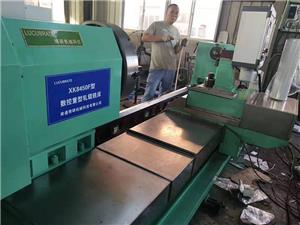
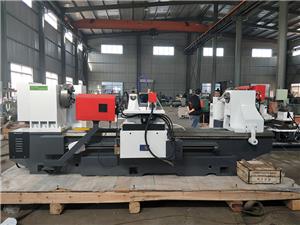
The CNC marking lathe addresses inconsistency by leveraging the same precision control as the machining process. With CNC, the marking tool follows a programmed path with micron-level accuracy. Depth and width are controlled by parameters, ensuring every mark is identical. Advanced systems use servo-controlled actuators to maintain consistent force, regardless of material variations. For instance, NANTONG LUCUBRATE MACHINERY TECHNICAL LTD. offers CNC marking lathes equipped with high-resolution encoders and closed-loop feedback, guaranteeing repeatability within ±0.01 mm. This level of precision is crucial for industries like aerospace, where marks must withstand extreme conditions and remain readable for decades.
Solution 2: In-Process Marking for Speed and Efficiency
By integrating marking into the CNC lathe, parts are marked while still clamped, eliminating secondary operations. This reduces cycle time dramatically. For example, a part that took 30 seconds to mark manually can be marked in under 5 seconds with a CNC marking lathe, and without additional handling. Moreover, the marking can be performed simultaneously with other operations, such as turning or milling, further reducing total cycle time. NANTONG LUCUBRATE's CNC marking lathes feature fast tool changes and high-speed positioning, enabling seamless integration into high-volume production lines. Manufacturers have reported up to 40% reduction in overall cycle time after implementing in-process marking.
Solution 3: Seamless Integration and Retrofit Options
Recognizing that many shops already have CNC lathes, NANTONG LUCUBRATE designs marking attachments that can be retrofitted onto existing machines. This approach minimizes capital expenditure and floor space requirements. The marking unit is mounted on the turret or a separate axis, and controlled by the same CNC program. No additional operators are needed. For new machines, the marking function can be built-in from the start. The company also provides comprehensive integration support, including custom fixtures and software interfaces. This flexibility makes CNC marking accessible to a wide range of manufacturers, from job shops to large OEMs.
Customer Case 1: Precision Aerospace Components in Seattle, USA
Precision Aerospace Components, a tier-2 supplier for Boeing, struggled with inconsistent dot-peen marks on titanium brackets. Manual marking led to a 12% rejection rate due to illegible codes. After installing a NANTONG LUCUBRATE CNC marking lathe, they achieved a 99.8% first-pass yield. The marking cycle time dropped from 45 seconds to 8 seconds per part. "The CNC marking lathe has been a game-changer for our traceability," said John Mitchell, Production Manager. "We've eliminated marking-related rejects and increased throughput by 25%."
Customer Case 2: Medical Implants Manufacturer in Minneapolis, USA
MedTech Innovations produces orthopedic implants that require UDI-compliant marks. Their previous laser marking system was slow and required secondary cleaning. With NANTONG LUCUBRATE's CNC marking lathe, they integrated marking into the turning process, reducing handling and eliminating cleaning. Marking time per implant went from 2 minutes to 20 seconds. "The precision and speed are unmatched," said Dr. Emily Chen, CEO. "We've scaled up production by 30% without adding staff."
Customer Case 3: Automotive Fasteners in Stuttgart, Germany
AutoFast GmbH, a supplier to Mercedes-Benz, faced bottlenecks in marking thousands of bolts daily. Manual stamping caused fatigue and errors. They retrofitted their existing CNC lathes with NANTONG LUCUBRATE marking units. The result: marking time reduced by 70%, and operator errors eliminated. "The retrofit was seamless, and the ROI was under six months," said Klaus Weber, Operations Director. "We now mark 20,000 bolts per shift with zero defects."
Customer Case 4: Oil & Gas Equipment in Houston, USA
Houston Oil Tools manufactures drill collars that require deep, durable marks for traceability. Their manual arc marking was slow and inconsistent. NANTONG LUCUBRATE provided a custom CNC marking lathe with a high-force marking head. Mark depth consistency improved from ±0.2 mm to ±0.02 mm, and marking time reduced from 3 minutes to 30 seconds per part. "The durability of the marks has significantly improved our asset tracking," said Mike Johnson, QA Manager. "We've reduced marking-related downtime by 80%."
Customer Case 5: General Machining Job Shop in Ontario, Canada
Maple Leaf Machining, a job shop serving various industries, needed a flexible marking solution. They chose a NANTONG LUCUBRATE CNC marking lathe with quick-change tooling. Now they can mark a wide range of parts, from small fittings to large shafts, with minimal setup. "The versatility is fantastic," said owner Sarah Thompson. "We've attracted new customers who require high-precision marking, boosting our revenue by 15%."
Applications and Partnerships
CNC marking lathes are used in aerospace, automotive, medical, oil & gas, and general machining. They excel in marking serial numbers, part codes, date codes, and 2D Data Matrix codes on cylindrical parts. NANTONG LUCUBRATE MACHINERY TECHNICAL LTD. has established partnerships with leading distributors in North America and Europe, such as Precision Tools Inc. and EuroTech Solutions, who supply their CNC marking lathes to major OEMs. These partnerships ensure local support and service. Additionally, NANTONG LUCUBRATE collaborates with cutting tool manufacturers to develop optimized marking styli for various materials.
FAQ
Q1: Can a CNC marking lathe mark hardened materials?
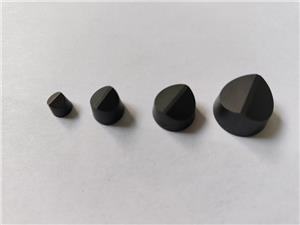
A: Yes, with the appropriate marking tool and parameters. NANTONG LUCUBRATE offers carbide and diamond-tipped styli that can mark materials up to 60 HRC. The machine's rigid construction and high-force actuator ensure consistent depth even in hard materials.
Q2: How does the marking lathe handle different part geometries?
A: The CNC control allows programming of complex paths, so marking can follow contours and curves. For cylindrical parts, the lathe's C-axis enables marking around the circumference. Custom fixtures can be provided for irregular shapes.
Q3: What about integration with existing CNC machines?
A: NANTONG LUCUBRATE offers retrofit kits that can be installed on most CNC lathes. The kit includes the marking head, controller, and software interface. Installation typically takes 1-2 days, and training is provided.
Q4: Is the marking process compliant with industry standards?
A: Yes, our CNC marking lathes can produce marks that meet standards such as ASTM E1361, ISO 9001, and UDI requirements for medical devices. We provide validation support for regulated industries.
Q5: What is the typical maintenance schedule?
A: The marking head requires minimal maintenance. We recommend checking the stylus every 10,000 marks and replacing if worn. The actuator should be lubricated every 500 hours. NANTONG LUCUBRATE offers service contracts for preventive maintenance.
Conclusion and Call to Action
The CNC marking lathe is more than a tool; it's a strategic investment that enhances quality, efficiency, and traceability. By addressing the pain points of inconsistent marks, slow cycles, and integration challenges, it empowers manufacturers to achieve operational excellence. As demonstrated by our customers, the benefits are tangible: higher yields, faster throughput, and reduced costs. If you're ready to elevate your marking process, contact our sales engineers at NANTONG LUCUBRATE MACHINERY TECHNICAL LTD. to request a technical whitepaper or schedule a consultation. Discover how a CNC marking lathe can transform your production line.