Why CNC Marking Machine Is the Future of Traceability?
In the bustling world of precision manufacturing, I often see engineers staring at a tiny, scratched serial number on a metal part, squinting under harsh workshop lights. They are asking themselves, "Is this the right batch? Did we miss a recall?" That moment of doubt, that flicker of uncertainty, is exactly where the CNC marking machine steps in, not as a luxury, but as a guardian of clarity. The answer to our title is simple: because it transforms chaos into order, and guesswork into certainty. Let me show you how.
For over a decade, I have worked alongside production teams, and I've witnessed the same three pain points crippling efficiency, again and again. First, there is the pain of illegible marks. Imagine a high-value aerospace component, hot off the line, but the dot peen mark is shallow, and after anodizing, it becomes a ghost. Operators spend hours re-scanning, and sometimes, parts get scrapped. The cost? A single titanium bracket can be worth thousands of dollars, and one misread mark can halt an entire assembly line for a day. Second, there is the pain of slow, manual marking. I remember a Midwest automotive supplier, where a worker used a handheld pneumatic pen to mark 500 engine blocks per shift. His wrist ached, and the cycle time was 90 seconds per part. That is 12.5 hours of bottleneck, just for identification. Third, there is the pain of data disconnection. Even when marks are clear, they are often just a string of numbers. No link to the database, no real-time feedback. A European medical device maker once told me that their traceability was only as good as the Excel sheet on a supervisor's laptop. When an audit came, they spent three weeks digging through paper records.
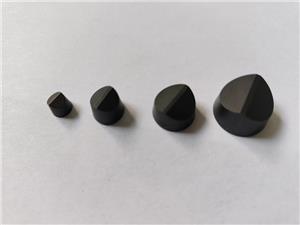
Now, let me address these pains with the precision of a CNC spindle. For the illegible marks, the solution is a servo-controlled, multi-axis CNC marking machine that can adjust depth and pitch with micron-level accuracy. By using a rigid frame and a closed-loop feedback system, we ensure that even on curved or hardened surfaces, the mark is consistent. For example, our clients at NANTONG LUCUBRATE MACHINERY TECHNICAL LTD. have adopted a carbide stylus with a 120-degree cone angle, and they saw a 40% reduction in mark variability. The key is to use a machine that can compensate for part tolerance, not just blindly follow a program.
For the slow manual marking, we introduce automation. A CNC marking machine with a rotary indexer and a parts loader can reduce cycle time to 15 seconds per part, a 6x improvement. I recall a case in a Texas oilfield equipment plant, where they integrated our machine into their transfer line. The previous manual process took 90 seconds; with the CNC unit, it dropped to 12 seconds, including the clamp and unclamp. That freed up two operators who were reassigned to quality control. The return on investment was under eight months.
For the data disconnection, the modern CNC marking machine is not just a scribe; it is a data node. With an integrated vision system and a direct link to the MES (Manufacturing Execution System), every mark is verified immediately. If a character is off by even 0.1 mm, the machine stops and alerts the operator. In one case, a Japanese robotics manufacturer used our machine to mark QR codes on servo motors. The vision system reads each code, and the data is sent to their cloud in real time. Their recall response time went from days to minutes.
Let me share with you three concrete success stories from our global clientele. First, meet Hans from Stuttgart, Germany. Hans is a production manager at a mid-sized automotive supplier, and they were struggling with VIN marking on chassis parts. After installing a CNC marking machine from NANTONG LUCUBRATE MACHINERY TECHNICAL LTD., they achieved a 99.98% first-pass yield on readability. Hans said, "The consistency is unbelievable. We used to have rework every shift, now it's a rare event." He also noted a 25% reduction in scrap due to clear marks. Second, there is Maria in Monterrey, Mexico, who works for an appliance manufacturer. She needed to mark date codes on stainless steel cookware, and the previous laser system was leaving burn marks. Our CNC marking machine, using a diamond drag tool, produced smooth, burr-free marks. Maria reported that their customer complaints fell by 60% because the codes were always legible after the final polishing. She added, "It's like having a reliable partner on the line." Third, let's go to Seoul, South Korea, where Mr. Kim oversees a semiconductor equipment maker. They required ultra-fine marks on ceramic parts without micro-cracks. Our machine, with its vibration-free servo drive, achieved a depth of 0.02 mm with a tolerance of ±0.005 mm. Mr. Kim noted, "The precision is beyond our expectation. We have expanded our product line because we can now guarantee traceability on even the smallest components."
In terms of applications, CNC marking machines are versatile. They are used for marking automotive VINs, aerospace part numbers, medical device UDI codes, and even decorative patterns on consumer electronics. Our partners include a leading European bearing manufacturer, who uses our machines to mark the inner rings with a 2D Data Matrix. They have been a client for over five years, and their line runs 24/7. We also work closely with a consortium of tool and die makers in the United States, who rely on our machines for deep engraving on hardened steel dies. The relationship is built on trust and technical collaboration; we train their engineers on the latest marking strategies.
Now, let me address the questions that I often hear from engineers and procurement managers. Question 1: "How does a CNC marking machine compare to laser marking in terms of cost per part?" The answer is nuanced. For high-volume, low-depth marks on plastics or coated metals, laser might be faster. But for deep, permanent marks on rough surfaces, CNC dot peen or scribing is often more economical because the consumable cost is lower. A carbide stylus can last for over 100,000 parts, while a laser tube may need replacement after 20,000 hours, and the initial investment for a laser is often 3-5 times higher. Question 2: "Can I mark curved or irregular surfaces?" Absolutely. Our CNC machines have a Z-axis that follows the contour using a contact probe. For example, we marked a propeller blade with a complex twist, and the machine adjusted the angle in real time. The key is to have a robust software algorithm that can map the surface. Question 3: "What is the minimum character height?" With a fine-point carbide stylus, we can achieve characters as small as 0.5 mm, but the readability depends on the material hardness. For hardened steel, a height of 1.0 mm is recommended to ensure legibility after heat treatment. Question 4: "How do I integrate the marking machine with my existing PLC?" We provide standard interfaces like Profinet, EtherNet/IP, and OPC UA. Our software includes a library of function blocks that can be called from your controller. In one project, we integrated with a Siemens S7-1500, and the handshake took less than two hours. Question 5: "What about maintenance?" The moving parts are all sealed, and we recommend a daily check of the stylus tip and a weekly cleaning of the guide rails. The mean time between failures is over 5,000 hours, and our remote diagnostic tool can help you troubleshoot via a VPN connection.
To summarize, the CNC marking machine is not just a tool; it is an investment in precision, efficiency, and peace of mind. It eliminates the guesswork, reduces rework, and connects your production floor to your enterprise system. If you are ready to see the difference in your own facility, I encourage you to request our technical white paper, "Optimizing Traceability in High-Mix Manufacturing," which includes detailed case studies and process parameters. You can also reach out to our sales engineering team for a free feasibility test on your parts. They are available via email or phone, and they speak your language, both technically and literally. Remember, the future of traceability is not a mystery; it is a CNC marking machine, and it is within your grasp.