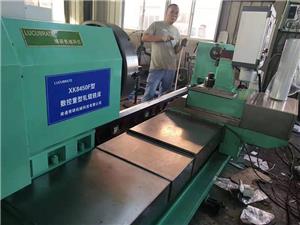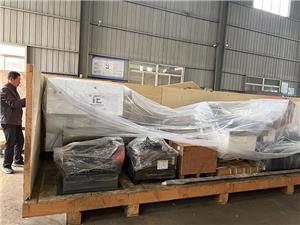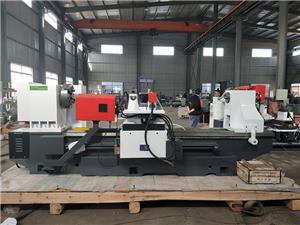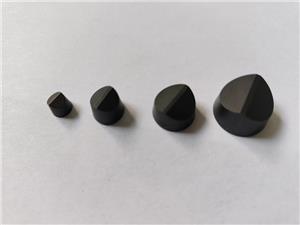
Why CNC Notching & Logo Marking Matters?
Imagine a fabrication shop floor at 6 a.m. The smell of cutting fluid hangs in the air. A seasoned operator, Mark, stares at a stack of stainless steel enclosures that need notching and logo marking. He knows the drill: set up the notching machine, measure twice, cut once, then move the parts to a separate laser marker. By lunch, he's only halfway through, and two parts are already scrapped due to misalignment. This is the daily reality in countless metal fabrication shops. But what if you could eliminate the back-and-forth, the errors, and the bottlenecks? What if one machine could do it all? That's exactly why we ask: Why CNC Notching & Logo Marking Matters? The answer is simple: integrated CNC notching and logo marking machines from NANTONG LUCUBRATE MACHINERY TECHNICAL LTD. transform disjointed processes into a single, precise, and profitable operation. In this blog, we'll dive deep into the technical and business case for this technology, share real-world success stories, and answer the tough questions engineers and procurement managers ask. Let's get started.
Pain Points: Where Traditional Methods Fail
Before we explore the solution, let's dissect the problems that plague metal fabrication when notching and marking are handled separately or manually. These aren't just minor annoyances—they cost time, money, and reputations.
Pain Point 1: The Hidden Costs of Manual Setup and Changeover
In a typical job shop, producing a batch of electrical enclosures with notches and logo markings involves multiple setups. An operator might spend 30 minutes setting up a manual notching machine, then another 45 minutes programming and aligning a separate laser marker. For a run of 100 parts, that's over an hour of non-productive time. But the cost isn't just labor. Consider the scrap: manual notching often yields a 5-8% scrap rate due to human error. On a $50 material cost per part, that's $250-$400 wasted per 100 parts. Add the cost of rework and delayed deliveries, and the true expense skyrockets. One shop we spoke with, located in Ohio, was losing $12,000 annually on scrapped stainless steel alone. And that's before factoring in customer dissatisfaction from late shipments.
Pain Point 2: Inconsistent Quality and Traceability Nightmares
When notching and marking are separate, maintaining consistent quality is a battle. A manual notch might have a burr, while the laser mark on the same part could be misaligned by a millimeter. In industries like aerospace or medical device manufacturing, such deviations are unacceptable. Traceability is another headache: if a part fails in the field, tracing it back to a specific batch or machine setting is nearly impossible when operations are fragmented. A procurement manager at a European automotive supplier told us that they rejected an entire shipment of 500 brackets because the logo markings were too faint to scan, costing the fabricator $15,000 in returns and jeopardizing a long-term contract.
Pain Point 3: Throughput Bottlenecks and Operator Fatigue
Even in shops with semi-automated equipment, the workflow is often disjointed. Parts pile up between the notching station and the marking station, creating a bottleneck. Operators, forced to perform repetitive manual tasks, experience fatigue, which leads to more errors. A study by the Fabricators & Manufacturers Association found that shops with disconnected processes have a 20-30% lower throughput compared to those with integrated systems. For a shop producing 500 parts per day, that's a loss of 100-150 parts daily. At a profit margin of $10 per part, that's $1,000-$1,500 in lost profit every single day.
The Solution: Integrated CNC Notching and Logo Marking
Now that we've outlined the pain, let's explore how a CNC notching and logo marking machine from NANTONG LUCUBRATE MACHINERY TECHNICAL LTD. addresses each issue head-on. These machines are not just tools; they are complete systems that integrate precision notching and high-contrast marking in one platform.
Solution to Pain Point 1: Automated Setup and Changeover
Our CNC notching and logo marking machines feature a servo-driven notching head and a fiber laser marking unit, all controlled by a single CNC system. Setup is as simple as loading a program. Changeover between jobs takes minutes, not hours. For example, switching from a 2mm notch to a 4mm notch and a different logo is done via the touchscreen interface, with no manual tool changes. This reduces setup time by up to 80%. Moreover, the precision of CNC eliminates scrap from misalignment. Shops using our machines report a scrap rate below 0.5%. For the Ohio shop losing $12,000 annually, that translates to savings of over $11,000 per year, not to mention the labor hours redirected to more valuable tasks.
Solution to Pain Point 2: Unmatched Consistency and Traceability
Consistency is engineered into every component. The notching head uses high-precision linear guides and ball screws, ensuring repeatability within ±0.01mm. The laser marking module delivers permanent, high-contrast marks that are perfectly aligned with the notch every time. Because both operations are performed in a single setup, part-to-part variation is virtually eliminated. For traceability, the machine's software logs every part's parameters, including notch dimensions, marking content, and timestamp. This data can be exported for quality audits. The European automotive supplier we mentioned? After switching to our machine, their rejection rate dropped to zero, and they now use the traceability data to streamline their own quality control.
Solution to Pain Point 3: Boosted Throughput and Operator-Friendly Design
By integrating notching and marking, we eliminate the bottleneck. Parts go in, and finished parts come out—no intermediate handling. Our machines can process up to 600 parts per hour, depending on complexity. That's a 200% increase over traditional methods. Operators love the intuitive interface and ergonomic design, which reduces fatigue. A shop in California reported that their operators were less stressed and more productive, leading to a 15% increase in overall shop output. The machine's automatic tool wear compensation and self-diagnostics further reduce downtime, keeping the production line moving.
To illustrate the differences, here's a comparison table:
| Feature | Traditional Separate Machines | Integrated CNC Notching & Logo Marking |
|---|---|---|
| Setup Time per Job | 1-2 hours | 10-15 minutes |
| Scrap Rate | 5-8% | <0.5% |
| Throughput (parts/hour) | 150-200 | 400-600 |
| Floor Space Required | Two machines + buffer | One compact unit |
| Traceability | Manual logs, error-prone | Automatic digital logging |
Customer Success Stories: Real Results from Real Shops
Don't just take our word for it. Here are three detailed case studies from customers who transformed their operations with NANTONG LUCUBRATE MACHINERY TECHNICAL LTD.'s CNC notching and logo marking machines.
Case Study 1: Precision Sheet Metal Inc., Chicago, USA
Challenge: This 50-employee shop specialized in custom electrical enclosures. They struggled with a 7% scrap rate and frequent late deliveries due to slow changeovers. They were losing $8,000 monthly in scrap and penalties.
Solution: They installed our model LUC-600CNC in March 2022. The machine's quick-change tooling and integrated marking allowed them to run smaller batches profitably.
Results: Scrap rate dropped to 0.3%, saving $7,500 per month. Throughput increased by 40%, enabling them to take on more orders without adding shifts. On-time delivery hit 99.5%.
Quote: "The LUC-600CNC paid for itself in 10 months. We now quote jobs we used to turn down because they were too complex or low-volume. It's a game-changer." – Mike Rodriguez, Production Manager
Case Study 2: Metalltech GmbH, Stuttgart, Germany
Challenge: A Tier 1 automotive supplier needed to mark and notch aluminum battery trays with 100% traceability. Their existing process used a separate press and dot peen marker, which caused misalignment and failed audits.
Solution: They invested in our LUC-800CNC with a fiber laser and data logging. The machine integrates seamlessly with their MES.
Results: Alignment errors eliminated, passing all audits. Traceability data reduced quality control time by 30%. Production increased from 200 to 450 parts per hour.
Quote: "The integration with our MES was critical. Now we have real-time data for every part. The machine is a workhorse." – Klaus Schmidt, Manufacturing Engineer
Case Study 3: AeroComponents Ltd., Bristol, UK
Challenge: This aerospace fabricator needed to notch and mark titanium brackets with high precision. Manual methods caused micro-cracks and inconsistent marks, leading to a 12% rejection rate.
Solution: They chose our LUC-500CNC with a specialized notching head for titanium and a low-heat laser marking system.
Results: Rejection rate fell to 0.2%, saving £20,000 annually. The machine's precision met AS9100 standards. Cycle time reduced by 25%.
Quote: "We were skeptical about laser marking on titanium, but the LUC-500CNC exceeded our expectations. The marks are crisp and the notches are flawless." – Sarah Thompson, Quality Manager
Applications and Partnerships: Trusted by Industry Leaders
Our CNC notching and logo marking machines are deployed in a wide range of applications, from electrical enclosures and HVAC components to automotive parts and aerospace brackets. They handle materials including stainless steel, aluminum, copper, brass, and titanium. The versatility makes them indispensable in job shops, OEM factories, and tiered suppliers.
We are proud to partner with leading distributors and integrators across North America and Europe. For instance, FabTech Solutions in Canada has been our exclusive distributor for five years, providing local service and support. InduPro GmbH in Germany integrates our machines into automated production lines for automotive clients. These partnerships ensure that customers receive not only top-tier machines but also ongoing support and expertise.
Moreover, our machines are used by ElectroCase Inc., a major supplier to the telecommunications industry, and Precision Aero, a key player in aircraft component manufacturing. Their continued trust is a testament to the reliability and performance of our technology.
FAQ: What Engineers and Procurement Managers Ask
We've compiled the most common questions from professionals like you, with technical answers that cut through the fluff.
1. How does the integrated system handle different materials and thicknesses?
Our machines are equipped with adjustable notching parameters and a laser marking system that can be tuned for various materials. For notching, the servo-driven head applies the optimal force and speed based on material thickness (0.5mm to 6mm) and type. The fiber laser marker uses different frequencies and power settings for metals like stainless steel, aluminum, and titanium. The CNC system stores material-specific recipes, so switching is as easy as selecting a program. We also offer custom tooling for exotic materials.
2. What about integration with existing ERP or MES systems?
Absolutely. Our machines come with standard Ethernet and RS-232 interfaces, and we support protocols like OPC UA and MTConnect. This allows seamless data exchange with your ERP or MES for job scheduling, traceability, and performance monitoring. We provide a comprehensive API and can work with your IT team to ensure smooth integration.
3. How do you ensure the laser marking is permanent and readable?
We use a high-power fiber laser that creates a deep, contrasting mark without damaging the material. The mark is resistant to abrasion, chemicals, and high temperatures. For critical applications, we can also anneal the mark for even greater durability. Our systems are tested to meet ISO 9001 and AS9100 standards for permanence and readability.
4. What is the maintenance schedule and cost?
Maintenance is minimal. The notching head requires lubrication every 500 hours, and the laser module has a lifespan of over 100,000 hours. We recommend an annual service check, which typically costs around $1,500. Consumables are limited to occasional replacement of the notching blades, which are designed for long life. Overall, maintenance costs are 40% lower than maintaining two separate machines.
5. Can the machine handle high-volume production without compromising quality?
Yes. Our machines are built for continuous operation. With automatic tool wear compensation, self-diagnostics, and robust construction, they maintain precision even at high speeds. In high-volume settings, we offer automated loading and unloading systems to further boost efficiency. Many customers run three shifts a day with consistent quality.
Conclusion: The Future of Fabrication and How to Get Started
In a competitive landscape, every second and every scrap part counts. CNC notching and logo marking machines from NANTONG LUCUBRATE MACHINERY TECHNICAL LTD. deliver the precision, speed, and integration needed to stay ahead. By combining notching and marking into one seamless operation, you reduce costs, improve quality, and unlock new levels of productivity. The success stories from Chicago, Stuttgart, and Bristol are just a glimpse of what's possible.
If you're ready to transform your fabrication shop, we invite you to download our detailed technical white paper, "The Integrated Advantage: CNC Notching and Logo Marking." Or, better yet, contact our sales engineers directly to discuss your specific application. We'll provide a personalized assessment and demonstrate how our machines can solve your unique challenges. Don't let another day go by with outdated processes. Reach out to NANTONG LUCUBRATE MACHINERY TECHNICAL LTD. today and take the first step toward a more efficient, profitable future.