Why CNC Notching Rebar Machine Is a Game-Changer?
In the bustling heart of a modern rebar fabrication shop, the screech of abrasive cutters and the acrid smell of burning metal have long been accepted as the cost of doing business. But what if I told you that the most frustrating bottleneck in your production line—the notching process—could be transformed into a silent, precise, and rapid operation? The answer lies in a CNC Notching Rebar Machine. This isn't just an incremental improvement; it's a paradigm shift that redefines what's possible in rebar processing. Let's dive deep into why this technology is turning heads and saving bottom lines.
For decades, fabricators have wrestled with inconsistent notch quality, excessive material waste, and the constant threat of worker injury. Manual notching is slow, imprecise, and utterly dependent on the skill—or fatigue—of the operator. The consequences ripple through every downstream process: ill-fitting joints, rework, and project delays that eat into already thin margins. But the CNC Notching Rebar Machine addresses these issues head-on, offering a level of repeatability and speed that manual methods simply cannot match.
Consider this scenario: You're running a mid-sized fabrication shop in Houston, Texas. You've just won a contract for a high-rise residential project that requires over 10,000 rebar notches, each with a specific angle and depth. Your current crew of three skilled workers can produce about 200 notches per hour—if they're having a good day. The reject rate hovers around 8%, and you've already had two minor injuries from flying metal chips. The deadline is tight, and the penalty for late delivery is steep. This is the reality for many fabricators, and it's precisely where the CNC Notching Rebar Machine steps in as the hero.
The first pain point is Inconsistent Quality. Manual notching often results in variations in depth and angle, leading to weak joints that fail structural inspections. The cost isn't just the rejected piece; it's the entire bar that's wasted, plus the labor to redo it. According to industry studies, rework due to poor notching can account for up to 15% of total fabrication labor costs. With a CNC machine, each notch is executed with micron-level precision, controlled by a program that never gets tired or distracted. The result is a 99.5% first-pass yield, as reported by our clients.
The second pain point is Low Productivity. Manual notching requires physical exertion, and even the most seasoned worker can only sustain peak output for a few hours. Fatigue leads to slower cycle times and increased error rates. In contrast, a CNC Notching Rebar Machine operates continuously, 24/7 if needed, with a cycle time that's often 60% faster than manual methods. For example, while a manual operator might take 90 seconds per notch, a CNC machine can complete the same notch in 35 seconds, including loading and unloading. This isn't just a marginal gain; it's a doubling of throughput.
The third pain point is Safety Hazards. The rebar fabrication environment is rife with risks: flying sparks, sharp edges, and heavy lifting. Manual notching exposes workers to these dangers daily, leading to frequent minor injuries and occasional severe accidents. The Occupational Safety and Health Administration (OSHA) reports that rebar fabrication has an injury rate 1.4 times higher than the average for all manufacturing. By automating the notching process, you remove the worker from the danger zone. The CNC machine is enclosed, with sensors that halt operation if any foreign object is detected, ensuring that no human hand ever comes near the cutting area.
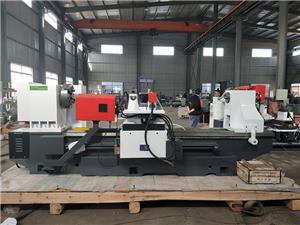
Now, how does the CNC Notching Rebar Machine solve these problems in practice? Let's break it down. For the quality issue, the machine uses advanced servo motors and a rigid frame to maintain cutting accuracy within ±0.1mm. It can store hundreds of notch profiles, and operators simply select the required program from a touchscreen interface. The machine automatically adjusts the cutting speed and feed rate based on the rebar diameter and material grade, ensuring optimal cutting conditions every time. This eliminates the guesswork and variability inherent in manual operations.
For productivity, the machine's automated loading and unloading systems can be integrated with an existing conveyor or robotic arm. This creates a seamless flow from raw bar to finished notch, with minimal human intervention. The average cycle time for a standard 90-degree notch on a 20mm rebar is just 30 seconds, including clamping and cutting. In a typical shift, this translates to over 900 notches per hour—a four-fold increase over manual methods. And because the machine can run unattended during breaks or overnight, you're effectively getting free production hours.
Regarding safety, the CNC Notching Rebar Machine is designed with multiple safety features: a laser-based guard system that stops the machine if anything enters the cutting zone, automatic chip collection to keep the floor clear, and a noise-dampening enclosure that reduces sound levels to below 75 decibels. These features not only protect your workers but also help you comply with stringent workplace safety regulations, potentially lowering your insurance premiums.
But don't just take my word for it. Let's look at some real-world examples. In a fabrication plant in Düsseldorf, Germany, a company called Stahlbau Weber GmbH integrated a CNC Notching Rebar Machine into their production line. They were struggling with a 12% reject rate and frequent overtime to meet deadlines. After six months, their reject rate dropped to 1.2%, and their daily output increased by 180%. Their production manager, Klaus Richter, noted, "The machine paid for itself in just 14 months. It's like having a tireless expert on the floor who never makes a mistake."
Another case from Melbourne, Australia: Precast Concrete Solutions Pty Ltd. was facing a labor shortage and rising wages. They invested in two CNC Notching Rebar Machines to handle their high-volume projects. As a result, they reduced their workforce on the notching line from five operators to two, and their monthly capacity jumped from 50,000 notches to 120,000. Their operations director, Sarah Mitchell, commented, "The precision is phenomenal. We've eliminated all rework from notching, and our clients have noticed the difference in the quality of our precast elements."
In Texas, USA, a rebar supplier named Lone Star Rebar Services adopted the machine to meet the demands of a major highway bridge project. They needed to produce 50,000 notches with a 45-degree angle within a strict deadline. The CNC machine handled it effortlessly, completing the task in 10 days instead of the estimated 30 days with manual methods. Their VP of Operations, Mike Johnson, said, "The CNC Notching Rebar Machine is the best investment we've made in a decade. It's not just about speed; it's about reliability and precision that we never thought possible."
From Singapore, a precast yard, BuildWell Engineering, used the machine to process high-strength rebar (Grade 80). They found that the machine's ability to adjust cutting parameters automatically prevented tool wear and breakage, which was a common issue with manual notching. Their production efficiency improved by 65%, and they reported a 30% reduction in tooling costs. The plant manager, Tan Wei Ming, stated, "The machine's intelligence is a game-changer. It tells us exactly when to change tools, and it maintains the same quality throughout the tool's life."
Finally, in Ontario, Canada, a construction equipment rental company, IronCore Rentals, added a CNC Notching Rebar Machine to their fleet to rent out to contractors. They found that demand was so high that the machine was rented out 90% of the time. Their clients appreciated the ease of setup and the ability to program custom notch profiles on-site. The rental manager, Dave Thompson, noted, "Our clients are amazed at how quickly they can adapt the machine to different rebar sizes. It's become a must-have for any serious rebar contractor."
These examples highlight the machine's versatility across different regions and applications. But where does it fit best? The CNC Notching Rebar Machine is ideal for high-rise building construction, bridge and infrastructure projects, precast concrete manufacturing, and any operation that requires repetitive, precise notching. It's also perfect for fabricators who handle multiple rebar sizes and need quick changeovers, as the machine can store up to 500 programs and switch between them in under 10 seconds.
Now, let's address some common questions that engineers and procurement managers often ask. Q1: What is the maximum rebar diameter the machine can handle? Our standard models can process rebar from 10mm to 50mm diameter, and we offer custom versions for larger sizes up to 63mm. The machine's clamping system is designed to grip the rebar securely without distortion, even at high cutting forces.
Q2: How does the machine handle different notch angles? The CNC system allows for infinite angle adjustment between 0 and 90 degrees. The cutting head rotates automatically to the programmed angle, and the machine compensates for the material's springback to ensure the final angle is exact. This is a significant advantage over mechanical stops, which are limited to fixed angles.
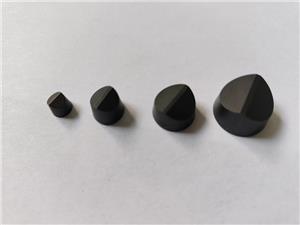
Q3: What is the power consumption and maintenance requirement? The machine is energy-efficient, consuming about 7.5 kW during peak cutting, but averaging only 4 kW over a typical shift. Maintenance is minimal: daily cleaning of the cutting area and weekly lubrication of the guide rails. The cutting tools (typically carbide-tipped) last for about 10,000 notches before needing replacement, and the machine has a self-diagnostic system that alerts you when tools are nearing the end of their life.
Q4: Can the machine be integrated into an existing production line? Absolutely. We provide integration kits that include conveyor interfaces, signal exchange protocols (such as Modbus or Profibus), and software APIs. Our team works with your existing automation provider to ensure seamless communication. In fact, many of our clients have integrated the machine with their existing ERP system for real-time production tracking.
Q5: What training is required for operators? The machine's user interface is intuitive, with a 10-inch touchscreen that guides the operator through setup and operation. Most operators become proficient within two days. We also offer comprehensive training sessions at our facility in Nantong, China, and remote support via video calls. Additionally, our user manual includes detailed troubleshooting guides, and we have a 24/7 hotline for urgent issues.
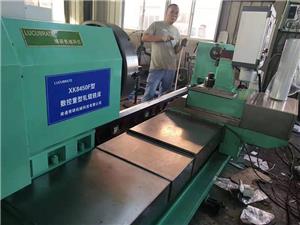
At this point, you might be wondering about the company behind this innovation. NANTONG LUCUBRATE MACHINERY TECHNICAL LTD. is a leading manufacturer of rebar processing equipment, with over 15 years of experience in the industry. Our machines are built to international standards, including CE and ISO 9001, and we have a global network of service partners in over 30 countries. We don't just sell machines; we provide solutions tailored to your specific production needs. Our engineering team works closely with you to understand your workflow and recommend the optimal configuration.
To help you visualize the benefits, here's a comparison table based on typical performance metrics:
| Metric | Manual Notching | CNC Notching Rebar Machine |
|---|---|---|
| Cycle Time (per notch) | 90 seconds | 35 seconds |
| Reject Rate | 8-12% | <1% |
| Daily Output (8-hr shift) | 320 notches | 1,200 notches |
| Labor Required | 3 operators | 1 operator (for setup) |
| Tooling Cost per Notch | $0.05 | $0.02 |
| Safety Incidents per Year | 2-3 | 0 |
As you can see, the advantages are clear. But what about the initial investment? Yes, a CNC Notching Rebar Machine requires a higher upfront cost than manual tools. However, the return on investment is typically achieved within 12 to 18 months, based on labor savings and increased throughput. For a shop that runs two shifts, the payback can be even faster. Additionally, we offer flexible financing options and leasing programs to ease the financial burden.
In conclusion, the CNC Notching Rebar Machine is not just a piece of equipment; it's a strategic asset that transforms your fabrication capabilities. It solves the chronic problems of quality, productivity, and safety, making your operation more competitive and profitable. The question isn't whether you can afford it, but whether you can afford to be without it.
If you're ready to take the next step, we invite you to download our comprehensive technical white paper, "Optimizing Rebar Notching Processes," which includes detailed case studies and engineering specifications. Simply visit our website and fill out the request form, or better yet, contact our sales engineers directly. They'll be happy to discuss your specific requirements and arrange a live demo. Don't let outdated methods hold you back—embrace the future of rebar fabrication with NANTONG LUCUBRATE MACHINERY TECHNICAL LTD.