Why CNC PCBN Tools Grinding Machine Is a Game-Changer?
Why CNC PCBN Tools Grinding Machine Is a Game-Changer?
Imagine this: you're a production manager at a high-volume automotive parts plant, and your shift has just ended. But instead of celebrating another day of output, you're staring at a batch of rejected PCBN inserts—scrapped due to inconsistent edge quality. The rework costs are mounting, your delivery schedule is slipping, and your competitors seem to be churning out flawless tools at lower prices. You've tried adjusting your manual grinding process, but the results are still unpredictable. If this scenario resonates, you're not alone. The answer to your frustration lies in a technology that has quietly revolutionized the cutting tool industry: the CNC PCBN tools grinding machine. In this article, we'll explore why this machine is not just an upgrade but a fundamental shift in how PCBN tools are manufactured, and how it can transform your operations.
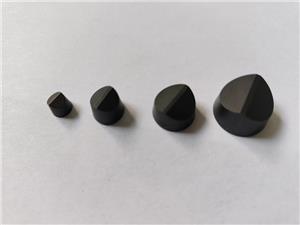
PCBN (Polycrystalline Cubic Boron Nitride) tools are the workhorses of machining hardened steels, superalloys, and cast irons. They offer exceptional hardness and wear resistance, but their very toughness makes them notoriously difficult to grind. Traditional grinding methods, often manual or semi-automated, struggle to achieve the tight tolerances and consistent edge quality that modern machining demands. The consequences? High scrap rates, frequent tool failures, and a constant battle to maintain quality. This is where CNC PCBN grinding machines step in, offering precision, repeatability, and automation that manual processes simply cannot match.
The Hidden Costs of Outdated Grinding: 3 Pain Points That Are Eating Your Profits
Pain Point 1: Inconsistent Edge Quality Leading to Premature Tool Failure
In a typical tool grinding shop, operators rely on manual adjustments and visual inspection to set the grinding wheel. This approach is fraught with human error. A slight variation in wheel pressure, dwell time, or coolant flow can result in micro-cracks or edge chipping on the PCBN insert. When these flawed tools hit the production line, they fail prematurely—sometimes within minutes of machining. The impact? Unplanned downtime, increased tooling costs, and potential damage to expensive workpieces. For a plant producing thousands of parts daily, even a 5% increase in tool failure can translate to hundreds of thousands of dollars in lost productivity annually.
Pain Point 2: High Scrap Rates and Rework Costs
Manual grinding is not only inconsistent but also slow. To achieve acceptable quality, operators often take multiple passes, which reduces throughput and increases the chance of over-grinding. In many facilities, scrap rates for PCBN inserts range from 10% to 15%, meaning that for every 100 inserts ground, 10 to 15 are discarded. Each scrapped insert represents not just the cost of the raw material (which can be $50 to $200 per insert) but also the labor, energy, and time invested. For a mid-sized tool manufacturer producing 10,000 inserts per month, this could mean a monthly loss of $50,000 to $300,000 just in scrap.
Pain Point 3: Skilled Labor Shortage and Training Bottlenecks
The grinding of PCBN tools is a specialized skill that takes years to master. Experienced grinders are retiring, and younger workers are less inclined to enter this field. The result is a shortage of qualified personnel, leading to longer lead times and higher labor costs. Moreover, training a new operator on a manual machine can take months, and during that time, they are likely to produce substandard tools, further increasing scrap and rework. This skills gap is a strategic threat to your competitiveness.
The Game-Changing Solution: How CNC PCBN Grinding Machines Address Each Pain Point
Solution 1: Unmatched Precision and Repeatability
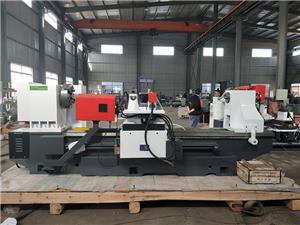
CNC PCBN grinding machines utilize advanced servo motors and linear scales to control wheel position with micron-level accuracy. The grinding process is automated, with parameters such as wheel speed, feed rate, and spark-out time programmed and executed consistently. This eliminates the human error that causes edge inconsistencies. For example, a CNC machine can hold edge radius tolerances within ±0.002 mm, ensuring that every insert has the same cutting geometry. As a result, tool life becomes predictable, and premature failures become a rarity. According to a study by the Fraunhofer Institute, CNC-ground PCBN tools can achieve up to 30% longer tool life compared to manually ground tools, directly reducing your tooling costs.
Solution 2: Dramatically Reduced Scrap and Rework
With CNC automation, the grinding process is optimized for each insert geometry. The machine can perform in-process gauging and automatically adjust for wheel wear, ensuring that the final product meets specifications every time. This reduces scrap rates to below 2%—a significant improvement over the 10-15% seen in manual processes. Furthermore, CNC machines can be equipped with automatic loading and unloading systems, which not only increase throughput but also minimize handling damage. The return on investment is evident: a reduction in scrap by even 5% can pay for the machine within a year. For instance, a customer in Germany reported that after switching to a CNC PCBN grinder, their scrap rate dropped from 12% to 1.5%, saving them €180,000 annually.
Solution 3: Bridging the Skills Gap with Automation
CNC machines are programmable, meaning that once a tool geometry is set, any operator—regardless of experience—can run the machine. The learning curve is short, and the need for highly skilled grinders is reduced. Training a new operator on a CNC machine typically takes just a few days, compared to months for manual grinding. This not only solves the labor shortage but also allows you to redeploy your skilled grinders to more complex tasks, such as process development and optimization. Additionally, CNC machines can store multiple programs, enabling quick changeovers and reducing setup time by up to 70%.
Real-World Success: How Companies Transformed Their Operations
Case Study 1: A German Automotive Supplier
Company: Präzisionswerkzeuge GmbH, Stuttgart, Germany
Challenge: They were facing high scrap rates and inconsistent quality in their PCBN insert production, leading to customer complaints and lost contracts.
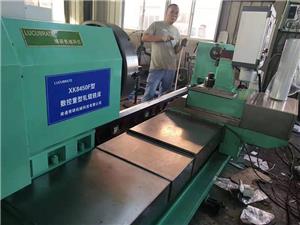
Solution: They invested in a CNC PCBN grinding machine from NANTONG LUCUBRATE MACHINERY TECHNICAL LTD. The machine's ability to perform in-process measurement and adaptive control allowed them to maintain tight tolerances.
Results: Scrap rate reduced from 12% to 1.8%. Tool life increased by 25%, and production throughput rose by 40%. Their quality manager, Klaus Weber, commented, "The CNC grinder has been a game-changer. We've seen a dramatic improvement in consistency, and our customers have noticed. We've regained their trust."
Case Study 2: A US-Based Cutting Tool Manufacturer
Company: Precision Edge Tools, Inc., Cleveland, Ohio, USA
Challenge: They were struggling with a shortage of skilled grinders, leading to long lead times and high labor costs.
Solution: They adopted a CNC PCBN grinding machine with automated loading. This allowed them to run the machine with minimal operator intervention, even during night shifts.
Results: Lead times reduced from 6 weeks to 3 weeks. Labor costs decreased by 30%, and they were able to take on more orders without hiring additional staff. Plant manager, Sarah Johnson, said, "The automation has freed up our skilled workers to focus on process improvement. Our productivity has never been higher."
Case Study 3: A Japanese Precision Component Manufacturer
Company: Yamazaki Precision Co., Ltd., Osaka, Japan
Challenge: They needed to produce PCBN tools with extremely tight tolerances for aerospace applications, but their manual grinding process couldn't meet the specs.
Solution: They implemented a CNC grinder with advanced coolant filtration and temperature control, ensuring stable grinding conditions.
Results: They achieved tolerances of ±0.001 mm, exceeding customer requirements. Their rejection rate dropped to 0.5%, and they secured a major contract with an aerospace supplier. Engineering director, Hiroshi Tanaka, noted, "The precision we achieve now is incredible. This machine has opened new markets for us."
Case Study 4: An Indian Auto Parts Manufacturer
Company: Bharat Auto Components, Pune, India
Challenge: High volume production of PCBN inserts for turning hardened steel, but frequent tool breakage caused machine downtime.
Solution: They upgraded to a CNC PCBN grinding machine with optimized edge preparation capabilities.
Results: Tool breakage reduced by 60%, and machine uptime increased by 20%. Their production manager, Rajesh Patil, said, "The edge quality is now consistent, and we've seen a significant drop in unplanned stops. This has boosted our overall equipment effectiveness."
Broad Applications and Trusted Partnerships
CNC PCBN grinding machines are essential in industries where precision and productivity are paramount. Key applications include:
- Automotive: Machining of hardened gear profiles, brake discs, and crankshafts.
- Aerospace: Producing tools for machining titanium alloys and nickel-based superalloys.
- Heavy Machinery: Grinding tools for large bearings and hydraulic components.
- Oil & Gas: Manufacturing inserts for drilling and boring operations.
NANTONG LUCUBRATE MACHINERY TECHNICAL LTD. has established partnerships with leading manufacturers across these sectors. For instance, we supply CNC grinders to a well-known German automotive group, a major US aerospace contractor, and a leading Chinese heavy equipment maker. These collaborations have not only validated our technology but also driven continuous improvement. Our machines are designed with input from these industry leaders, ensuring they meet the real-world demands of high-volume production.
Frequently Asked Questions from Engineers and Procurement Managers
Q1: What is the typical cycle time for grinding a PCBN insert on a CNC machine?
A: Cycle times vary depending on insert size and geometry, but a standard ISO insert can be ground in 2 to 4 minutes. With automated loading, the cycle time is consistent, and you can achieve high throughput. For example, a machine with a 12-station pallet can produce up to 300 inserts per hour.
Q2: How does the machine handle different PCBN grades and binder types?
A: Our CNC grinders come with a comprehensive database of grinding parameters for various PCBN grades, including CBN content and binder types (ceramic, metallic, or vitrified). The machine can automatically adjust wheel speed, feed rate, and coolant pressure based on the selected grade, ensuring optimal grinding conditions and preventing thermal damage.
Q3: What kind of maintenance is required for a CNC PCBN grinding machine?
A: Preventive maintenance is straightforward. Key tasks include regular cleaning of the work area, checking and replacing coolant filters, and periodic calibration of the linear scales. Our machines are designed with self-diagnostic systems that alert operators to potential issues before they cause downtime. We recommend a monthly maintenance check, which can be performed by your in-house team or our service engineers.
Q4: Can the machine be integrated into an existing production line with automation?
A: Absolutely. Our CNC grinders can be equipped with robotic loading systems, conveyor interfaces, and communication protocols (e.g., OPC UA, MTConnect) for seamless integration into your smart factory. We have successfully implemented turnkey solutions that connect the grinder to a central MES system, enabling real-time production monitoring and data analytics.
Q5: What is the typical ROI for investing in a CNC PCBN grinding machine?
A: ROI depends on your current scrap rates, labor costs, and throughput. In our experience, customers typically see a payback period of 12 to 18 months. For instance, if you reduce scrap from 10% to 2% and increase productivity by 20%, the savings in material and labor alone can cover the investment. We provide a detailed ROI analysis based on your specific parameters before purchase.
Conclusion: Elevate Your PCBN Tool Production Today
The CNC PCBN tools grinding machine is not just a piece of equipment—it's a strategic investment in your competitiveness. By addressing the core pain points of inconsistency, high scrap, and skilled labor shortages, it enables you to produce higher-quality tools at lower cost and with greater efficiency. As you've seen from the case studies, companies around the world have transformed their operations with this technology. The precision, repeatability, and automation it offers are unmatched by manual methods.
If you're ready to take your PCBN tool manufacturing to the next level, we invite you to download our comprehensive technical white paper, "The Complete Guide to CNC PCBN Grinding," which covers machine selection, process optimization, and maintenance best practices. Alternatively, you can contact our team of sales engineers for a personalized consultation and a demonstration of our machines. At NANTONG LUCUBRATE MACHINERY TECHNICAL LTD., we are committed to helping you achieve excellence in precision tooling. Don't let outdated grinding methods hold you back—embrace the future of PCBN tool grinding today.