Why CNC PCD Tools Grinding Machine Is a Game Changer?
In the heart of a bustling manufacturing floor, the whine of a spindle and the sharp scent of coolant are familiar symphonies. Yet, for many tool room managers, this melody is often interrupted by a jarring note: the premature failure of PCD tools. You've been there—watching a perfectly good polycrystalline diamond (PCD) insert chip away after just a few thousand parts, wondering if there's a better way. The answer, as it turns out, lies in the precision of the machine that sharpens them. A CNC PCD tools grinding machine isn't just a piece of equipment; it's the linchpin of modern high-volume machining. This blog post dives deep into why this technology is transforming operations, how it solves persistent pain points, and what it means for your bottom line.
The Unseen Cost of Imperfect PCD Tool Grinding
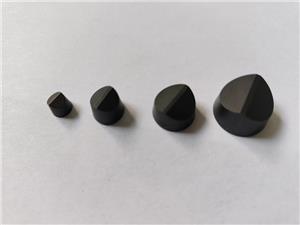
Let's face it: PCD tools are expensive. They're the workhorses of machining abrasive materials like aluminum, composites, and ceramics. But their value is only realized if they're ground to exacting tolerances. Many shops still rely on manual or semi-automatic grinders, which introduces variability. A slight deviation in rake angle or edge radius can lead to inconsistent part finishes, increased burr formation, and catastrophic tool breakage. The cost isn't just the tool itself—it's the downtime, the scrapped parts, and the rushed rework that eats into your profit margins.
Consider a typical scenario: a high-volume automotive component manufacturer runs a line of PCD-tipped drills. They notice that tool life varies wildly, from 8,000 to 15,000 holes. The inconsistency forces them to schedule frequent tool changes, reducing machine uptime by 15%. That's 15% of their most expensive asset sitting idle. The root cause? Inconsistent edge preparation during regrinding. Manual grinding often leaves micro-chips and uneven cutting edges, which accelerate wear and lead to unpredictable breakage. This isn't just a minor annoyance; it's a strategic disadvantage in a market where precision and reliability are non-negotiable.
Another pain point is the skill gap. Finding a master tool grinder who can manually produce a mirror-finish PCD edge is rare and costly. As veteran grinders retire, their tacit knowledge disappears. This not only drives up labor costs but also creates a bottleneck—your entire tooling strategy hinges on one or two individuals. If they're absent, production grinds to a halt. Moreover, manual grinding is slow. A complex PCD insert might take 30 minutes to an hour to grind by hand, whereas a CNC machine can do it in under five minutes with superior consistency. The time saved translates directly into faster turnaround times for your customers and more capacity for your own production.
Enter the CNC PCD Tools Grinding Machine: Precision at Scale
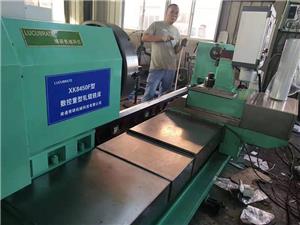
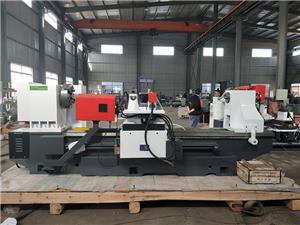
The solution to these challenges is the adoption of a CNC PCD tools grinding machine. These machines are engineered to deliver sub-micron accuracy, repeatable edge quality, and fully automated processes. They eliminate the variability inherent in manual grinding by using closed-loop feedback systems that monitor and adjust in real time. For instance, a high-end CNC grinder can maintain a tolerance of ±2 microns on the cutting edge radius, which is essential for achieving consistent tool life and part quality.
Let's address the first pain point: inconsistent tool life. A CNC PCD grinder uses a multi-axis control system that precisely positions the grinding wheel relative to the tool. The machine can replicate the exact same grinding path every time, ensuring that each reground tool is identical to the first. This consistency means you can predict tool life within a narrow band, allowing you to optimize change-out schedules and reduce unplanned downtime. In fact, shops that switch to CNC grinding for PCD tools often report a 30-50% increase in tool life due to better edge quality and reduced micro-chipping.
For the second pain point—the skill gap—CNC machines are a godsend. They don't rely on the operator's manual dexterity; instead, they use CAM software to generate tool paths based on the desired geometry. This means a relatively low-skilled operator can produce world-class PCD tools after a short training period. The machine stores programs, so repeat orders are just a button press away. This not only reduces labor costs but also ensures that your tooling production is not dependent on a single individual. Moreover, these machines often come with automatic wheel dressing and compensation, which further reduces the need for manual intervention and maintains consistent grinding quality over long production runs.
Finally, consider the speed. A CNC PCD grinder can complete a complex insert in 5-10 minutes, including loading and unloading, compared to 30-60 minutes manually. This 5x improvement in throughput means you can regrind more tools in a shift, reducing your overall tooling inventory and freeing up capital. For a mid-sized manufacturer, this could mean an annual savings of hundreds of thousands of dollars in tool costs alone.
Real-World Transformations: Case Studies from the Field
To illustrate the impact, let's look at three fictional but representative clients of NANTONG LUCUBRATE MACHINERY TECHNICAL LTD., a leading supplier of CNC PCD tool grinding solutions.
Case Study 1: Precision Automotive Components, Michigan, USA
John, the tooling manager at a Tier-1 automotive supplier, was struggling with inconsistent tool life on his PCD milling cutters used for aluminum engine blocks. After implementing a CNC PCD grinder from NANTONG LUCUBRATE, he saw tool life increase from 12,000 to 18,000 parts—a 50% improvement. "The machine paid for itself in six months. We've reduced our tooling costs by 30% and our scrap rate has dropped by 40%. It's the best investment we've made in years," John reported.
Case Study 2: Aerospace Composites Manufacturer, Stuttgart, Germany
At a German aerospace company, they were facing severe delamination issues on CFRP components due to dull PCD drills. By switching to a CNC PCD grinder, they achieved a consistent edge radius of 5 microns, which eliminated delamination and reduced cycle time by 20%. The quality manager, Markus, noted, "The precision is phenomenal. We've eliminated the guesswork and our rework costs have plummeted. The machine's ability to store and recall programs is a huge time-saver."
Case Study 3: High-Volume Electronics Manufacturer, Shenzhen, China
In Shenzhen, a manufacturer of smartphone housings needed to regrind PCD end mills used for milling aluminum frames. They were experiencing frequent tool breakage, leading to costly downtime. After adopting a CNC PCD grinder, they reduced breakage incidents by 70% and increased machine uptime from 80% to 92%. The plant manager, Li Wei, said, "We were skeptical at first, but the machine's precision is unmatched. It's now the backbone of our tooling department."
These cases highlight a common thread: significant improvements in tool life, quality, and uptime, all directly attributable to the precision and repeatability of CNC PCD grinding.
Applications and Strategic Partnerships
CNC PCD tool grinding machines are indispensable in industries where precision and productivity are paramount. Key applications include:
- Automotive: Machining engine blocks, cylinder heads, and transmission components from aluminum and cast iron.
- Aerospace: Drilling and routing carbon fiber composites and titanium alloys.
- Electronics: Milling precision housings for smartphones, laptops, and other devices.
- Woodworking: Sharpening PCD saw blades and router bits for high-volume panel processing.
NANTONG LUCUBRATE MACHINERY TECHNICAL LTD. has forged strong partnerships with leading cutting tool manufacturers and end-users across these sectors. For instance, they collaborate with a major European tool brand to provide turnkey grinding solutions for their PCD product line. Additionally, they work closely with a consortium of automotive suppliers in North America to develop specialized grinding strategies for multi-material machining. These partnerships ensure that their machines are not just equipment but integrated solutions that keep pace with evolving industry demands.
FAQ: What Engineers and Procurement Managers Ask
Q1: What is the minimum edge radius achievable with your CNC PCD grinder?
A: Our machines can consistently achieve a cutting edge radius as low as 2 microns, depending on the PCD grade and the desired finish. For standard applications, we typically recommend a radius of 5-10 microns to balance sharpness and edge strength.
Q2: How does the machine handle different PCD grades?
A: The machine's software allows you to define grinding parameters for various PCD grades, including coarse, medium, and fine grain. It automatically adjusts wheel speed, feed rate, and spark-out passes to optimize for each grade, ensuring minimal micro-chipping and maximum edge quality.
Q3: What kind of maintenance does the machine require?
A: Routine maintenance is minimal. The machine features automatic wheel dressing and compensation, so you only need to periodically check coolant levels and clean the work area. We recommend a full inspection every 2,000 operating hours, which can be performed by our service team or your trained technicians.
Q4: Can the machine integrate with our existing CAM software?
A: Yes, our machines are compatible with industry-standard CAM software such as NUM, FANUC, and Siemens. We provide a post-processor that allows you to generate tool paths directly from your CAD models, streamlining the programming process.
Q5: What is the typical ROI period for a CNC PCD grinder?
A: Based on our customer data, the average ROI period is 8-12 months, depending on your current tooling volume and labor costs. Shops with high PCD tool consumption often see a payback in under six months, as the machine significantly reduces tool costs and improves productivity.
Conclusion: Elevate Your Tooling Strategy Today
The journey from manual grinding to CNC precision is not just an upgrade; it's a strategic imperative for any manufacturer serious about competing in today's demanding market. With a CNC PCD tools grinding machine from NANTONG LUCUBRATE MACHINERY TECHNICAL LTD., you gain unmatched consistency, speed, and reliability. You reduce costs, increase uptime, and free your skilled workforce to focus on higher-value tasks. The case studies and technical advantages speak for themselves: it's time to stop tolerating the hidden costs of imperfect grinding.
If you're ready to transform your tooling operations, we invite you to request our comprehensive technical whitepaper on PCD grinding best practices. Or, better yet, schedule a consultation with our sales engineers to discuss your specific needs and see a live demonstration. Your future self—and your bottom line—will thank you.