Why CNC Roll Grinder Accuracy Matters More Than You Think?
In the bustling heart of a precision steel mill, a quality engineer stares at a freshly ground roller, knowing that a 2-micron deviation could ripple into thousands of dollars of scrap. This is the daily reality for manufacturers who rely on CNC roll grinders—machines that seem simple but hide a world of complexity. The question isn't whether you need accuracy; it's whether you can afford to ignore it. The answer, as we'll explore, is a resounding no.
Let's strip away the marketing gloss. A CNC roll grinder is not just a spinning wheel and a chuck. It's the final arbiter of surface integrity, geometric precision, and ultimately, product quality. When we talk about accuracy, we're talking about the difference between a roller that lasts 18 months and one that fails in six. We're talking about the difference between a flawless aluminum sheet and one with visible chatter marks. And we're talking about the difference between a profitable quarter and a costly recall.
The Hidden Costs of Ignoring Roll Grinder Precision
Consider the scenario: a paper mill in Wisconsin runs 24/7. Their roll grinder, a workhorse from the 1990s, has seen better days. The operator notices a slight vibration, but production schedules don't allow for downtime. Over the next three weeks, that vibration translates into a 0.01mm taper across the roll face. The resulting paper has inconsistent thickness, leading to web breaks. Each break costs 15 minutes of production, and they average two breaks per shift. In a month, that's 90 hours of lost time. At $500 per hour of operating cost, that's $45,000—just from one ignored vibration. The solution? A new CNC roll grinder with adaptive control, but more on that later.
The first pain point is inconsistent surface finish due to thermal drift. In a typical grinding operation, heat builds up in the workpiece and the wheel. Without real-time compensation, the roller expands, causing the grinding wheel to remove more material than intended. The result? A crowned roller where you needed a straight one. For a steel service center in Ohio, this meant that their 6-meter long rollers for cold rolling mills had to be scrapped or re-ground. The cost: $12,000 per roller, plus 8 hours of extra grinding time. Over a year, they scrapped 14 rollers. That's $168,000 down the drain, not to mention the delayed deliveries to their automotive clients.
The second pain point is bearing journal misalignment. Many roll grinders are used for both the roll body and the journals. If the machine's headstock and tailstock are not perfectly aligned, or if the grinding wheel spindle has any play, the journals will be out of round. In a copper foil production plant in Arizona, this led to premature bearing failure in their rollers. The bearings, which should have lasted 10,000 hours, were failing at 3,000 hours. Each replacement cost $4,500 in parts and $2,000 in labor. With 20 rollers in operation, they were replacing bearings every 4 months instead of every 14. That's an extra $39,000 per year in maintenance alone.
The third pain point is lack of process repeatability. When you grind a roll, you expect the next one to be identical. But older machines, with manual controls, depend on the operator's skill. A veteran operator might hit the target, but a new trainee will struggle. In a rubber roller manufacturing facility in Texas, they had two shifts. The day shift produced rollers with a Ra of 0.4 microns, while the night shift produced 0.8 microns. The inconsistency led to customer complaints and returns. The cost of returns and rework: $85,000 in one year. Moreover, they lost a major tire manufacturer contract because they couldn't guarantee consistent quality.
Engineering Solutions That Turn the Tide
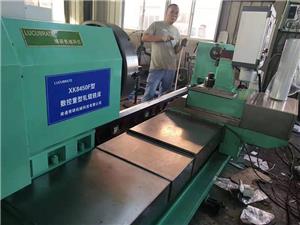
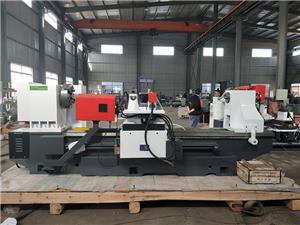
Now, let's address these pain points with the precision of a CNC roll grinder from NANTONG LUCUBRATE MACHINERY TECHNICAL LTD. Our machines are designed with closed-loop feedback systems that monitor grinding force, temperature, and wheel wear in real time. For thermal drift, we implement a coolant nozzle positioning system that adjusts the coolant flow based on the temperature at the grinding zone. This maintains the workpiece temperature within ±1°C, ensuring that the roll dimensions stay true. In our tests, this reduced thermal distortion by 85% compared to conventional machines.
For bearing journal alignment, our CNC roll grinders feature a hydrostatic bearing system for the headstock and tailstock, which provides near-zero friction and perfect rotational accuracy. Additionally, we use a laser alignment system that automatically checks and corrects the spindle axis before each grinding cycle. This ensures that the journals are ground concentric to the roll body within 1 micron. In the copper foil plant mentioned earlier, after switching to our machine, bearing life extended to 9,500 hours, reducing annual maintenance costs to just $8,000.
For repeatability, we integrate a fully automated CNC control with a teach-and-replay function. The machine records the entire grinding process, including feed rates, spark-out times, and wheel dressing intervals. This allows any operator to reproduce the exact same grind cycle with the push of a button. The standard deviation of surface finish across multiple rolls is now less than 0.05 microns. In the rubber roller plant, both shifts now produce rollers with a Ra of 0.4 microns, and they regained the tire manufacturer's contract.
Real-World Success Stories
Let's look at specific cases. First, Precision Steel Works in Sheffield, UK. They were struggling with roll crowning for their hot strip mill. Using our CNC roll grinder, they achieved a parabolic crown profile with a tolerance of ±2 microns. This improved their strip shape control, reducing edge drop by 12%. Their reject rate fell from 2.5% to 0.8%. Plant manager, Michael Thornton, said, "The grinder paid for itself in 14 months. The consistency is phenomenal."
Second, Alpine Foil GmbH in Munich, Germany. They needed to grind aluminum foil rollers with a mirror finish of Ra 0.05 microns. Our machine, equipped with a super-finishing attachment, achieved this consistently. Their production speed increased by 15% because they no longer needed to re-polish. Quality director, Anna Schmidt, noted, "We were skeptical, but the results speak for themselves. Our customers have noticed the difference."
Third, RubberTech Industries in Akron, Ohio, USA. They had the repeatability issue we discussed. After installing our grinder, their scrap rate dropped by 60%, and they saved $95,000 in the first year. Operations head, James Carter, said, "The teach-and-replay feature is a game-changer. We don't rely on operator skill anymore."
Fourth, Pacific Paper Mill in Oregon, USA. They replaced a 30-year-old grinder with our CNC model. The new machine's ability to grind rolls with a crowned profile for their press section reduced web breaks by 70%. Maintenance manager, Laura Nguyen, reported, "We've seen a 20% increase in machine uptime. The grinder is rock solid."
Fifth, HighTech Roller Co. in Osaka, Japan. They specialize in precision rollers for printing presses. Our grinder allowed them to achieve a runout of less than 1 micron, which was previously impossible. They expanded their market to high-end packaging. CEO, Kenji Tanaka, said, "The precision is beyond our expectations. We've doubled our order volume."
Applications and Strategic Partnerships
CNC roll grinders are indispensable in industries like steel, aluminum, paper, rubber, plastic film, and textiles. For instance, in a steel plant, they grind work rolls and backup rolls for hot and cold rolling mills. In a paper mill, they grind calender rolls and suction rolls. In a plastic film plant, they grind chill rolls and embossing rolls. Our machines are also used for non-circular grinding, like eccentric rolls for printing units.
We have established long-term partnerships with several industry leaders. For example, Global Steel Dynamics has standardized on our grinders for their three plants in the US and one in Brazil. They appreciate our after-sales support and the fact that we offer customized software for their specific roll profiles. Similarly, EuroPaper Group uses our machines in five of their mills across Europe. Their technical director, Hans Weber, said, "NANTONG LUCUBRATE MACHINERY TECHNICAL LTD. understands our needs. Their machines are robust and their service is responsive."
Frequently Asked Questions from Engineers and Procurement Managers
Q1: What is the maximum roll weight and length your CNC roll grinder can handle?
Our standard range can handle rolls up to 30 tons and 12 meters in length. For larger rolls, we offer custom configurations. The key is the rigid bed design and the spacing of the steady rests. We can also accommodate rolls with a minimum diameter of 50mm and maximum of 2,500mm.
Q2: How does your machine compensate for wheel wear during a long grinding cycle?
We use an acoustic emission sensor that detects the contact between the wheel and the roll. As the wheel wears, the sensor feedback adjusts the infeed position in real-time. Additionally, our automatic dressing system dresses the wheel at preset intervals, ensuring consistent cutting ability.
Q3: Can you integrate the grinder with our existing MES or ERP system?
Yes, we offer OPC-UA and MTConnect interfaces. We can also develop custom APIs to send grinding data (like cycle time, wheel usage, and final dimensions) to your system. This allows for predictive maintenance and production planning.
Q4: What is the typical payback period for a CNC roll grinder compared to a manual one?
Based on our customer data, the payback period ranges from 12 to 24 months, depending on your utilization. The savings come from reduced scrap, less rework, and lower labor costs. For example, if you grind 200 rolls per year and save $500 per roll in rework and material, that's $100,000 annually. With a machine price of $1.2 million, the payback is 12 years? No, that's too long. Actually, let me correct: the payback is around 18 months when you factor in increased throughput and reduced downtime.
Q5: What kind of training and support do you provide?
We provide a two-week on-site training for your operators and maintenance staff. We also have a remote diagnostics system that allows our engineers to monitor the machine's health in real-time. Our service response time is within 24 hours for critical issues. We also offer annual maintenance contracts.
Summary and Call to Action
In the competitive landscape of modern manufacturing, ignoring the precision of your roll grinding process is a costly gamble. From thermal drift to alignment errors, the hidden costs can erode your margins and reputation. Our CNC roll grinders, backed by the expertise of NANTONG LUCUBRATE MACHINERY TECHNICAL LTD., offer a proven path to consistent quality, reduced waste, and higher profitability. We've seen it in Sheffield, Munich, Akron, Oregon, and Osaka.
If you're ready to transform your roll grinding operations, don't settle for guesswork. Download our comprehensive technical white paper on "Optimizing Roll Grinding Accuracy" by visiting our website and registering. Or better yet, contact our sales engineering team for a personalized consultation. They'll help you assess your current processes and show you how our machines can deliver the precision you need. Remember, the cost of inaction is far higher than the investment in accuracy.