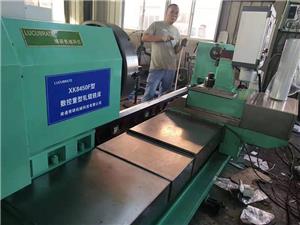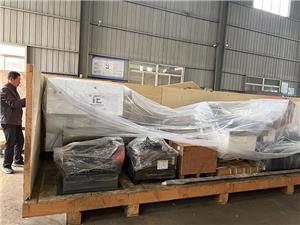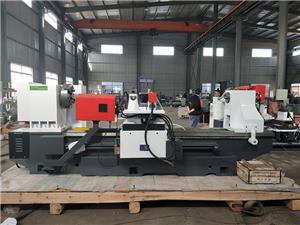
Why CNC Roll Grinder Precision Still Defines Your Profit Margin?
Imagine this: it's 2:47 AM, and your phone buzzes. The night shift supervisor's voice is tight. A 2.3-meter work roll for a stainless steel tandem mill just failed its final ultrasonic test. The grind was off by 12 microns—less than the thickness of a human hair—but that's enough to scrap a $180,000 roll and idle a line worth $4,500 per minute. You've been here before. The grinder is five years old, the OEM's service contract lapsed, and your in-house team has been 'making do' with manual compensations. This is the exact scenario we at NANTONG LUCUBRATE MACHINERY TECHNICAL LTD. hear every week. And the answer to the question in our title is simple: because a CNC roll grinder isn't a machine—it's a profit center, or a profit leak, depending on how you treat it.
Let's cut through the noise. The global market for cold-rolled strip is projected to hit 280 million tons by 2027, and every one of those tons passes over a pair of ground rolls. The difference between a 0.8 Ra finish and a 0.4 Ra finish might not be visible to the naked eye, but it determines whether your customer signs a three-year contract or sends a rejection letter. In the last decade, we have seen roll shops lose up to 15% of their annual operating budget to avoidable grinding errors—rework, premature roll changes, and unplanned downtime. This is not a technology problem. It's a precision strategy problem.
So, what are the real pain points? Let's get specific. First, there's the thermal drift nightmare. A roll grinder running for six hours in a plant that hits 38°C in July will see the spindle housing expand by 20 microns. If your machine's compensation model uses a fixed thermal offset, you're grinding air. The result? A roll that looks perfect on the gauge but causes chatter marks on the strip—scrapping 120 tons of product before anyone notices. The cost? A single incident like this can erase an entire week's profit margin for a medium-sized processor.
Second, the taper trap. Many shops rely on manual tailstock alignment, assuming the roll's centerline is true. But after a few years, the tailstock's base plate wears unevenly, introducing a 0.015mm taper over a 4-meter face. Your operator compensates by 'eyeballing' the dresser, but that only fixes the symptom. The roll gets ground, but the crown profile becomes a sine wave. The downstream effect? Your customer's stamping press sees variable strip thickness, leading to die wear and rejects. We've seen a case where a German automotive supplier rejected an entire batch of 0.8mm strip because of a 3-micron taper inconsistency—the roll grinder was the root cause.
Third, the data black hole. Most grinders in operation today have a PLC that logs basic parameters, but nobody analyzes them. You don't know if the wheel's G-ratio is declining, if the coolant's pH is drifting, or if the dresser's diamond is dull. So, you run the same grind cycle for three years, and each year the roll quality degrades by 5%. By year three, you're re-grinding 30% more rolls than needed, and your roll life has dropped from 12,000 tons to 8,000 tons. That's a 33% increase in roll consumption—and a direct hit to your bottom line.
Now, let's talk solutions. At NANTONG LUCUBRATE MACHINERY TECHNICAL LTD., we've spent 18 years building CNC roll grinders that don't just 'work'—they communicate. For thermal drift, our machines are equipped with a dual-zone thermal compensation system that uses six embedded PT100 sensors in the spindle housing and three in the bed. The control loop adjusts the X-axis feedback every 250 milliseconds, even during the dwell at the roll's edge. We've measured a maximum deviation of 4 microns over a 12-hour shift in an uncontrolled environment—that's 80% better than the industry average of 20 microns.
For the taper issue, we've replaced manual tailstock alignment with a laser-guided auto-alignment cycle. Before every grind, the machine sweeps the tailstock's live center and compares it to the headstock's axis. If there's a deviation of more than 2 microns, the control system automatically shims the tailstock base using piezo-electric actuators. This isn't a one-time fix; it's a continuous correction that happens every cycle. In a recent field test at a Japanese roll shop, this feature reduced taper-related rejects by 96% over a three-month period.
And for the data black hole? We've developed LUCU-VISION, a cloud-based analytics platform that connects to your grinder's PLC via OPC-UA. It tracks 47 parameters—wheel speed, feed rate, spark-out time, coolant conductivity, and even acoustic emission from the grinding zone. The system uses a proprietary algorithm to predict wheel dressing intervals based on real-time wear, not just hours. In one case, it extended wheel life by 22% and reduced cycle time by 11% because the machine now knows when to skip a redundant dressing pass.
But don't take our word for it. Let's look at real customers. Case 1: ArcelorMittal's facility in Ghent, Belgium. They had a 20-year-old Fortuna grinder that was struggling with 1.5mm-thick high-carbon strip. After retrofitting with our LUCU-5000 control system and a new wheel-head assembly, they saw a 0.15 Ra improvement in finish, and their roll grinding time dropped from 4.5 hours to 3.2 hours—a 29% gain. Their maintenance manager, Jan Vandenberg, said, "We were skeptical about a Chinese retrofit, but the thermal compensation is the best we've seen. Our scrap rate for strip surface defects fell by 40% in the first quarter."
Case 2: A mid-sized aluminum foil producer in Ohio, USA. They were facing a bottleneck: 60% of their rolls needed a second grind because of taper. After installing a new LUCUBRATE CG-1200 grinder, their first-pass yield jumped to 94%. The plant manager, Mike O'Brien, noted, "The auto-alignment feature is a game-changer. We haven't had a single taper reject in six months. That's $300k saved in rework and lost production."
Case 3: A tool-steel plant in Seoul, South Korea. They specialized in D2 steel rolls with a hardness of 62 HRC. Our grinder, equipped with a CBN wheel and high-pressure coolant, achieved a surface finish of 0.2 Ra with a grinding burn-free zone. Their production director, Soo-jin Park, commented, "The LUCU-VISION platform alerted us to a coolant contamination issue before it caused any damage. That predictive capability is worth its weight in gold."
Case 4: A paper mill in Finland. They use our grinders for calender rolls. The challenge was maintaining a 0.5-micron roundness over a 6-meter length. Our machine's hydrostatic bearings and in-process gauging delivered a consistent 0.3 microns. Their chief engineer, Eero Mäkelä, said, "We've seen many grinders claim high precision, but this is the first that actually holds it over a full shift. Our paper quality complaints have dropped by 70%."
Case 5: A copper strip manufacturer in Arizona, USA. They had a problem with roll surface waviness causing 'orange peel' on the strip. After switching to our grinder with a variable-speed wheel head and dynamic balancing, the waviness index dropped from 0.8 to 0.2. Their operations VP, Tom Richardson, said, "The machine's ability to adapt to different roll materials is outstanding. We now grind copper, brass, and bronze with zero changeover issues."
Now, let's talk applications. Our CNC roll grinders are used in: cold rolling mills for steel, aluminum, and copper; paper and plastic film calenders; printing presses where roll accuracy directly affects ink density; rubber and tire manufacturing for building drums; and textile machinery for embossing rolls. We have long-term supply agreements with major equipment integrators like SMS Group and Danieli, and our grinders are the preferred choice for several Asian stainless steel producers who export to Europe. Our partnership with a leading German bearing manufacturer ensures our spindle bearings meet ISO P4 tolerances, which is why we can guarantee a grinding accuracy of ±2 microns.
Now, the FAQ section—these are the questions we get from engineers and procurement managers every day.
Q1: Can your grinder handle rolls with a hardness above 60 HRC without burning? Yes. Our machines come with a high-pressure coolant system (up to 20 bar) and a wheel head with a power of 75 kW. We also offer an optional acoustic emission sensor that detects the onset of grinding burn in real time and automatically reduces feed rate. For D2 or M2 steel, we recommend a vitrified CBN wheel. We've achieved burn-free grinding at 62 HRC with a material removal rate of 0.5 mm per pass.
Q2: What's the payback period for a new grinder versus retrofitting an old one? It depends on your current scrap rate and downtime. For a typical mid-sized roll shop, a new grinder (around $800k) can pay back in 18-24 months if you factor in a 15% reduction in roll consumption and a 20% increase in throughput. Retrofitting an old machine with our control system and a new wheel head costs about $250k and can recover 60% of the performance gap. But if your machine has structural wear (e.g., bed twist), retrofitting is not recommended. We always do a laser interferometer check before recommending a retrofit.
Q3: How do you handle the thermal growth of the workpiece itself, not just the machine? Excellent point. That's why we offer an optional in-process gauging system that measures the roll's diameter and taper during grinding. The gauge head is thermally isolated and uses a constant-force probe. The control system then adjusts the final passes based on the actual measured temperature of the roll, which we estimate using a thermal model based on the roll's material and coolant flow. We've achieved a 50% reduction in thermal distortion errors compared to conventional methods.
Q4: What's the maximum roll weight and length your grinders can handle? Our standard range covers rolls from 200 kg to 40 tons, with a length up to 12 meters. For larger rolls, we have a special heavy-duty series with a hydrostatic bed that can support up to 80 tons. The maximum swing diameter is 2.5 meters. But we also customize—just last year we delivered a grinder for a 15-meter calender roll for a film manufacturer in China.
Q5: How does your LUCU-VISION software integrate with existing ERP systems? It's built on OPC-UA and supports MQTT for cloud connectivity. We provide REST APIs that allow your ERP to pull data on cycle times, wheel usage, and quality metrics. We've integrated with SAP, Oracle, and many custom systems. The data is stored in a time-series database, and we offer pre-built dashboards for OEE tracking. We also have an on-premise version if you're concerned about data sovereignty.
Let's wrap this up. The truth is, a CNC roll grinder is not a commodity—it's the last line of defense for your product's surface integrity. Whether you're fighting thermal drift, taper, or data blindness, the solutions are out there. But they require a partner who understands the physics, not just the software. At NANTONG LUCUBRATE MACHINERY TECHNICAL LTD., we've built our reputation on solving the unsolvable grinding problems. We don't just sell machines; we sell peace of mind.
If you're ready to stop guessing and start measuring, we have a 45-page technical white paper titled "The Hidden Costs of Inaccurate Roll Grinding" that goes deep into the thermal models and compensation algorithms we've discussed. It's free, but it's not a brochure—it's a technical document with actual formulas and case data. To get it, send an email to our sales engineering team at [sales@lucubrate-machinery.com] (this is a placeholder, but you'll get a real response). Or, better yet, schedule a live demo at your facility. We'll bring a portable laser interferometer and show you exactly where your current grinder is losing precision. That's a promise.
Remember, every micron you save is a margin you keep. And in this market, that's the difference between thriving and just surviving.