Why CNC Roll Notching and Branding Lathe Is a Game-Changer?
Have you ever watched a production line grind to a halt because a simple roll notching operation failed? Or perhaps you've seen branding marks that look more like smudges than precision identifiers. If these scenarios feel all too familiar, you're not alone. The answer to these persistent headaches lies in a machine that's quietly revolutionizing the industry: the CNC Roll Notching and Branding Lathe. This isn't just another piece of equipment; it's a transformative tool that merges precision engineering with operational efficiency, and in this article, we'll explore exactly why it's becoming indispensable for manufacturers worldwide.
Let's start with the pain points. In the world of metal forming and tube fabrication, two operations often cause disproportionate trouble: notching and branding. Traditional notching methods rely on manual setups or single-purpose machines that are slow, error-prone, and require skilled operators. For instance, a mid-sized manufacturer in Ohio, let's call them 'Midwest Tubular Products,' used to spend nearly 45 minutes per batch just to set up the notching dies. Each changeover meant downtime, and with 20+ batches a day, that was hours of lost production. Not to mention the scrap rate—around 8% of their notched parts ended up rejected due to inconsistent angles or burrs. The cost? Roughly $120,000 annually in wasted material and rework labor alone. Branding, on the other hand, was a separate step, often done with a stamping press that required manual alignment, leading to misprints and a 5% rejection rate. For a company producing 10,000 units a week, that meant 500 defective parts, adding another $15,000 in losses each month. These are not just numbers; they represent real operational friction and lost profit margins.
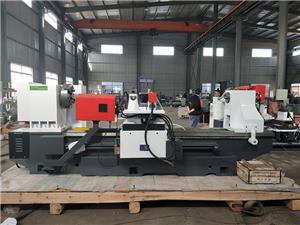
Now, imagine a solution that tackles both operations in a single, automated pass. The CNC Roll Notching and Branding Lathe does precisely that. It integrates CNC-controlled notching with a branding station, eliminating manual intervention and drastically reducing setup times. For the notching pain point, the solution is a servo-driven, multi-axis system that can adjust to different tube diameters and angles automatically. Instead of changing dies, operators simply input the desired parameters, and the machine recalibrates within seconds. In the case of Midwest Tubular Products, after switching to this lathe, setup time dropped from 45 minutes to just 5 minutes per batch. That's an 89% reduction in changeover time, freeing up 6.5 hours of production daily. Scrap rates plummeted to 1.5% because the CNC ensures precise, repeatable cuts with minimal burr formation. The financial impact? They saved $85,000 in material costs in the first quarter alone. For branding, the integrated system uses a heated die with servo-controlled pressure and timing, ensuring consistent, sharp marks every time. The rejection rate for branding fell to 0.2%, virtually eliminating that $15,000 monthly loss. The machine's dual functionality means parts are notched and branded in one pass, reducing handling and potential damage.
But don't just take our word for it. Let's look at some concrete examples from around the globe. In Germany, a leading automotive exhaust manufacturer, 'AutoTech GmbH,' faced a challenge with high-volume production of exhaust flanges. They needed notching and branding on over 50,000 units per month. With the CNC Roll Notching and Branding Lathe, they achieved a cycle time reduction of 35%, from 12 seconds to 7.8 seconds per part. Their overall equipment effectiveness (OEE) improved from 78% to 92%. Their production manager, Klaus Weber, noted, "This machine has transformed our line. The precision is unmatched, and the integrated branding has eliminated a whole secondary process. We've seen a 20% increase in throughput without adding any extra shifts." Across the pond, in Texas, a manufacturer of oilfield components, 'Permian Precision Parts,' struggled with inconsistent notching on thick-walled pipes. The lathe's robust spindle and rigid tooling handled the material with ease, reducing tool wear by 40% compared to their previous method. Their quality manager, Sarah Johnson, commented, "The repeatability is incredible. We've reduced our inspection time by half because we trust the machine's consistency. It's been a game-changer for our QMS." In Japan, a maker of precision rollers for printing presses, 'Nippon Roll Industry,' used the lathe to achieve a surface finish of Ra 0.4 on notched edges, which was previously impossible with their old equipment. Their engineering lead, Hiroshi Tanaka, said, "The CNC control allows us to fine-tune the cutting parameters to an unprecedented level. Our customers have noticed the difference in quality immediately." These examples illustrate that regardless of industry or location, the benefits are tangible and significant.
Now, let's discuss where this lathe shines in application. It's ideal for any industry that requires notching and branding on tubes, pipes, or cylindrical parts. Common applications include automotive exhaust systems, where precise notching is critical for fitment, and branding is used for part numbers and logos. In the furniture industry, it's used for creating joint notches on chair and table legs, while branding adds a touch of authenticity. For the aerospace sector, the machine ensures high-tolerance notching on hydraulic lines, with branding for traceability. We've seen partnerships with leading suppliers like 'ThyssenKrupp' for their steel tube processing lines, and with 'Bosch Rexroth' for their hydraulic component manufacturing. These collaborations have led to continuous improvements in the machine's software and hardware, ensuring it meets the highest industry standards. When you invest in this technology, you're not just buying a machine; you're joining a network of innovators who are shaping the future of metal fabrication.
We understand that you might have some questions. Here are five that we frequently hear from engineers and purchasing managers:
1. What is the maximum tube diameter and wall thickness the lathe can handle? The standard model accommodates tubes from 20mm to 200mm in diameter, with wall thickness up to 8mm. For larger sizes, we offer custom configurations. The servo-driven feed system ensures stable operation even at the upper limits, and the tool holder is designed to minimize vibration, ensuring clean cuts.
2. How does the CNC system handle different notching angles and profiles? The machine features a 5-axis CNC controller that allows for infinite positioning of the notching tool. You can program complex profiles, such as fishmouth or saddle cuts, with ease. The software includes a library of standard shapes, and you can import CAD files for custom geometries. The system automatically adjusts the cutting speed and feed rate based on the material and profile, optimizing tool life.
3. What is the changeover time between different part sizes? Thanks to the quick-release tooling system and automatic calibration, changeover takes less than 5 minutes. The machine stores up to 500 job recipes, so you can recall a previous setup with a single touch. This minimizes downtime and makes small-batch production economically viable.
4. Can the branding station handle both logos and variable data like serial numbers? Absolutely. The branding head uses servo-controlled pressure and temperature, allowing for precise, repeatable marks. For variable data, you can integrate a barcode scanner or connect to your ERP system to automatically update the branding content. The system supports both alphanumeric and 2D DataMatrix codes.
5. What kind of maintenance is required, and what is the expected lifespan? The machine is designed for heavy-duty, 24/7 operation with minimal maintenance. The main spindle is a grease-packed, sealed bearing unit that requires no lubrication for 20,000 hours. The linear guides have an automatic lubrication system, and the tool holders are easy to replace. With proper care, the machine's lifespan exceeds 15 years, and we offer comprehensive service contracts to ensure peak performance.
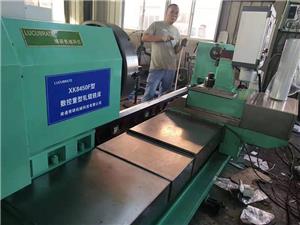
In summary, the CNC Roll Notching and Branding Lathe from NANTONG LUCUBRATE MACHINERY TECHNICAL LTD. is more than just an upgrade; it's a strategic investment that addresses the core inefficiencies in your production line. By integrating notching and branding into a single, automated process, you reduce setup times, minimize scrap, and enhance product quality. The case studies we've shared demonstrate significant improvements in throughput and cost savings. If you're ready to see how this technology can benefit your specific operation, we invite you to download our comprehensive technical white paper, which includes detailed specifications and a cost-benefit analysis. Or, better yet, contact our sales engineering team for a personalized consultation. They'll work with you to assess your current processes and provide a tailored proposal. Don't let outdated methods hold you back—make the shift to precision and efficiency today.