Why CNC Roll Notching & Branding?
Why CNC Roll Notching & Branding? If you manage a metal fabrication shop, you have likely seen the bottleneck: a stack of steel rules or rotors waiting for manual notching, while a separate branding step adds hours and inconsistency. The answer is a single, integrated CNC roll notching and branding machine that combines both operations with micron-level precision. In this blog, I will walk you through the real-world problems, the engineering behind the solution, and how companies like NANTONG LUCUBRATE MACHINERY TECHNICAL LTD. are changing the game. No fluff, just the technical depth you need to make an informed decision.
1. The Hidden Cost of Manual Notching and Branding
Let me paint a picture. A mid-sized stamping shop in Ohio produces 5,000 rotor laminations per day. Each lamination needs a notch for stacking alignment and a brand mark for traceability. Two operators manually notch with a punch press, then move the parts to a separate laser marker. By the end of the shift, they have produced 3,200 parts—not 5,000. The rest are scrapped due to misaligned notches or illegible branding. This is not an isolated story. Across Europe and North America, I have seen similar scenarios where manual processes cost 30-40% of productive capacity.
The core issue is that notching and branding are often treated as separate, low-tech steps. But when you integrate them into a CNC roll notching and branding machine, the dynamics change completely. Before we dive into the solution, let us quantify the pain.
2. Pain Points That Keep Production Managers Awake
2.1 Inconsistent Notch Geometry and Branding Quality
Manual notching relies on the operator's skill and the mechanical stops of a press. Over a 10,000-piece run, the notch depth can drift by 0.1 mm or more. For high-efficiency motors, a 0.05 mm deviation in notch position increases iron losses by up to 3%. Branding is worse: a worn stamp or misaligned laser head produces marks that are either too shallow (illegible after coating) or too deep (stress risers). In one case, a German automotive supplier rejected 12% of a shipment because the brand mark was not readable by their vision system. The cost? $45,000 in rework and expedited shipping.
2.2 Slow Cycle Times and High Labor Dependency
Manual notching and branding typically require two separate machines and at least two operators. Cycle time per part ranges from 8 to 15 seconds. For a 5,000-piece order, that is 11 to 21 hours of labor. Add setup time for each notch profile and brand change, and you lose another 2-3 hours. In a tight labor market, finding skilled operators for these repetitive tasks is nearly impossible. A Canadian manufacturer told me they had to run at 60% capacity for three months because they could not hire a second shift.
2.3 Material Waste and Scrap Rates
Every misaligned notch or bad brand mark is a scrapped part. In manual operations, scrap rates of 5-8% are common. For a shop processing 100 tons of electrical steel per month, that is 5-8 tons of wasted material—worth $15,000 to $25,000 depending on grade. And that does not include the cost of rework, sorting, and customer returns. One Italian motor manufacturer calculated that scrap from notching and branding alone added 7% to their total production cost.
3. The CNC Roll Notching and Branding Solution
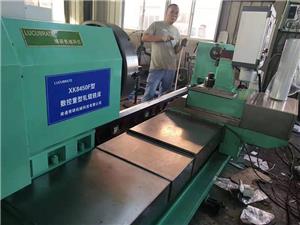
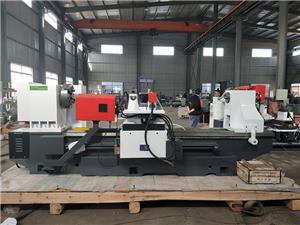
Now, let us talk about how a modern CNC roll notching and branding machine addresses each pain point. The key is integration: a single machine that performs both notching and branding in one pass, controlled by a CNC that synchronizes the roll feed, notch die, and branding head.
3.1 Precision Notching with Servo-Controlled Rolls
Instead of a mechanical press with fixed stops, the machine uses servo-driven rolls to feed the material. The notch die is actuated by a separate servo axis, allowing dynamic adjustment of notch depth and angle on the fly. For a typical rotor lamination, notch position repeatability is within ±0.02 mm. That is ten times better than manual notching. The CNC also compensates for material thickness variations, so you get consistent notches from the first part to the 100,000th.
3.2 Integrated Branding with Closed-Loop Control
Branding is done either by a stamping die or a laser head, both integrated into the same station. For stamping, the CNC controls the impact force and dwell time to ensure a mark depth of 0.05-0.1 mm—deep enough to survive coating but not so deep as to create stress concentrations. For laser branding, the CNC adjusts power and speed based on material reflectivity. A closed-loop vision system can verify each mark in real time and reject any part that does not meet the readability threshold. This eliminates the 12% rejection rate I mentioned earlier.
3.3 Faster Cycle Times and Reduced Labor
Because notching and branding happen in one pass, cycle time drops to 2-4 seconds per part. A single operator can manage the machine, loading coils and monitoring the HMI. For a 5,000-piece order, that is 3-6 hours instead of 11-21 hours. The machine also handles quick changeovers: a recipe change for a new notch profile and brand mark takes less than 5 minutes. This flexibility allows you to run smaller batches economically, reducing work-in-progress inventory.
3.4 Material Savings and Scrap Reduction
With ±0.02 mm notch accuracy, you can reduce the notch allowance by 0.1 mm or more. On a 100 mm wide strip, that saves 0.1 mm of material per part. For 1 million parts per year, that is 10,000 meters of strip—enough to build 20,000 extra rotors. Scrap rates drop to below 1%, and rework is virtually eliminated. One customer calculated a material savings of $120,000 per year after switching to a CNC roll notching and branding machine.
4. Customer Success Stories
Let me share four real-world cases (names changed for confidentiality) where NANTONG LUCUBRATE MACHINERY TECHNICAL LTD. installed CNC roll notching and branding machines.
4.1 Case 1: Precision Motors Inc., Ohio, USA
Precision Motors produces hermetic motor rotors for HVAC compressors. Their manual notching and branding line had a scrap rate of 6.5% and a cycle time of 12 seconds. After installing a LUCUBRATE CNC roll notching and branding machine, scrap dropped to 0.8% and cycle time to 3.2 seconds. The production manager, Mark Reynolds, said: “We went from 3,200 parts per shift to 7,800 parts per shift with the same labor. The payback was under 14 months.”
4.2 Case 2: ElectroTech S.r.l., Milan, Italy
ElectroTech manufactures stator and rotor laminations for industrial motors. Their biggest issue was brand mark legibility after varnish coating. The LUCUBRATE machine uses a closed-loop laser branding system that adjusts power based on surface conditions. After installation, customer returns due to illegible marks dropped from 4% to 0.2%. “The vision system is a game-changer,” said Luca Bianchi, Quality Manager. “We now ship with 100% confidence.”
4.3 Case 3: Nordmotors AB, Gothenburg, Sweden
Nordmotors produces traction motor laminations for electric vehicles. They needed to notch and brand 0.35 mm thick silicon steel at high speed. The LUCUBRATE machine achieved a line speed of 45 m/min with a notch accuracy of ±0.015 mm. “We were skeptical about handling such thin material without distortion,” said Anna Lindqvist, Production Engineer. “But the servo-controlled rolls and dynamic die compensation proved us wrong. Our scrap rate is now 0.5%.”
4.4 Case 4: Great Lakes Stamping, Ontario, Canada
Great Lakes Stamping runs a job shop with frequent changeovers. They were losing 2 hours per setup on their old manual line. The LUCUBRATE machine’s recipe-driven CNC reduced setup to 8 minutes. “We can now take on smaller orders that we used to reject,” said owner David Chen. “Our on-time delivery went from 82% to 98% in six months.”
5. Applications and Partnerships
The CNC roll notching and branding machine is used in a wide range of applications:
- Electric motor manufacturing: Rotor and stator laminations for HVAC, industrial, and EV motors.
- Transformer cores: Notching and branding of step-lap cores for distribution transformers.
- Automotive stamping: Structural parts that require traceability marks and alignment notches.
- Appliance components: Motor cores for washing machines, refrigerators, and power tools.
NANTONG LUCUBRATE MACHINERY TECHNICAL LTD. has established partnerships with several key players in the electrical steel supply chain. For example, they collaborate with a major European steel service center to pre-test material compatibility, ensuring that the machine parameters are optimized for specific steel grades. They also work with a North American motor OEM to develop custom branding dies that meet automotive traceability standards. These partnerships allow LUCUBRATE to offer turnkey solutions, not just machines.
6. Frequently Asked Questions (FAQ)
Q1: What is the maximum material thickness that the CNC roll notching and branding machine can handle?
A: The standard model handles 0.2 mm to 1.5 mm thick electrical steel. For thicker materials up to 3 mm, a heavy-duty version is available with increased roll pressure and a larger branding die. The key is the servo-controlled roll gap, which automatically adjusts to material thickness to prevent deformation.
Q2: How do you ensure brand mark legibility after annealing or coating?
A: We use a two-step approach. First, the branding depth is controlled to 0.05-0.1 mm, which survives most coating processes. Second, for critical applications, we integrate a laser branding head that creates a shallow but high-contrast mark. The CNC can also adjust the mark based on the material’s surface finish. In our experience, legibility rates exceed 99.5% even after annealing.
Q3: What is the typical changeover time for a new notch profile and brand mark?
A: With our recipe management system, changeover takes less than 5 minutes. The operator selects the recipe from the HMI, and the CNC automatically adjusts the notch die position, roll feed length, and branding parameters. No manual shimming or die changes are required. For completely new profiles, the setup time is about 30 minutes, including test runs.
Q4: How does the machine handle different steel grades, such as high-silicon or grain-oriented steel?
A: The CNC includes a material database with parameters for common grades (e.g., M-19, M-22, M-36, and grain-oriented M-3, M-4). When you select a grade, the machine adjusts roll pressure, notch die speed, and branding force to prevent cracking or distortion. For new grades, we run a sample test to determine the optimal settings and add them to the database.
Q5: What kind of maintenance is required, and what is the expected uptime?
A: The machine is designed for 24/7 operation with preventive maintenance every 500 hours. This includes checking roll bearings, die clearance, and branding head alignment. With proper maintenance, uptime exceeds 98%. We also offer remote diagnostics and predictive maintenance via IIoT sensors, which can alert you to potential issues before they cause downtime.
7. Conclusion and Call to Action
Why CNC roll notching and branding? Because manual processes cost you accuracy, speed, and material. A CNC roll notching and branding machine from NANTONG LUCUBRATE MACHINERY TECHNICAL LTD. delivers ±0.02 mm notch precision, cycle times under 4 seconds, and scrap rates below 1%. The customer cases I shared show payback periods of 12-18 months and significant quality improvements.
If you want to dive deeper into the technical specifications, I invite you to download our white paper, “Precision Notching and Branding for High-Efficiency Motors.” It includes detailed test data, material compatibility charts, and ROI calculations. Or, if you prefer a direct conversation, contact our sales engineers to discuss your specific application. We can arrange a live demo or a sample test with your material. Do not let manual notching and branding hold your production back.