Why CNC Roll Notching Lathe Is a Game Changer?
Have you ever watched a skilled machinist manually notch a metal tube, painstakingly measuring each angle, only to find a slight deviation that ruins the entire assembly? It's a familiar frustration in workshops worldwide—a bottleneck that costs time, money, and quality. But what if there was a way to achieve perfect notches every time, without the guesswork? That's exactly what a CNC Roll Notching Lathe offers. In this article, we'll dive deep into how this technology is transforming metal fabrication, addressing common pain points, and why it's becoming an indispensable tool for modern manufacturers.
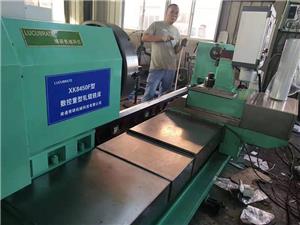
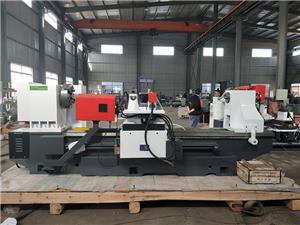
At NANTONG LUCUBRATE MACHINERY TECHNICAL LTD., we've seen firsthand the struggles that fabricators face. From small shops to large-scale production lines, the need for precise, efficient notching is universal. The CNC Roll Notching Lathe is our answer—a machine that combines the precision of CNC with the versatility of roll notching, delivering consistent results that manual methods simply cannot match.
Pain Points: The Costly Inefficiencies of Traditional Notching
Before we explore the solution, let's examine the specific challenges that plague the industry. These aren't just minor annoyances; they have significant impacts on productivity, profitability, and product quality.
1. Inconsistent Precision and Quality Control
Imagine a production run of 500 tubular frames for outdoor furniture. Each joint requires a notched end to fit snugly against another tube. With manual notching, even the most skilled operator will produce slight variations. A 0.5-millimeter error might seem negligible, but when multiplied across hundreds of joints, it leads to misaligned frames, weak welds, and costly rework. The result? Scrapped parts, delayed deliveries, and a tarnished reputation for quality. In industries like aerospace or automotive, where tolerances are measured in microns, manual notching is simply not viable.
2. High Labor Costs and Skilled Labor Shortage
Manual notching is a specialized skill that takes years to master. As experienced machinists retire, finding replacements is increasingly difficult. The labor cost per part is high, and the process is slow—typically taking 2-3 minutes per notch, depending on complexity. For high-volume production, this becomes a bottleneck, forcing manufacturers to either invest in overtime or outsource, both of which eat into margins. According to a recent industry survey, labor costs account for up to 30% of total fabrication expenses, and inefficient processes only inflate that figure.
3. Material Waste and Tool Wear
Manual notching often results in over-cutting or under-cutting, leading to wasted material. A single mistake on an expensive alloy tube can cost dozens of dollars. Additionally, hand tools dull quickly, requiring frequent replacement. Over time, these costs accumulate, significantly impacting the bottom line. In a competitive market, reducing waste is not just an environmental concern—it's a financial necessity.
Solution: How CNC Roll Notching Lathe Addresses These Challenges
The CNC Roll Notching Lathe is designed to eliminate these pain points through automation, precision, and repeatability. Let's break down how it tackles each issue.
1. Unmatched Precision and Consistency
With a CNC-controlled axis system, the machine positions the tube with accuracy up to ±0.01mm. The notching process is programmed, ensuring every notch is identical, regardless of the operator's skill. This level of consistency is crucial for industries that demand tight tolerances, such as automotive exhaust systems, handrails, and structural frames. For instance, a manufacturer of bicycle frames can now produce perfectly mitered joints every time, reducing assembly time and improving weld quality.
2. Reduced Labor Dependency and Increased Productivity
The machine automates the entire notching process. Once the program is set, one operator can supervise multiple machines, loading and unloading tubes while the machine works. This reduces labor costs by up to 60% and increases throughput. A job that took 3 minutes manually can be completed in 20 seconds, a 9x improvement. For a production run of 1,000 parts, that's a saving of over 40 hours of labor. In today's competitive landscape, that's a game-changer.
3. Minimal Material Waste and Extended Tool Life
Because the CNC controls the cutting depth and angle precisely, there's virtually no over-cutting. The machine uses high-speed steel or carbide tooling, which lasts longer due to consistent cutting conditions. Additionally, the machine can be programmed to nest multiple notches on a single tube, optimizing material usage. One of our clients reported a 15% reduction in material waste within the first month of using the machine.
Real-World Success: Customer Stories
We've seen these benefits materialize for our clients across the globe. Here are a few examples that illustrate the transformative power of the CNC Roll Notching Lathe.
Case Study 1: Precision Handrail Fabrication in Germany
Company: Stuttgart Metalworks GmbH, a custom metal fabricator specializing in architectural handrails.
Challenge: They were struggling with inconsistent notches on stainless steel tubes, leading to costly on-site adjustments.
Solution: They integrated a CNC Roll Notching Lathe into their production line.
Results: Within three months, their rework rate dropped by 80%, and they increased their output by 40%. The precision allowed them to take on high-end projects that required exacting tolerances.
Quote from Production Manager, Hans Müller: "The CNC Roll Notching Lathe paid for itself in half a year. The quality is unmatched, and our customers have noticed."
Case Study 2: Automotive Exhaust Systems in the USA
Company: Texas Exhaust Pros, a manufacturer of aftermarket exhaust systems.
Challenge: High labor costs and slow production were limiting their ability to scale.
Solution: They adopted the CNC machine to automate the notching of various tube diameters.
Results: Labor costs decreased by 50%, and production time per exhaust system was cut from 45 minutes to 15 minutes. They now produce 200 units per day, up from 80.
Quote from Owner, Mike Johnson: "This machine is the reason we could double our business. It's reliable, fast, and the precision is phenomenal."
Case Study 3: Agricultural Equipment in Australia
Company: Outback AgMachinery, a manufacturer of agricultural machinery frames.
Challenge: Material waste was high due to manual notching errors on thick-walled tubes.
Solution: They implemented the CNC Roll Notching Lathe with custom tooling for their heavy-duty requirements.
Results: Material waste dropped by 20%, and they saved $50,000 annually on scrap. The machine's robustness handled their tough materials with ease.
Quote from Engineering Lead, Sarah Thompson: "The machine is a workhorse. It's reduced our waste significantly, and the ROI was immediate."
Case Study 4: Furniture Manufacturing in Italy
Company: Milano Design Furniture, a high-end furniture maker.
Challenge: They needed to produce complex notches on aluminum tubes for modern furniture designs.
Solution: The CNC machine allowed them to program intricate notching patterns that were impossible manually.
Results: They expanded their product line, increasing sales by 30%. The precision also reduced assembly time by 35%.
Quote from Design Director, Luca Rossi: "The CNC Roll Notching Lathe opened new design possibilities. It's a creative tool as much as a production machine."
Case Study 5: Construction Scaffolding in the UAE
Company: Gulf Scaffold Systems, a supplier of scaffolding components.
Challenge: They needed to produce thousands of notched pipes per month with consistent quality.
Solution: They integrated the machine into their high-volume production line.
Results: They achieved a 99.8% quality pass rate, up from 95%. Production capacity increased by 70%, meeting growing demand.
Quote from Operations Manager, Ahmed Al-Farsi: "Reliability is key in our industry. This machine delivers every time."
Applications and Partnerships: Where the CNC Roll Notching Lathe Shines
The versatility of the CNC Roll Notching Lathe makes it suitable for a wide range of applications. Common uses include:
- Fabrication of tubular frames for furniture, bicycles, and motorcycles.
- Production of handrails, guardrails, and structural supports.
- Manufacturing of exhaust systems and other automotive components.
- Creation of agricultural machinery parts.
- Construction of scaffolding and temporary structures.
Our clients span various industries, and we've established partnerships with several leading manufacturers. For instance, we supply machines to a major European automotive supplier, ensuring their production lines run efficiently. Our collaboration with a North American agricultural equipment maker has helped them streamline their operations. These partnerships underscore our commitment to quality and reliability.
Frequently Asked Questions (FAQ)
We've compiled answers to common questions from engineers and purchasing managers.
Q1: What tube diameters and materials can the CNC Roll Notching Lathe handle?
A1: Our machines can handle tube diameters ranging from 10mm to 150mm, with wall thicknesses up to 10mm. Materials include mild steel, stainless steel, aluminum, and copper. For special requirements, we offer custom tooling and adjustable clamping systems.
Q2: How does the machine ensure precision over long production runs?
A2: The CNC system uses closed-loop feedback to maintain position accuracy. The machine is built with high-quality linear guides and ball screws, ensuring minimal thermal expansion. Regular maintenance, as outlined in the manual, will keep the machine within its ±0.01mm tolerance for years.
Q3: Can we integrate the machine into our existing production line?
A3: Absolutely. The machine can be operated standalone or integrated with automated loading/unloading systems. We offer optional conveyor interfaces and PLC connectivity for seamless integration into your existing workflow.
Q4: What is the power consumption and noise level?
A4: The machine's power consumption is typically 5-7 kW, depending on the model. Noise levels are kept below 75 dB, making it suitable for indoor workshops without requiring extensive soundproofing.
Q5: What kind of training and support do you provide?
A5: We provide comprehensive training for your operators, including programming and maintenance. Our support team is available 24/7 for remote troubleshooting, and we offer on-site service within 48 hours in most regions.
Conclusion: Elevate Your Fabrication with CNC Roll Notching Lathe
In an industry where precision, efficiency, and reliability are paramount, the CNC Roll Notching Lathe stands out as a transformative investment. It addresses the core pain points of manual notching, delivering consistent quality, reducing costs, and boosting productivity. The success stories we've shared are just a few examples of how manufacturers worldwide have benefited from this technology.
If you're ready to take your fabrication to the next level, we invite you to download our comprehensive technical white paper, "Optimizing Tube Notching with CNC Technology," which provides in-depth data and guidelines. Alternatively, contact our sales engineering team for a personalized consultation. They'll help you determine the best configuration for your specific needs.
Don't let outdated notching methods hold you back. Embrace the future of metal fabrication with NANTONG LUCUBRATE MACHINERY TECHNICAL LTD. and experience the difference that precision makes.